A feature-length documentary film by Carol Mansour and Muna Khalidi. After 43 horrific days working round the clock under constant bombardment in the emergency rooms of Gaza’s Al Shifa and Al Ahli hospitals, British-Palestinian reconstructive surgeon, Dr. Ghassan Abu Sittah, emerged to find himself as a face of Palestinian resistance.
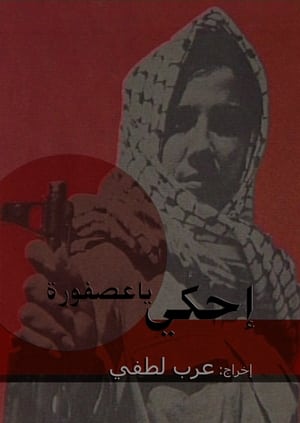
Seven militant women (fedaiyat) of the revolutionary generation tell the story of the Palestinian resistance through accounts of their own lives. Cut from 35 hours of interviews with leaders of the armed struggle, the film presents an image of confident, unapologetic and proud feminine identity. Together, the memories of these women narrate the dream of a generation, yet unrealized.
With nearly two million people living in miserable conditions in Gaza, the Israeli blockade has taken its toll on mental health there. Against the backdrop of the border clashes earlier in 2018 this film goes deep inside the minds of the people of Gaza to explore the mental health issues affecting many there.
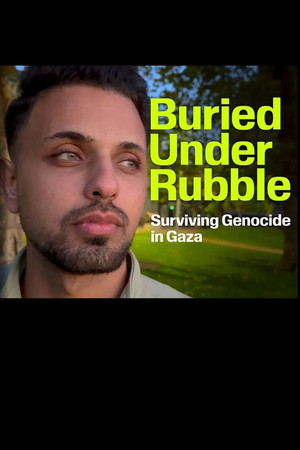
Palestinian writer and journalist Hamza Salha recently reached Ireland from Gaza, where he endured two years of relentless bombardment and famine under Israeli genocide. Just a few weeks after his arrival, Hamza sits down with Palestine Deep Dive's Omar Aziz to recount his experience and document what he witnessed. From being buried under the rubble to experiencing first hand the latest technology in AI-assisted automated killing and surveillance, Hamza's personal account of resilience and resistance to Zionist erasure traces his family’s journey from the Nakba of 1948 to today’s ongoing genocide. Host / director: Omar Aziz Editor: Dhruv Haria Assistant Editor: Sam Mathias-Stanley
A close-up look at the New Yorkers who took to the streets during the 2024 Presidential Election.
Saud now lives in Paris, caring with devotion and tenderness for his two young children while closely following the drama in Gaza. “It's hard to be far away.” He speaks sadly of his situation as a Palestinian citizen of Israel. When he accompanies his daughter to school, they both stick up placards for the liberation of Palestine...
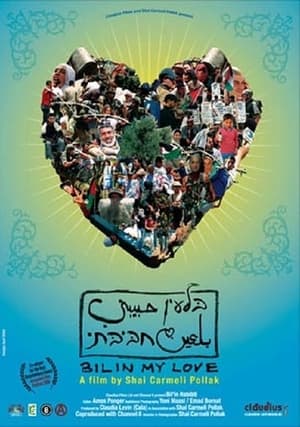
The Israeli filmmaker Shai Corneli Polak records the building of the 'security wall' through Palestinian territory at the village of Bil'in. The villagers protest mostly peacefully, while the Israeli army doesn't react peacefully. By now the Israeli High Court has ruled that the building of the wall was illegal.
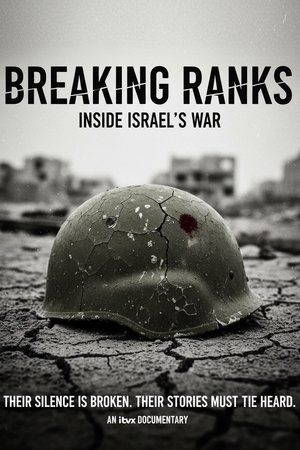
Breaking Ranks: Inside Israel’s War presents the first-hand recollections of IDF soldiers who have broken official silence to share their experiences of the war in Gaza - accounts that may raise serious questions about conduct on the ground and potential breaches of international law. Directed by award-winning filmmaker Ben Zand, the film features exclusive interviews with Israel Defense Forces (IDF), reservists and veterans - many speaking for the first time - who served during the war in Gaza. Their testimonies describe what they recall as indiscriminate bombardment, instances where Palestinian civilians were used as human shields, and an operational culture that some soldiers characterised as “no innocents in Gaza.”
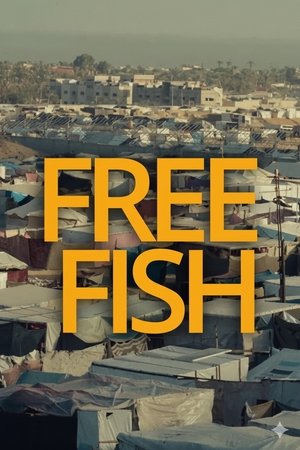
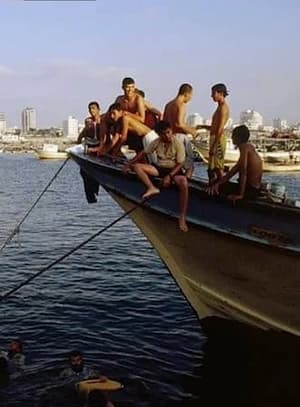
Free Fish is a short documentary filmed over the course of a year in Gaza, following two brothers — Abu Nagham and Ahmad — separated by war yet connected by the sea. Displaced from their home, Abu Nagham now lives in a tent in the south, fishing with his young nephew Rami, who lost his twin brother. Ahmad remains in the north, fishing amid ruins and occupation. Once a source of livelihood and freedom, the sea has become a battleground — heavily restricted, constantly watched, and always dangerous.
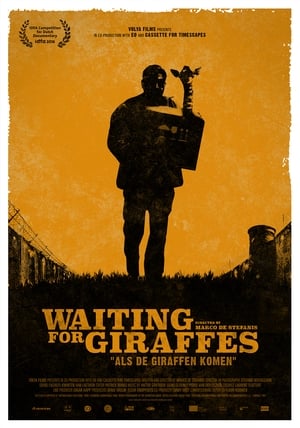
After two intifadas and the construction of the Israeli wall, the only Palestinian zoo is still there and is now seeking for international recognition and to replace their lost giraffes.
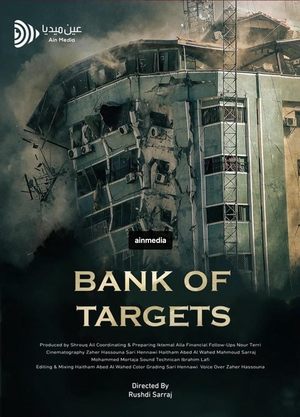
Winner of the Jury’s Special Mention at the 18th Al Ard Film Festival in Sardinia, Bank of Targets documents Israel’s targeting of civilian infrastructure in Gaza in 2021. Through a first-hand account of the bombing of a residential building, Sarraj highlights the efforts of journalists to create a record of war crimes as they unfold. Sarraj was killed in his home by an Israeli air strike on 22 October, 2023.
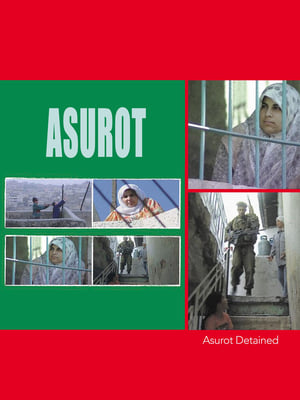
Najwa, Nawal, and Siham, three Palestinian widows, live with their 11 children in a house on Shuhada Street in Hebron. Their house lies on the border; the façade is under Israeli occupation, the Palestinian Authority controls the back. At the entrance to the house is a military post; on the roof the Israeli army has placed a watch point over Palestinian Hebron. The three women, trapped in the middle and constantly surrounded by Israeli soldiers, carry on their difficult lives in a perverse situation: the occupation becomes a routine, the absurd becomes a given. This is the story of an occupation that extends to the staircase and the roof of the house, where it encounters poverty, loneliness, pain, but also the small joys of everyday life. This is an internal prison, the external one is the ongoing occupation.
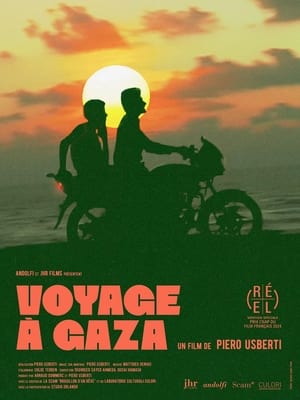
“In Gaza you have to get there in the evening, in spring, lock yourself in your room and from there listen to the sounds coming in through the open window.... It's 2018. I am 25 years old and a foreign traveler. I meet young Palestinians my age..”
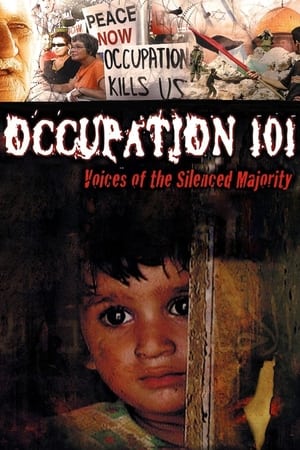
A thought-provoking documentary on the current and historical causes of the Israeli-Palestinian conflict and U.S. political involvement.
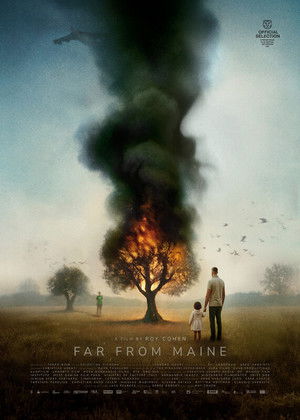
Haunted by the killing by Israeli police of a Palestinian friend from his youth, an Israeli queer filmmaker embarks on a cinematic dialogue across time — confronting memory, friendship, and the genocide unfolding today. In this intimate cinematic letter, Israeli filmmaker Roy Cohen addresses his Palestinian friend and fellow peace activist Aseel Aslih, who was murdered by Israeli police in their youth. Cohen tells Aslih of his experiences navigating a growingly genocidal society and seeks Aslih’s moral clarity and resilience in the evocative letters he had written as a teenager.
Shuja’iyah: Land of the Brave represents one filmmaker’s personal reflection on the meaning of “crimes against humanity” in the context of Israel’s ‘Operation Protective Edge’ waged in the Gaza Strip in 2014, using footage of her family filmed in the summer of 2013 juxtaposed against audio from the summer of 2014. Assali posed the question, when we say ‘crimes against humanity’, what ‘humanity’ are we talking about?”
"Gaza Is Our Home" is a profoundly personal documentary that peels back the layers of devastation within the Gaza Strip, as witnessed through the lens of filmmaker Monear Shaer. His debut documentary was created out of agony as a timely, impactful, and tragic response to the collective anguish of all who call Gaza home... What began as an auto-generated slideshow on Monear’s iPhone of his own trip to see his family in 2021, has since transformed into a feature-length documentary. Through a tapestry of intimate interviews, unfiltered personal footage, and raw storytelling, "Gaza Is Our Home" transcends the political rhetoric and confronts audiences with the agonizing reality and ongoing cruelty thrust upon the film-makers own family. It is more than just a documentary... Rather, "Gaza Is Our Home" stands as a testament to the humanity behind the over 33,362 innocent lives massacred since Oct 2023...
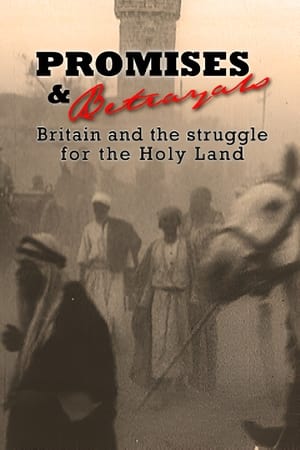
A documentary on how British double-dealing during the First World War ignited the conflict between Arab and Jew in the Middle East. The bitter struggle between Arab and Jew for control of the Holy Land has caused untold suffering in the Middle East for generations. It is often claimed that the crisis originated with Jewish emigration to Palestine and the foundation of the state of Israel. Yet the roots of the conflict are to be found much earlier – in British double-dealing during the First World War. This is a story of intrigue among rival empires; of misguided strategies; and of how conflicting promises to Arab and Jew created a legacy of bloodshed which determined the fate of the Middle East.
An attempt to describe the everyday of a place that struggles for the most basic human rights: the Gaza Strip as a microcosm for the failure of civilization.
Assassinated Lebanese intellectual Mahdi Amel — often dubbed “the Arab Gramsci” — famously said: “He who resists is never defeated.” What use is his thought to us today, and what is our responsibility as image makers to Gaza?