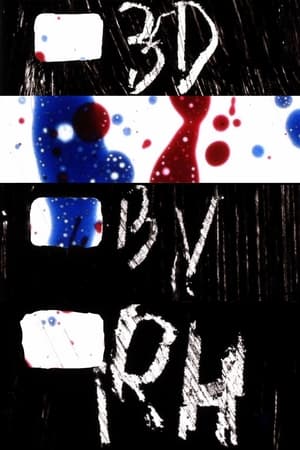
3-D is a hand-painted experimental short film by Riley Hogan. Acrylic paint, ink and scratching were used to animate on clear Super 8mm film leader.
It is said that if a man is fading away, he sees his life running quickly in front of his eyes. What does a hundred-year old film strip see before it gives way to digital vehicles? Does it see broken frames, scratched film stock or something else? This is a film about time and its ephemeral nature.
A man sits in his living room, doing absolutely nothing while morning arrives.
What could possibly be more important than feeding your daughter?
A vibrant animation by Patricia Marx. Preserved by the Academy Film Archive in 2000.
Iwasaki’s ink oscillates like an evil lava lamp that might actually be alive and its progression into more and more disturbing images create an impressive sense of dread in a film that is basically just some pencil drawings on a blank background. (Film School Rejects)
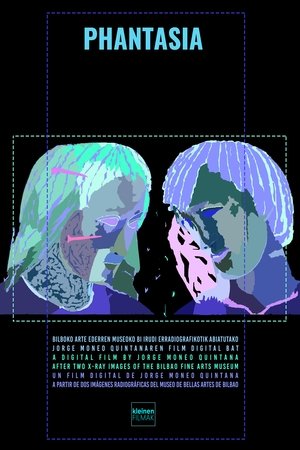
X-ray images were invented in 1895, the same year in which the Lumière brothers presented their respective invention in what today is considered to be the first cinema screening. Thus, both cinema and radiography fall within the scopic regime inaugurated by modernity. The use of X-rays on two sculptures from the Bilbao Fine Arts Museum generates images that reveal certain elements of them that would otherwise be invisible to our eyes. These images, despite being generally created for technical or scientific purposes, seem to produce a certain form of 'photogénie': they lend the radiographed objects a new appearance that lies somewhere between the material and the ethereal, endowing them with a vaporous and spectral quality. It is not by chance that physics and phantasmagoria share the term 'spectrum' in their vocabulary.
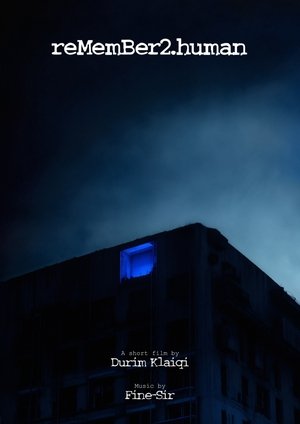
In an indeterminate future, forbidden memories challenge a database containing all human memories. An experimental cinematic search between past and future, fiction and fact, Prishtina and Tirana. The future, a glitch.
In this short film, a young man, a girl and a dog attempt to fly with wings more symbolic than practical.
La dissolution du paysage
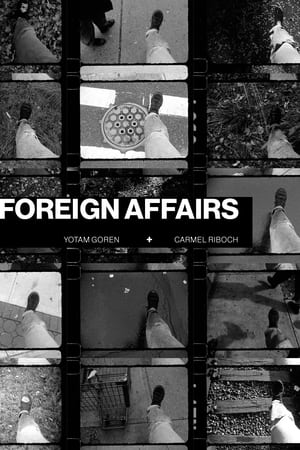
Shot on 16mm film in New York and composed in Berlin, the work explores polarizing themes of the metropolis. Audibly and visually, the viewer is put in a flicker between serenity and intensity; harrowing ambience cut with sharp beeps, vulnerable steps mashed in high velocity.
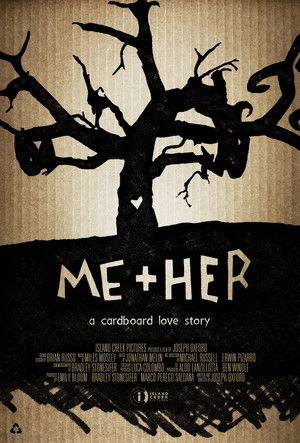
Creating a universe between two small pieces of Cardboard. When Jack and Jill of Cardboard City are separated by Jill's torrid illness, Jack must think outside the box to assure they will be together again.
Len Lye usually timed his films with great care to match their soundtracks, but for All Souls Carnival, he and composer Henry Brant worked separately, preferring to see if the score and visual track would synchronise by chance. Lye also experimented with a new Direct Film technique, drenching the filmstrip in colourful paint and marker pen.
An essay in colour harmonics and visual overtones. Conceived and produced as part of the Images Film Festival's Minute Movies.
The enduring romance of the lines. A visual exploration of Dave Brubeck's jazz classic "Take Five".
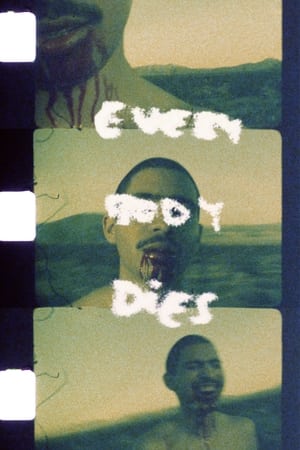
Utilizing super 8mm and an economical shooting method of quick, short shots building idiosyncratic rhythms via rapid editing techniques, time, nature, and even the body folds in on itself. Everybody Dies (2020) is a poetic journey into the desert. It’s a reflection on the nature of death as something not to be feared, but embraced as a part of a personal and universal human experience. Super 8mm.
A lost traveler encounters a talking clown puppet that won’t stop looking at a mysterious orange light.
The motif in this animation is the memories of my dog which lived 17 years.
"Light animation and original poetry in this initiatic journey by Dennis Pies, who is now known as Sky-David." - Daily Psychedelic. Preserved by the Academy Film Archive in 2013.
An experimental short from Oskar Fischinger