A landscape is only a landscape until we know what lies beneath. Pozo Ibarra, in the Central Mountains of León, is a mining complex full of significant architectural attributes, and also the imposing and ruinous remnant of a painful past that passed the ideas of freedom, literally, through the stone, turned into a great mass grave. Now, when the sun goes down, the souls that inhabit it rise up, refusing to forget.
Made in Japan, Last Room is both fiction and documentary. The occupants of the love-hotels and capsule-hotels tell their own intimate, dreamlike stories, interspersed with journeys through the archipelago's landscapes. Soon, these personal stories resonate with a collective history: that of Gunkanjima, the abandoned ghost island of Nagasaki, and then that of Japan as a whole.
In a remote area of northern Spain, the wind has a name: Tramuntana. Tramuntana takes what it wants—clothes, trees, boats, and the people of the landscape who live with the endless threat of being carried away by its force. This film is a lyrical portrait of this furious wind, woven from the stories passed down by local villagers.
An experience of a camera swinging in different gestures facing the optical distortion of the Sun. The last appearance of the smudge.
Join filmmaking duo Chris Hegedus and Nick Doob as their cameras follow Franken to book signings, campaign rallies and the launch of Air America Radio, documenting his transformation from irreverent funnyman to political pundit.
A condensation of a handful of sunsets with various visual moods. Red and blue as opposites that still find a way to cohere. Concrete silhouettes over an ever-changing, expanding canvas. Every movement is collective, molecular. Over an invisible horizon, a chance presents itself to meditate on the “speed” of water (and the sea) and also for a more fluid kind of editing.
One Meter of Democracy (2010) challenged the endurance of viewers, as well as the courage of the artist. In a quasi-democratic process, He Yunchang invited approximately 20 friends to vote in a secret ballot on whether he should have a surgeon cut a one metre incision the length of his body, from collar bone to knee, without anaesthesia. The vote was carried by a narrow majority, with several abstaining. The performance was documented in video and photographs that reveal the emotional cost of witnessing this gruelling event. This work, sometimes also known as ‘Asking the Tiger for its Skin’ was also staged on a symbolic date: 10 October 2010 was the 99th anniversary of the Wuchang uprising and the Xinhai Revolution which led to the fall of the Qing Dynasty and the establishment of the Republic of China. The final image shows the group with sombre, shocked faces.
A homeless man living in a encampment in Minneapolis tells his perspective on the ongoing crisis of homelessness.
A hen questions the meaning of her life on a farm.
Las Preguntas que Perdimos
Phil Comeau shines a spotlight on the Ordre de Jacques-Cartier, a powerful secret society that operated from 1926 to 1965, infiltrating every sector of Canadian society and forging the fate of French-language communities. Through never-before-heard testimony from former members of the Order, along with historically accurate dramatic reconstructions, this film paints a gripping portrait of the social and political struggles of Canadian francophone-minority communities.
Mariam, Asiya, and Anissa were 11, 7, and 5 years old when they were raped. The attackers were their paternal uncle, a neighborhood youth, and the nanny's son. They have no memory of the event. To protect them, their bodies developed traumatic amnesia. Years later, the memories returned, and they decided to file a complaint.
A documentary featuring 30 Argentinian women aged between 4 and 80, sharing their stories of resilience, strength, and unique perspectives on womanhood through performance art.
Archive footage from 2006 - 2010 of a young girl growing up during the ages of four to eight. Only fragments of what is remembered exists. Words from a transgender man float to the surface as fleeting memories go on.
A film essay that intertwines the director's gaze with that of her late mother. Beyond exploring mourning and absence as exclusively painful experiences, the film pays tribute to her mother through memories embodied by places and objects that evidence the traces of her existence. The filmmaker asks herself: What does she owe her mother for who she is and how she films? To what extent does her film belong to her?
As part of a six-month investigation, The Times synchronized and mapped thousands of videos and police audio of the U.S. Capitol riot to provide the most complete picture to date of what happened - and why.
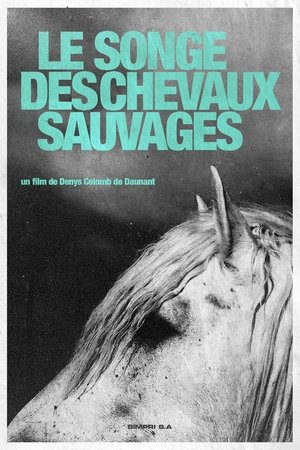
The horses in Denys Colomb Daunant’s dream poem are the white beasts of the marshlands of the Camargue in South West France. Daunant was haunted by these creatures. His obsession was first visualized when he wrote the autobiographical script for Albert Lamorisse’s award-winning 1953 film White Mane. In this short the beauty of the horses is captured with a variety of film techniques and by Jacques Lasry’s beautiful electronic score.
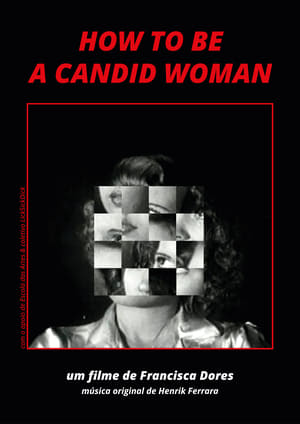
To produce speech, a set of mechanisms must be brought together. What is the normal articulation for speech? How to produce the sounds that make it up in the correct way? A physiological analysis of the aspects of speech shows us how: the jaw must move in a certain way; the air must be expelled from the lungs in another. Based on the concepts stated in the film "Normal Speech Articulation" (1965), produced by the University of Iowa (USA), we intend to reflect on the way women have been represented, and consequently educated, over the years, both in film and in the media. Largely composed of archival footage, this film intends to make evident, through a montage inspired by Structuralist movements, the violence of this education.
Jo; or The Act of Riding a Bike is Zefier's third film.
Outtakes, commentary from Zefier's third film: Jo; or The Act of Riding a Bike.