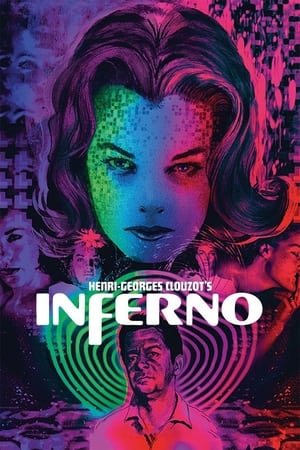
The making of The Beatles' controversial 1967 film, featuring previously unseen archive footage.
Every year, thousands of German citizens travel to India, hoping to have a spiritual awakening of their own. In turn, they end up taking bits and pieces of Indian culture back home with them, creating a distorted version of Indian religion that’s practiced widely across Europe. The number of yoga institutes, ashrams, and Sanskrit institutes in Germany indicates that younger generations are far from giving up on this trend. Some are so enamored by this version of Indian culture that they travel thousands of kilometres to meet their spiritual advisors in tents, attend yoga sessions at 5 in the morning, and, in some cases, even adopt Indian names and clothes to try and connect more with this Eastern way of living. But exactly how prevalent is this trend?
Documentary filmmaker Renton Hinderer takes a look back at his long relationship with one of his closest friends to understand the paths we choose in life, and how friendship is eternal through it all.
A documentary about a cat cafe for a film class
As part of the 2017 UK-India Year of Culture, the British Council and British Film Institute share a unique collection of films documenting the sights and culture of a bygone India. Filmed between 1899-1947, and preserved in the BFI National Archive since then, these rare films capture many glimpses of life in India, from dances and markets, to hunts and pageantry.
Filmmakers revisit Inukjuak, the Inuit village where Robert J. Flaherty filmed Nanook of the North in the early twentieth century, and examine the realities behind the ground-breaking documentary.
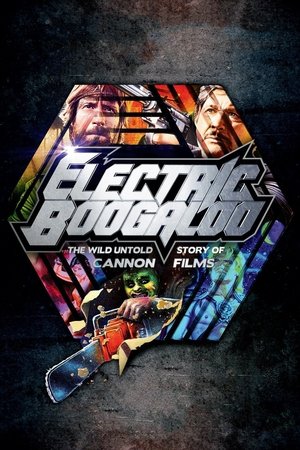
A documentary about the rise and fall of the Cannon Film Group, the legendary independent film company helmed by Israeli cousins Menahem Golan and Yoram Globus.
Cinecitta is today known as the center of the Italian film industry. But there is a dark past. The film city was solemnly inaugurated in 1937 by Mussolini. Here, propaganda films would be produced to strengthen the dictator's position.
Raj Kapoor, the film maker and actor became a legend in his lifetime. Head of one of the last great studios on the Indian sub-continent and creator of a film-making empire for nearly half a century. Woven into the texture of this 70-minute film, part personal narrative, part rare visuals, part cinema footage, is the picture of a man who straddled the Indian cinematic world for nearly half a century like a colossus.
Investigates the politics of cinematic shot design, and how this meta-level of filmmaking intersects with the twin epidemics of sexual abuse/assault and employment discrimination against women, with over 80 movie clips from 1896 - 2020.
A short film by Peter Greenaway. It depicts the painting The Wedding Feast at Cana by Paolo Veronese, through mixed media and shows different perspectives.
Four friends embark on a journey to California where they discover the beauty of friendship amidst the stunning landscapes of the West.
A 60-minute salute to American International Pictures. Entertainment lawyer Samuel Z. Arkoff founded AIP (then called American Releasing Corporation) on a $3000 loan in 1954 with his partner, James H. Nicholson, a former West Coast exhibitor and distributor. The company made its mark by targeting teenagers with quickly produced films that exploited subjects mainstream films were reluctant to tackle.
Why is it prohibited to sit in food courts if you will not order foods? Why did Isko Moreno, newly elected Mayor of Manila, suddenly withdrew the licenses of bars near university establishments? What is life at night in Poblacion, Makati for Prostitutes? These are the questions that intrigued the group of students from Adamson University from tapping the nameless dilemma of the business industry and figuring in the end if they are ethical or not.
In one of those wonderful coincidences of history, lumière, the French word for “light,” was also the last name of brothers Auguste and Louis, whose brilliant invention, the cinematograph, helped to inaugurate the most beloved art form of the last 130 years. Institute Lumière director Thierry Frémaux uses Lumière, Le Cinema! to guide the viewer through over a hundred shorts—some famous, some forgotten, some never before seen—directed by Lumière and company. In the process, Frémaux illuminates how the brothers employed the camera as a creative instrument as they (and their operators) mastered framing, staging, and subject selection for quotidian and exotic microdocumentaries as well as the first ever fictional motion pictures. The result is not only a glorious re(telling) of the genesis of cinema but a profound meditation on the beautiful world captured—and the mysterious world imagined—by the Lumières.
A thrilling comedic documentary attempting to uncover the mystery of who is responsible for one of the most infamous bloopers in cinematic history.
A group of elders spends their weekdays in a retirement home in Sandim, in the north of Portugal, where they talk, do arts and crafts, practice yoga and pray. We follow them between October 2012 and March 2013, when an economic crisis overshadowed Portuguese society and unemployment rates reached record levels. Meanwhile, arrangements are made for the Carnival ball. Will they bring the first place home this time?
An experiment and a dialogue about recording, the act of filming and the colors available to whoever points the camera somewhere.
A cheerful road movie all about Belgian films at Cannes over the past 70 years. Filmmakers from the past converse with those from the present to paint the portrait of a cinema that is both diverse and free. An account of Belgium’s participation in the greatest film festival in the world.
Explore the life of Flannery O’Connor whose provocative fiction was unlike anything published before. Featuring never-before-seen archival footage, newly discovered journals, and interviews with Mary Karr, Tommy Lee Jones, Hilton Als, and more.