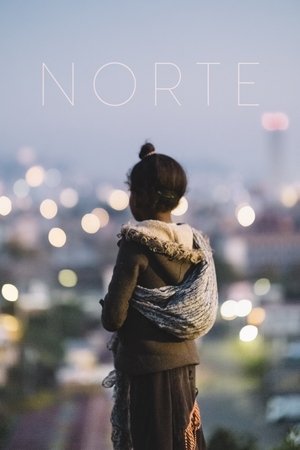
After four years away, Huiju returns home to South Korea. Exchanges with her loved ones are awkward and clumsy. Huiju turns once again to her familiar rituals: pruning the trees, preparing a sauce, tying a braid.
Norte
Homelessness in the United States takes many forms. For Elizabeth Herrera, David Lima and their four children, housing instability has meant moving between unsafe apartments, motels, relatives’ couches, shelters, the streets and their car. After 15 years of this uncertainty, the family moved into their first stable housing — an apartment in the San Francisco Bay Area — in the midst of the coronavirus pandemic.
Seven strangers are interviewed to talk about the relationship they have with their mother.
A group of educators led by Fernand Deligny are working to create contact with autistic children in a hamlet of the Cevennes.
7-year-old Sasha has always known that she is a girl. Sasha’s family has recently accepted her gender identity, embracing their daughter for who she truly is while working to confront outdated norms and find affirmation in a small community of rural France.
Nick and Michi roam the streets and meadows of their neighbourhood inseparably, but when Michi surprises Nick with unexpected news, they try to suppress it in their own way.
My Flesh and Blood is a 2003 documentary film by Jonathan Karsh chronicling a year in the life of the Tom family. The Tom family is notable as the mother, Susan, adopted eleven children, most of whom had serious disabilities or diseases. The film itself is notable for handling the sensitive subject matter in an unsentimental way that is more uplifting than one might expect.
Through divorce, adoption and second marriages, none of the children in the Van Wijk family have the same biological parents.
During the pandemic, living under an extreme right-wing government, filmmakers Bel Bechara and Sandro Serpa receive the news that would change their lives: there was a baby to be adopted.
In the remote village of El Echo that exists outside of time, the children care for the sheep and their elders. While the frost and drought punish the land, they learn to understand death, illness and love with each act, word and silence of their parents. A story about the echo of what clings to the soul, about the certainty of shelter provided by those around us, about rebellion and vertigo in the face of life. About growing up.
Documentary about the writer Thomas Verbogt and the creation of his latest work. The film shows how Verbogt takes a radical experience from his earliest childhood as the starting point for a novel. Drawn animations, combined with filmed scenes, depict how the writer's imagination sprouts from a literary character.
An unnamed passer-by is forced to trace a circular route inside an abandoned tram station, facing loss and time. The broken walls act as a channel, transmitting fragmentary, blurred and analogical memories.
Before leaving for Rome with his mother, five year old Natan is taken by his father, Jorge, on an epic journey to the pristine Chinchorro reef off the coast of Mexico. As they fish, swim, and sail the turquoise waters of the open sea, Natan discovers the beauty of his Mayan heritage and learns to live in harmony with life above and below the surface, as the bond between father and son grows stronger before their inevitable farewell.
We all carry hell with us. The filmmaker’s hell exists on a canvas, which he studied carefully in childhood. The mystical picture has many names: Circus, Hell, Game at the Arena. Decades later he finds the painting again. The film unravels as loose ponderings about the plight of being an artist and touches upon the filmmaker’s personal demons. Can he see the painting in a new light?
Little kids, big dreams and smashingly good music – Dixieland follows the amazing progress of four members of a Ukrainian children’s brass band from Kherson. Through steady practice under the wildest of conditions, Roman (12, trumpet), Polina (10, trombone, drums and many other instruments), Nikita (12, drums) and Nikita (14, piano) produce magical music with ancient, wobbly instruments. Not least due to their wit and good humor, they persevere together, helped along by their 80+-year-old conductor and a young teacher. These children of the post-Soviet provinces use American tunes to achieve their dream – to become someone in the world and make something of their lives, no matter how dire the circumstances. From the authors of an awards winning documentary film Ukrainian Sheriffs.
Pegah talks about Gholam, a man who’s not like her father, mother, uncles, or aunts, even though he’s always present at family gatherings. Gholam films these everyday scenes with his own camera. At the time, Pegah can’t imagine what the purpose of these films might be, but she’s happy to pose before the lens of this family friend, who she’s certainly very fond of.
Jackie Miller adopted her son, Scott, in the early 1970s. In 2008, Scott brought his mom to StoryCorps to ask her about that decision.
To My Birthmother...
Tells the story of five people from the last generation of Soviet children who were brought up behind the Iron Curtain. Just coming of age when the USSR collapsed, they witnessed the world of their childhood crumble and change beyond recognition. Through the lives of these former schoolmates, this intimate film reveals how they have adjusted to their post-Soviet reality in today's Moscow.