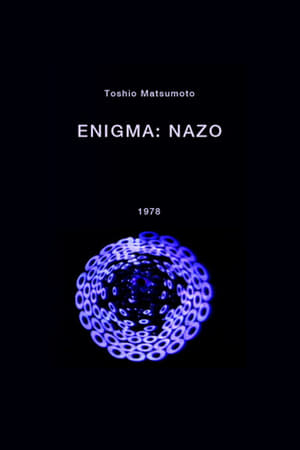
Enigma is something of a more glamorous version of White Hole, with a wide variety of elaborate textures (often composed of iconographic and religious symbols) converging towards the centre of the screen.
CGI collage short film originally premiered as part of the 'Extinction Renaissance' exhibition at the Loyal Gallery in Stockholm.
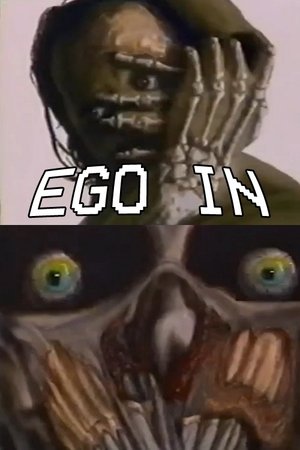
Autoportrait
Video art body horror short film.
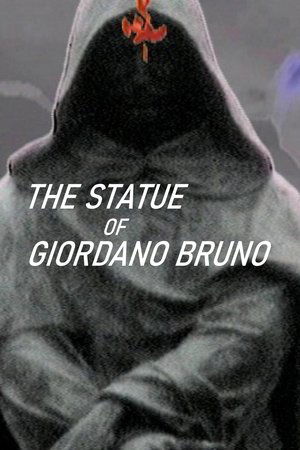
This film was made out of the capture of a live animation performance presented in Rome in January 2005 by Pierre Hébert and the musician Bob Ostertag. It is based on live action shooting done that same afternoon on the Campo dei Fiori where the philosopher Giordano Bruno was burned by the Inquisition in 1600. A commemorative statue was erected in the 19th century, that somberly dominate the market held everyday on the piazza. The film is about the resurgence of the past in this place where normal daily activities go on imperturbably. The capture of the performance was reworked, shortened and complemented with more studio performances.
Arbitrary Logic, an interactive audio-visual synthesiser was first presented under the working title Osnabruk at the Osnabruk festival of 1987 and later as part of an improvised and computer music performance with Keith Rowe at the London Filmmakers Cooperative, December 1989.
1980-81, 13:27 min, b&w, sound Videograms is an ongoing series of text/image constructs or syntaxes using the Rutt/Etra Scan Processor, a device that enables Hill to sculpt electronic forms on the screen. Each "videogram" relates literally or conceptually to Hill's accompanying spoken text, which is visually translated into abstract shapes. Hill writes, "The vocabulary and precision of this tool allowed me to expand the notion of an 'electronic linguistic' through textual narrative blocks created specifically for the electronic vocabulary inherent in the Rutt/Etra device."
Shows a couple (Adam and Eve) and various objects, simultaneously, in time, space and movement.
Abstract video art created in 1981. Music by Vibeke Sorensen and Walter Michael. Abstract video art created in 1981 at EUE Video in NYC.
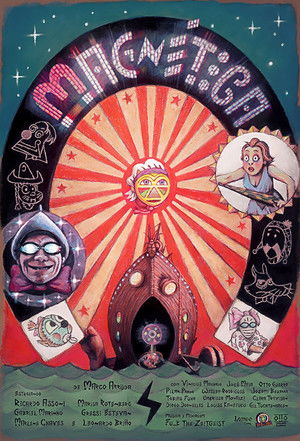
In a city inhabited by drawn beings, an indigenous boy witnesses a holographic appearance. It is the arrival of an entity of unknown materiality. With a mysterious presence and exotic allegories, it starts to enchant the residents, awakening their most insane senses.
"We are powerfully imprisoned by the terms in which we have been conducted to think.” - R. Buckminster Fuller
The term hysteresis soberly describes a processual behaviour where the previous history affects the result as much as new changes. Robert Seidel enters analogue drawings, performance footage of the queer dancer Tsuki and pluck sounds and drones by Oval into a feedback system that reorganises time and movement in a multicoloured and sensual organic tableau.
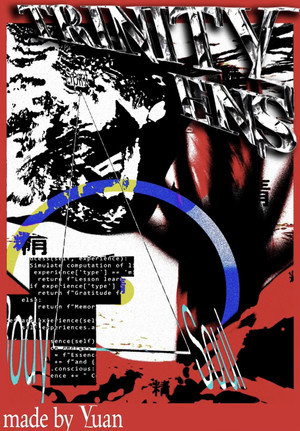
Trinity Ens is a video art piece representing a personal view of the body soul and spirit trough experimental visuals.
Short experimental video art by Barbara Sykes.
Part one of the two part abstract video art-piece, with music composed by Philip Glass and performed by the Kronos String Quartet.
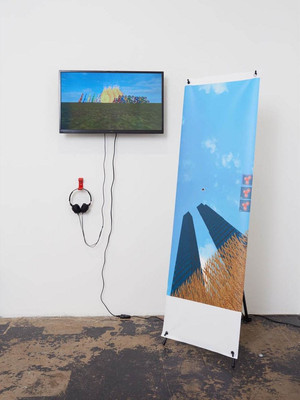
Orchids,… centers on an animated video in which Marten sets forth a sanitised and alluring world of free-floating and fragmentary objects. Excised from normal context and imbued with an impossible cosmetic sheen, these crystalline forms are conjured in colours that range from the surreally heightened to the deliberately banal. A line of toy-like objects – a train, a giraffe on wheels, a boat – trundles along on an impossibly turquoise plane. Parasitically followed by a swirling black fly, the unfolding narrative is one of production, consumption and saturation. Elsewhere, the naked human backside of the title (cropped and anonymous) is shown with a luridly-glowing orchid tucked between its buttocks. At points, the imagery takes on the semblance of a painting or diagram, both formulaic ‘analogues’ of reality, like the video itself, implying the knotty weight of a Cézanne still life.
“The faster you break it the faster we make it,” says the wooden column at one point, going on to acknowledge the bounteous economic logic of this reality with the observation that “production is sealed in gold.”Early on we see the black-and-white striped house Adolf Loos designed for Josephine Baker. It’s a cardboard model, of course; the plans were never realized. The house is an idea, an image, a virtual presence, a possibility, a provocation. Later in the film it reappears, reconfigured in different materials with a different range of qualities and surface finishes. “Why do so many things look the same, and only one of them is good?” asks a female voice. This is not the column’s voice but that of someone who sounds much like Marten herself. It is, in fact, her sister, one Marten speaking another Marten’s words. After all, in order to manufacture glamour, a little plagiarism is essential. And this process—call it borrowing, copying, paying homage, whatever—is both violent and comic.
For Ed Atkins, Marten’s "Evian Disease" embodies ‘flatness’ in all its weightlessness, emotional deficit and hollowness of representation. The fact that it’s completely unapologetic about it is what makes it a dangerous piece to his mind.
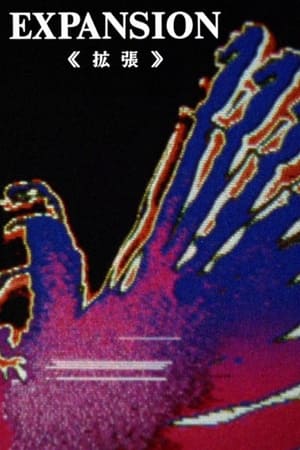
Expansion remixes the images of Matsumoto’s Esctasis into an more colourful psychedelic short.
Real time development of a video feedback, processed and controlled through a video keyer. Sound results from video signals, interfaced with audio synthesizer.