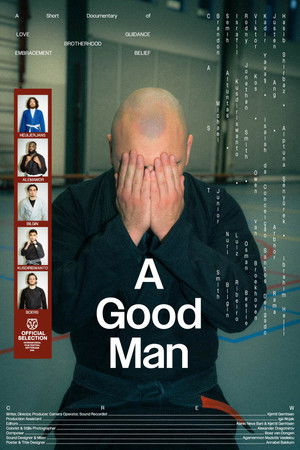
An exploration of masculinity through a close-knit Brazilian Jiu Jitsu community built on brotherhood and faith.
A journalist in Rotterdam has to show the city to an important foreign relation. He shows her the Rotterdam port.
A chronicle of prominent Dutch association football club Feyenoord's 75-year history, and its place at the heart of its namesake neighborhood on the south bank of Rotterdam, the largest seaport in Europe.
A look at Louis Van Gaal's eight year playing career for Sparta Rotterdam.
Rotterdam 2040 is a film about the city’s future, departing from the principle of Gyz La Rivière that you can’t look ahead without considering your past (something that hasn’t always been Rotterdam’s strongest feature). At high speed, La Rivière reconstructs the history of Rotterdam from the time before the bombings until now, and expands the developments to the year 2040 (100 years after the bombing and the 700th anniversary of the city). La Rivière made a specific choice to expose his personal vision, which is sometimes radical or a little absurd. So no experts and no talking heads, but an assault of old and new imagery, held together by La Rivière as the narrator of the film. Although Rotterdam 2040 deals with architecture and urban renewal, it is actually a film about people. The subjective experience of the city by its (future) occupants mainly determines the parade of architectural blunders and suggestions for the future. All tongue-in-cheek of course.
A look at the history of VVV-Venlo's stadium.
Sjaak and Clara founded the very first food bank in the Netherlands in 2002. Since handing over their responsibilities at the food bank, they have continued their mission unabated. They still run a soup kitchen and the Social Café Onder de Oranjeboom (Under the Orange Tree), where vulnerable members of society can find a hot meal, support, and a good conversation. For many years, this dedicated couple has been committed to helping people in Rotterdam living in poverty.
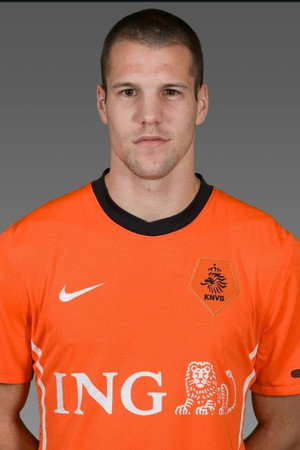
A retrospective of the career of dutch defender Ron Vlaar
Aston Villa footbal club visit the home town of their captain Ron Vlaar.
A look at the promotional clash between Sparta and Excelsior.
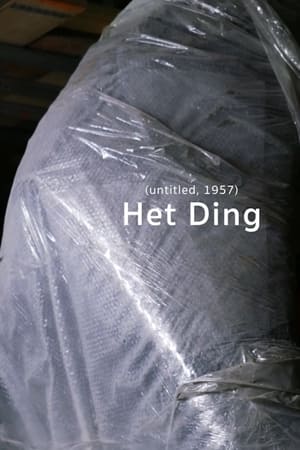
Next to the Bijenkorf on the Coolsingel stands one of Rotterdam’s most famous sculptures, an untitled structure created by Russian modernist artist Naum Gabo, that has been simply called Het Ding (The Thing). This documentary about the restoration of Naum Gabo’s nameless sculpture from 1957 combines awe-inspiring shots of this artwork with audio fragments from Gabo’s fiery Russian manifests.
A look back at the history of this traditional Dutch club.
A look at Go Ahead Eagle during the 2017-2018 season.
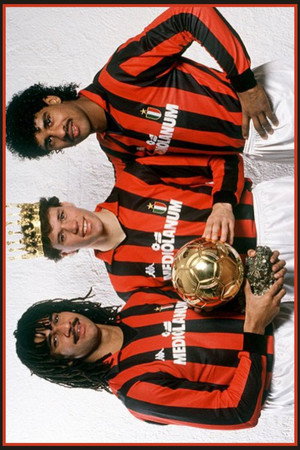
A 2003 documentary about the period of Marco van Basten, Ruud Gullit, and Frank Rijkaard at AC Milan.
A look at the careers of Bert van Marwijk and Barry Hughes at Go Ahead Eagles.
Captain - Orkun Kökçü
A look at the traditions of the oldest club in the Netherlands Sparta Rotterdam.
Shots of pre-war Rotterdam, both the city and the port.
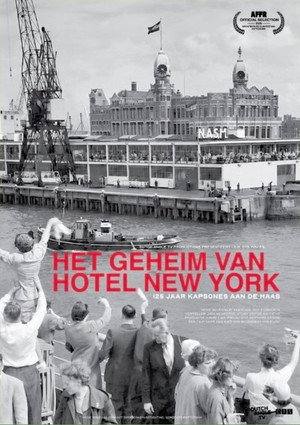
Few buildings tell the story of a city as vividly as Hotel New York does for Rotterdam. Originally constructed in 1901 as the headquarters of the Holland-America Line, this landmark building has witnessed over a century of commerce, migration, war, decline, and urban renewal. Drawing on a wealth of archival material and a diverse range of interviews, the film weaves together the personal accounts of those who knew the building from the inside with the historical evolution of Rotterdam as a port city. From an office building and squatted property to its eventual transformation into a hotel, "The Secret of Hotel New York" presents the story of an enduring symbol of Rotterdam’s capacity for reinvention.
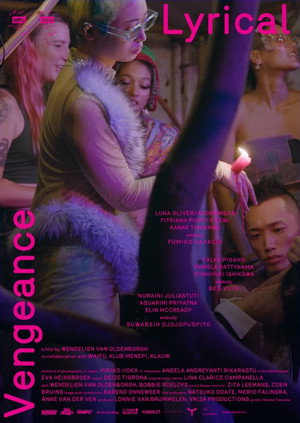
On crowded dance floors at queer club nights in Tokyo, Yogyakarta and Rotterdam, ravers celebrate the lives and works of Japanese author Fumiko Hayashi, Indonesian author Suwarsih Djojopuspito and Dutch-Indonesian author Beb Vuyk. These women challenged patriarchal and nationalist politics from the 1930s to the 1950s, a turbulent period marked by violence, war and decolonization. They wrote openly about sensitive subjects such as women’s labour, sex work and resistance to colonial and patriarchal oppression. Contemporary activists, artists and researchers engage with the authors’ literary legacies through collective reading, and performance. These local actors quote from the writers’ work and, through improvisation, enact how these women might have responded to complex situations. The writers’ artistic practice, activism and feminism resonate with the creative practices of today’s transnational queer community, connecting different ways of creating and claiming space.