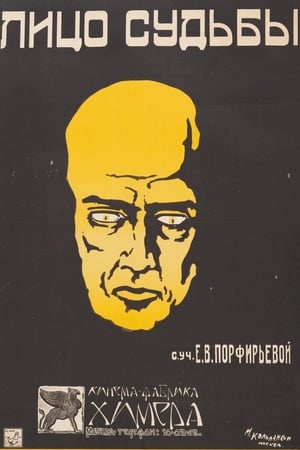
Satan
It’s the spring of 1945 in a small resort town on the Baltic. Günter is 16 and firmly believes that the Germans will win the war. During the hunt for a forced labourer who is on the run, Günter catches him and watches as he is shot to death. He proudly accepts the award of an Iron Cross before being shipped to the nearby front as part of the last contingent of troops. He is quickly captured by Soviet soldiers, but manages to escape and return home. When the town is occupied by the Red Army, Günter is arrested for the murder of the forced labourer. The film was banned in 1968 before it was completed, and a large portion of the negative was later destroyed.
A two-reel adaptation of Dante Alighieri's Inferno from the Divine Comedy by Helios Film. It is less well-known than the five-reel feature produced the same year by Milano Films, but it was released earlier in 1911.
Malchow, German Democratic Republic, 1980. 20-year-old Anne is hiding Juri, a deserter of the Red Army. The two fall in love with each other. But their love is threatened: there is an arrest warrant and possibly a death sentence waiting for Juri. The two leave the country and flee to the West, leaving Anne’s six-month-old daughter Inga behind. Inga grows up with her grandparents and thinks that her mother died during a swimming accident. 25 years later she meets the literature professor Robert, who sends her on the trail of her past. He met Inga’s mother Anne during one of his seminars. At first Inga is resistant, but then she asks for Robert’s help. Together they take off on a journey through Germany, in search of Inga’s mother Anne...
This 1919 silent is the first American film based on the same Sholem Aleichem stories as Fiddler on the Roof, but produced 50 years before the blockbuster musical. Unlike most adaptations of Aleichem’s work, Broken Barriers (Khavah) focuses not on Tevye the milkman, but on his daughter Khavah, who falls in love with the gentile boy Fedka and must navigate the reverberations from this with both her community and her family.
Japanese silent film.
An entire city has lost its voice. Mr. TV, the owner of the city's only television channel, is carrying out a sinister plan to control all of the city's inhabitants.
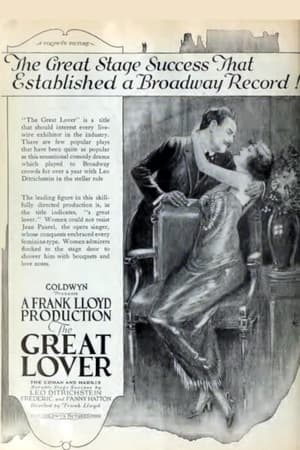
A Woman's Business
Set during the 1939–1940 Winter War, the film follows a group of young women from Leningrad who volunteer for service at the front. Working as nurses in hospitals and on the battlefield, they devote themselves to saving the lives of wounded soldiers, while also taking up arms alongside the men in combat. Through hardship and sacrifice, their courage forges bonds of friendship and love that endure amid the trials of war.
A petty thief who robs the very rich at speakeasies, and gets away with it because the rich don't want the bad publicity, is finally caught and sent to Sing Sing. After good behavior, he gets an emergency permission for a return home, so that he may save his daughter from the hands of her disreputable mother. However, he must first promise not to kill his wife while he is out of prison.
Young Cabiria is kidnapped by pirates and sold as a slave in Carthage. Just as she's to be sacrificed to Moloch, Cabiria is rescued by Fulvius Axilla, a good-hearted Roman spy, and his powerful slave, Maciste. The trio are broken up as Cabiria is entrusted to a woman of noble birth. With Cabiria's fate unknown, Maciste punished for his heroism, and Fulvius sent away to fight for Rome, is there any hope of our heroes reuniting?
The question is, would the young tramp really have fallen in love with the groceryman's daughter if he had not caught her in the heart struggle? Be that as it may, she could not find it in her to drown the unwelcome visitor to the pantry, so she let it go and the silent little drama witnessed by the tramp greatly impressed him. Not so the strict aunt, she declared the whole thing to be in exact accordance with everything else in the family. Their hearts ran away with their heads. That was why they lost money on credit, could not pay off the mortgage and send the sick sister to a better climate. As for the tramp, they had no business to take him in. He could not pay for his keep. But the tramp surprised them all.
Two brothers compete for the love of a woman while the impending war threatens to separate them from both sides of the border. Based on the novel "La Débâcle" by Émile Zola.
John Stonehouse (William Russell) checks into a hotel, intending to commit suicide. But instead he winds up helping a girl, Gilberte Bonheur (Fritzi Brunette), out of a jam. He finds her bending over a man who she has apparently killed, and since he's about to kill himself anyway, he offers to assume the blame. Throw a valuable emerald into the works, and the fact that the dead man suddenly comes back to life, and Stonehouse -- not to mention the audience -- becomes thoroughly befuddled by it all. Everything clears up, however, when Gilberte gives him a theater ticket -- it turns out that everything he went through was the plot to a stage play, enacted in real life by the actors. The critics roasted the play, saying it wasn't true to life, and this was their proof that the situations really could happen. Gilberte retires from acting when Stonehouse proposes.
After the train station clerk is assaulted and left bound and gagged, then the departing train and its passengers robbed, a posse goes in hot pursuit of the fleeing bandits.
The film consists of a series of tightly interlinked vignettes, the most sustained of which details the story of a man and a woman who are passionately in love. Their attempts to consummate their passion are constantly thwarted, by their families, by the Church and bourgeois society in general.
A Japanese merchant attempts to drive one of his rivals mad by impersonating a man he had once murdered.
An aging doorman, after being fired from his prestigious job at a luxurious hotel, is forced to face the scorn of his friends, neighbours and society.
Lost Croatian silent film.
A silent film about a sorrowful man who's searching for a buyer for his goods and acceptance for his existence.