Set in 1973 Spain, a struggling encyclopedia salesman and his wife take advantage of an offer to make adult films. The act turns him into an aspring legit filmmaker and her into an international sex symbol.
In 1948, French singer Charles Aznavour (1924-2018) receives a Paillard Bolex, his first camera. Until 1982, he will shoot hours of footage, his filmed diary. Wherever he goes, he carries his camera with him. He films his life and lives as he films: places, moments, friends, loves, misfortunes.
ca. 1980-81, 4 min, Super-8mm. "In Blue Aura, a man and woman are asleep in bed. The dream begins with a crudely made, whirling paper spiral and the woman is twirled out of bed to her strange mission. The man remains in his own unconscious ritual, looking like a Byzantine saint in face and form. The sheets rise to either side of him in stylized drapes and fall across his body in curving pleats. The dream continues and the man joins the woman, but as if in a separate dream of his own. The film ends but the dream does not seem to; the man and woman are trapped in this half-life and dream on." — Barbara Sharres, "Trance Occurrences," Chicago Reader, January 15 1982.
Hieronymus Rivera, a strong force in the New York fashion underground, is offered the deal of a lifetime by Cecilia Meadows, a government official who is the head of a new secret program called DAFTCA. What begins as a simple agreement to design uniforms for the organization, soon finds Hieronymus in the center of a vast web of conspiracy.
A traumatized cheer captain races to stop a masked killer and the new tourist attraction aimed to exploit her tragedy from a year earlier.
A group of punks steal weapons from a military base.
Eerie images of landscapes after the Fukushima nuclear disaster shot on black and white 8mm.
Loosely based on an infamous 1984 Long Island murder case involving Satan-worshiping, teenage drug freaks (Knights of the Black Circle), David Wojnarowicz and Tommy Turner’s Where Evil Dwells is a low-budget D.I.Y. movie that walks the jagged lines between splatter flick, experimental film and transgressive art. The original footage was destroyed in a fire and the only footage that survived is this 28 minute preview that was put together for the Downtown New York Film Festival in 1985.
O COCO
Thurston Moore, Kim Gordon, and Lou Reed roam the streets of Los Angeles searching for James Woods.
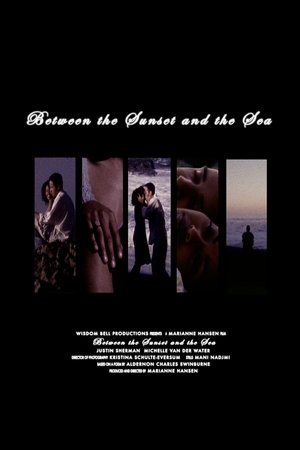
On the beach at sunset a man waits for his one true love. When she arrives, a bittersweet romance ensues.
In late 1970s Ohio, a group of friends filming a homemade zombie movie witness a devastating train derailment. Soon after, their quiet town is gripped by unexplained disappearances, strange phenomena, and a growing sense of fear, as they uncover that something terrifying has been set loose.
Lost Boundaries is comprised of footage shot by Julien on location, in England in the summer of 1985, during the making of the Sankofa film and video collective's first experimental feature film The Passion of Remembrance (1986), which he co-directed with Maureen Blackwood, another member of the collective. In recapturing those moment Lost Boundaries both deconstructs and foregrounds the means of 16mm film production while weaving together a fragile community of Black artists and actors who came to prominence at a time when debates in film theory - such as those of the Screen film journal and of "third cinema" discourses where cinema was intertwined within (Brechtian) filmmaking practices - were at the forefront of forging a new politics of artistic representation. A Black avant-garde.
A documentation of the year of high school of 1970 to 1971 for students and teachers alike at the St. Mark prep-school community, from the 'weird drama and film students', to the most infamous teachers of the year like Mr. Burns and Mr. Whatley, along with many references to music and film of interest at the time; Consistently from the perspective of an intrusive senior, according to Mr. Whatley, "had the worst case of senioritis he had ever seen." Shot entirely in Super-8, narrated by the director.
Trance dances and out of body projection. In front of the camera, Parvaneh Navaï becomes a mediator who enters in contact with and immerses into the energies of Nature, while her own energy radiates and echos in the forest ("selva"). The camera amplifies and expands her presence, transforming the forest into an imaginary space. The camera becomes a painter's brush.
A sunny day at the park becomes a duel to the death when two lemonade sellers turn to guerrilla warfare in a battle for customers.
This is Poe and Král's first effort, shot on small-gauge stock, before their more well-known endeavor The Blank Generation (1976) came to be. A "DIY" portrait of the New York music scene, the film is a patchwork of footage of numerous rock acts performing live, at venues like Madison Square Garden, Radio City Music Hall, the dive bars of Greenwich Village and, of course, CBGB.
Made for straight 8's 2019 competition on one cartridge of super 8mm film with only in-camera edits and no post-production. This film follows two naked people who meet at a café, fall in love, and decide to dress each other in clothes.
SONG 1: Portrait of a lady (the Songs are a cycle of silent color 8mm films by the American experimental filmmaker Stan Brakhage produced from 1964 to 1969).
SONG 4: Three girls playing with a ball. Hand painted (the Songs are a cycle of silent color 8mm films by the American experimental filmmaker Stan Brakhage produced from 1964 to 1969).