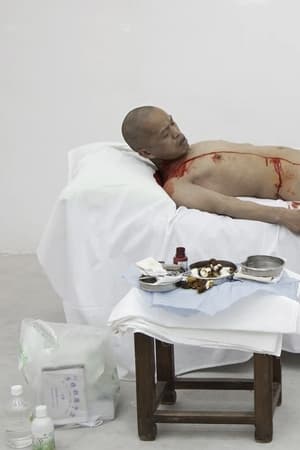
One Meter of Democracy (2010) challenged the endurance of viewers, as well as the courage of the artist. In a quasi-democratic process, He Yunchang invited approximately 20 friends to vote in a secret ballot on whether he should have a surgeon cut a one metre incision the length of his body, from collar bone to knee, without anaesthesia. The vote was carried by a narrow majority, with several abstaining. The performance was documented in video and photographs that reveal the emotional cost of witnessing this gruelling event. This work, sometimes also known as ‘Asking the Tiger for its Skin’ was also staged on a symbolic date: 10 October 2010 was the 99th anniversary of the Wuchang uprising and the Xinhai Revolution which led to the fall of the Qing Dynasty and the establishment of the Republic of China. The final image shows the group with sombre, shocked faces.
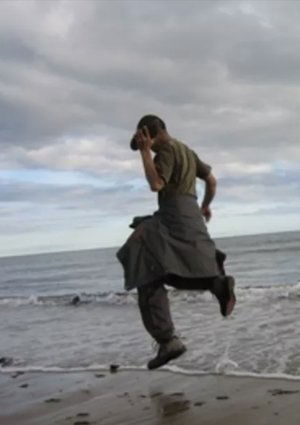
The Rock Touring Around Great Britain is a performance piece by Chinese artist He Yunchang that involved a walking circumambulation of Great Britain from September 23, 2006 to June 14, 2007. Starting from the hamlet of Rock, Northumberland, the artist walked to the nearby town of Boulmer where he selected a rock which he then carried counterclockwise until he returned it to the precise location from which it was taken. As the artist commented, the work was primarily "an attempt to represent the iron will of an individual and the living conditions of his being with simple and pure methods."
A collaboration between filmmaker Ayoka Chenzira and performance artist Thomas Pinnock, who performs his "immigrant folktales" using traditional lore of his native Jamaica to dramatize his migration to New York in the 60's.
As Cirque du Soleil reboots its flagship production, O, more than a year after an abrupt shutdown, performers and crew members face uncertainty as they work to return to their world-class standards in time for the (re)opening night in Las Vegas. With unfettered access, filmmaker Dawn Porter captures the dramatic journey of the world's most famous circus act on its way back from the brink.
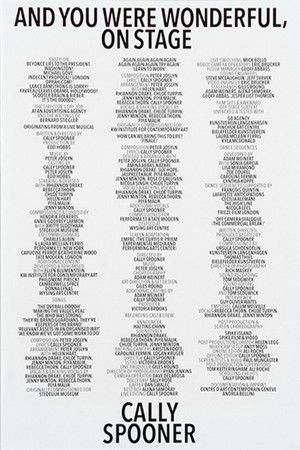
An immersive film installation by Cally Spooner. In this work, a musical for six continuously rolling cameras, a black box soundstage and its inhabitants, are recorded in a single take. The mechanics of the shoot (cameras, microphones, mixing boards, chromakey screens and crew) remain as present as the performers they capture. Cast and crew become a constant-motion human backdrop, pragmatically recomposing scene-changes through lighting cues, voice, body movement, or continuous shifts of filmic apparatus and props. The semblance of a post-production edit arrives through the organisation and orchestration of bodies on set. Delivered by a chorus line of women, the film gossips about various celebrities, athletes and politicians who have outsourced their performances to different technologies.
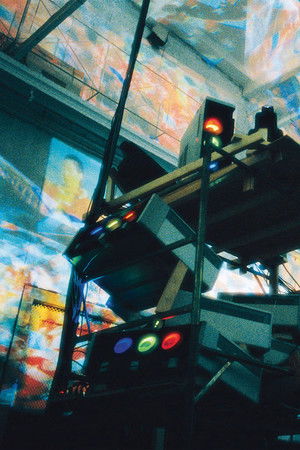
Sistine Chapel is an audio-visual collage of new footage and samples from Paik’s past videos, which featured many of his friends, collaborators, and public figures. It was Paik’s own way of summarizing his artistic career with video. The film installation consists of fast-paced and overlapping images that completely cover the gallery walls and ceiling—one of the most under-appreciated parts of architecture, according to Paik. With its electronic visuals and booming audio, interspersed with periods of silence, the immersive installation stands in stark contrast to the experience of its namesake.
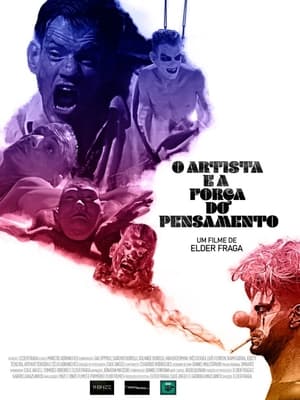
THE ARTIST AND THE FORCE OF THOUGHT, reflects the relationship between balance and imbalance within the partiality of movement of the dancer Marcos Abranches. It oscillates the body to wake up from the emptiness and isolation caused by the imbalance. The movement's lack of aesthetics is felt by abandonment and rejection, understanding that relief is in the support of love. Investigating body movement in a world without anguish, without pain, without despair. Search for life. Find in dance the balance of the body and the beauty of the soul.
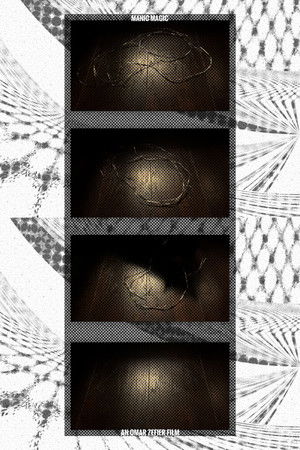
A poem about mania written by Omar Zefier. His second film.
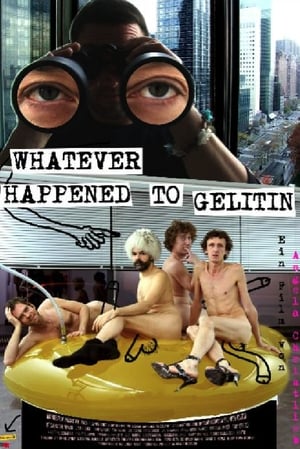
Art dealer Salvatore Viviano and director Angela Christlieb embark on a search for the lost artist collective Gelitin, which since the 1990s has shattered the borders of "good taste" again and again with extravagant actions and installations. Interviews with old companions and artist friends in the U.S., Europe, and Asia are linked with anarchically montaged Gelitin archive material: intense, transgressive, experimental, gaudily colorful, funny, and virulent.
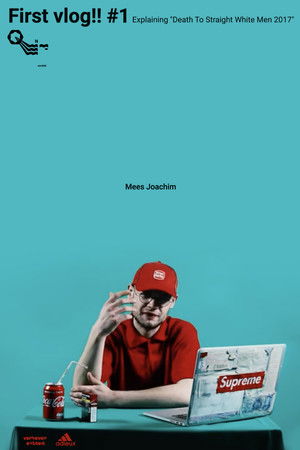
A short mock-vlog film explaining and defending the concepts behind the fictional 'Death To Straight White Men 2017' clothing brand. Edited in a way that mocked the trends of Youtube vlogging and apology-videos of the time, including sound effects and interjected fast-moving graphics. "After QnWF-société received an overwhelming amount of negative feedback following the launch of their 'Death To Straight White Men 2017' clothing brand, their CEO felt the need to create an apology video of sorts - explaining and defending the concepts behind their latest line of clothing."
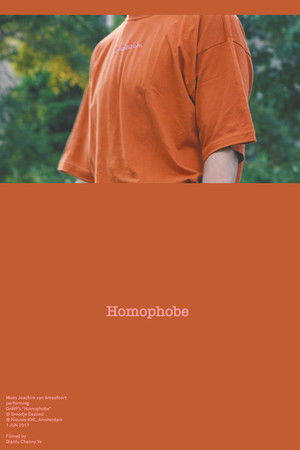
Performance documentation of Mees Joachim's 'Homophobe', a 10 minute live-reenactment of a scene from 'E Kolór Korrá' (2017). A juxtaposition performed as minimally as possible. A destructively interpretive dance, literally shattering bones whilst forcefully dropping on the ground. A pre-cursor to their 'The Scaphoid Fracture' (2017) performance.
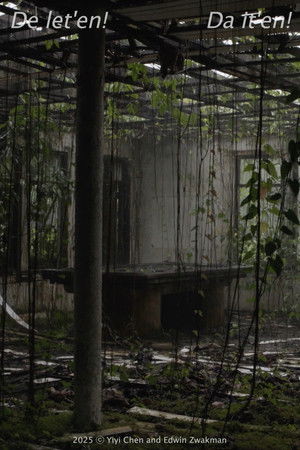
A meditative depiction of a colonial villa in Mungo, Surinam, taken back by nature.
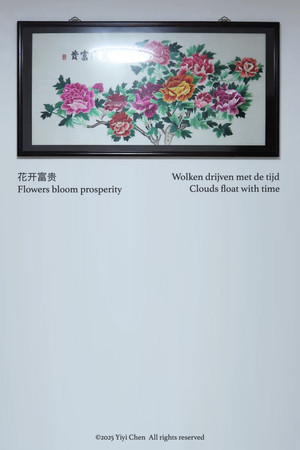
A three-screen video installation juxtaposing the Dutch sky, the artist's grandparents' apartment, and the cityscape of Changsha.
What begins as a spatially abstract, weightless situation transforms into a mediation of geography, culture, and history. Filmed transcontinentally between Singapore and The Netherlands, Control emphasizes the idiosyncratic texture of a common, fragmented consciousness.
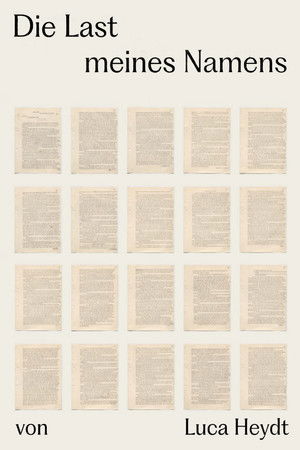
2-channel film installation 'Die Last meines Namens', wherein Heydt deals with an unpleasant part of his own family history. Heydt’s great-grandfather was a member of the NSDAP and mayor of the small town of Haselünne in Emsland for almost 10 years during the Third Reich. Based on interviews with his grandfather and research in various archives, Heydt develops a personal perspective on the subject. The film deals with how we construct identity from oral retellings, how we process family histories, and how we can find current and personal points of access to German remembrance culture. At the heart of the work are two conversations with his grandfather Heinrich Heydt, recorded at different points in the research process. In them, the grandfather describes his memories of his father, the time, and the two reflect on the subject and the results of the research.
"Water reflections are never static, its fluid form constantly plays with the light in new and totally unique ways. Trying to capture this process naturally leads to an imperfect representation. Embracing this, ‘a puddle of water held in shape by my thoughts’ plays with the materiality of the digital image with the border between digital grain and the movement of the water constantly blurring. This ongoing research project consists of clips recorded over the last two years. - During the Leaving Space exhibition (2024) the work was presented as an installation using an old LCD screen, a wash-stool and other spacial elements. The space where the screen was installed could only be observed from the outside through the glass doors but not entered.
"Inspired by my countless walks in the Middelpolder, the video mirrors my text ‘Dream of a Dutch Sky’, unfolding the Dutch landscape through three different perspectives: the camera’s , the protagonist’s and the plane’s, capturing a wanderer’s stroll."
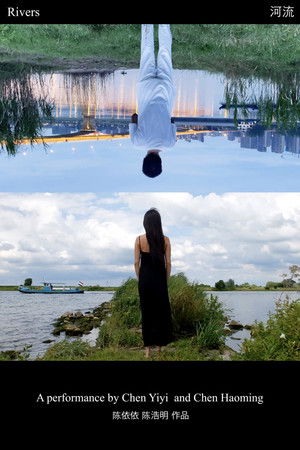
"The river Lek reminded me of the river Xiang in my hometown Changsha. I had not been home for 3 years and one of the connections with home was the poems my dad wrote me every day via WeChat. The rivers seemed equally significant for the people in the Netherlands and in Changsha. They are both a romantic connection and an important symbol of daily trade and industry. In a Wechat session my father and I simultaneously read three pairs of poems we wrote for this occasion, he by the Xiang and I by the Lek. Giving the words to the waters that ultimately will meet somewhere in the ocean. The video shows fragments of the performance which took place at the same time in Changsha and Culemborg in June. The full-length documentation is presented as a dual-screen video installation. The three poems written by me can be found on the page "Writing"."
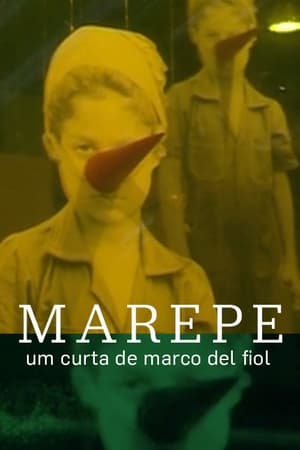
Marepe, an artist from Bahia, produces art with anything he comes across in the town he lives in, Santo Antônio de Jesus. Packs of cigarettes, coconut palms, walls, and memories taken from the streets, go into putting together a personal archeology for this young artist.
A silent experimental film, originally made in accompaniment to Josephine Zwaan's '1/4' album release presentation in 2016. The film sees musician Josephine Zwaan persist through a test of endurance, with the foundation of the film being a one-take of her staring deeply into the lens of the camera, haphazardly overlayed and re-framed by graphical elements color-matched to the album's artwork.