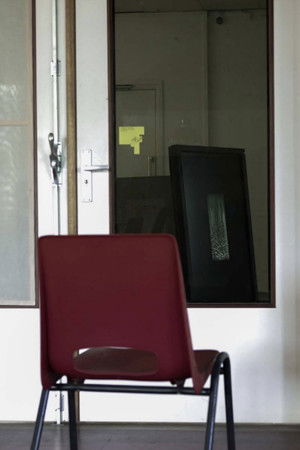
A ritual of grids, reflections and chasms; a complete state of entropy; a space that devours itself; a vertigo that destroys the gravity of the Earth; a trap that captures us inside the voids of the screen of light: «That blank arena wherein converge at once the hundred spaces» (Hollis Frampton).
WINHANGANHA (Wiradjuri language: Remember, know, think) - is a lyrical journey of archival footage and sound, poetry and original composition. It is an examination of how archives and the legacies of collection affect First Nations people and wider Australia, told through the lens of acclaimed Wiradjuri artist, Jazz Money.
A generational trauma through the lens of an Asian American teenager through food and poetry.
what was the last dream you had?
Aida Ra Mana invites you to explore a sci-fi universe set in the year 2044. In this imagined future, the story revolves around three aliens whose deep friendship unfolds in a world dominated by military rule and stringent restrictions. Through this work, Aida Ra Mana poses profound questions about resilience and the human spirit. How do we create joy and humor when faced with pervasive limitations and diminished opportunities? What does it mean to nurture friendship and creativity in an environment where one must constantly conceal their magic and beliefs from an authoritarian regime? By blending elements of science fiction with poignant social commentary, Aida Ra Mana's universe serves as a mirror to our own society's challenges and a testament to the enduring power of joy and laughter in the face of adversity.
‘Objects of War’ is a series of testimonials on the Lebanese war. Each person chooses an object, ordinary or unusual, which serves as a starting point for his / her story. These testimonials while helping to create a collective memory, also show the impossibility of telling a single History of this war. Only fragments of this History are recounted here, held as truth by those expressing them. In ‘Objects of War’, the aim is not to reveal a truth but rather to gather and confront many diverse versions and discourses on the subject. ‘Objects of War’ started in 1999 assembling the testimonials of eleven persons. It was first shown in 2000 . It continued in 2003 with ‘Objects of War n°2’, recording seven additional testimonials. This time however, and since then, the recorded material is left unedited, shown in its integrity. The work of collecting and assembling these stories continued with ‘Objects of War n°3 & n°4’ in 2006 and ‘n°5 & 6’ in 2014.
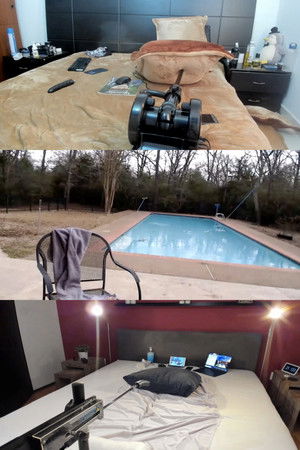
A 'very intellectual' dirty talk on online sex work and a remix of 23-different-sources on the lookout for the answer to 'What happens to violence when you are not looking at it?' In this new work, EMIRHAKIN traces the parabola of performativity and gauges the unequal distances of labor in performance art and webcam performances from the focus point of body politics.
'Afloat' is an experimental film that paints a portrait of Japanese performance artist: Ayumi Lanoire. The film opens as a telephone call between Ayumi and Person X, which meanders the audience through the various layers that make up her personas leading one to wonder whether she is in fact a myth or reality.
A poem about mania written by Omar Zefier. His second film.
A silent experimental film, originally made in accompaniment to Josephine Zwaan's '1/4' album release presentation in 2016. The film sees musician Josephine Zwaan persist through a test of endurance, with the foundation of the film being a one-take of her staring deeply into the lens of the camera, haphazardly overlayed and re-framed by graphical elements color-matched to the album's artwork.
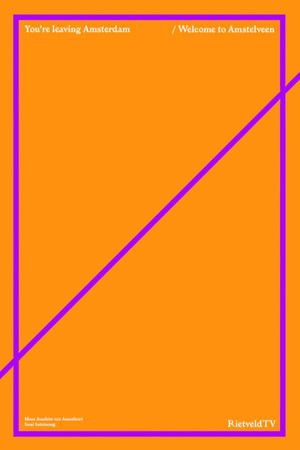
A short documentary film functioning as the introduction to the One Minutes x Inter-Architecture Department (Gerrit Rietveld Academy) short-film broadcast episode for Rietveld TV, as aired on SALTO. This broadcast was meant to give an artistic impression of a communal art-project developed by the Inter-Architecture Department for the municipality of Amstelveen, The Netherlands. This short documentary film introduces each duo placed and posing at their respective project-based locations, spread out over Amstelveen, through purposely awkward still-but-moving vignettes. The duo's are reintroduced several times in quick succession, with each consecutive appearance showing more of an awkward inter-personality, meant to evoke a certain liminal playfulness. An overpass, a bridge, a bridge-barrier, a docking port, the border between Amsterdam and Amstelveen, the edges of Amsterdamse Bos, an abandoned railroad.
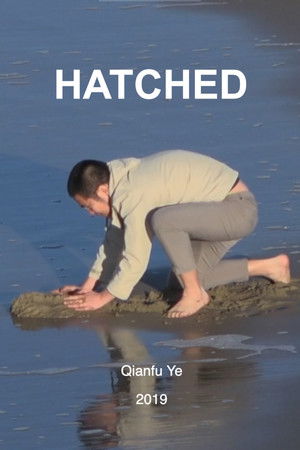
A recently hatched turtle, made of sand and by hand, returns to the sea.
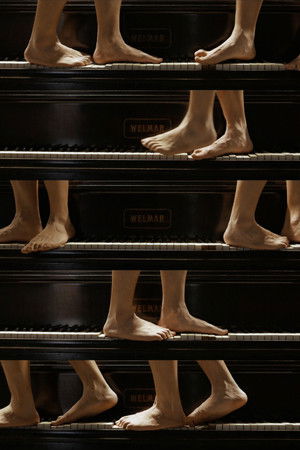
An experimental short where one's footsteps create sound on a piano, creaks and all.
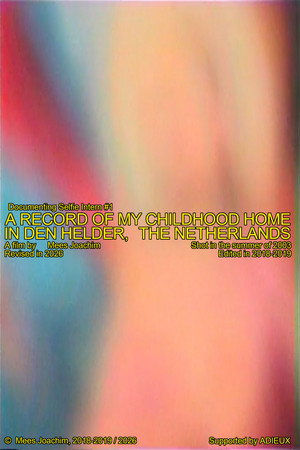
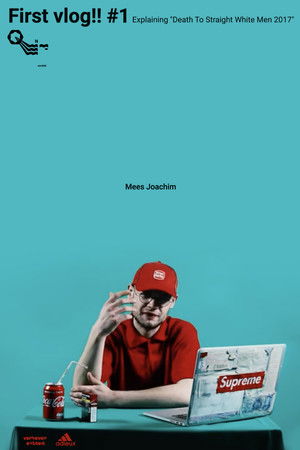
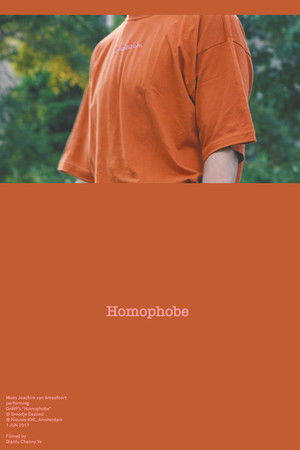
A short documentary film made up of archival footage shot in 2003, which was reworked and edited in 2018-2019. The film shows a haphazardly shot, fragmented property viewing and inventarisation through the eyes of a child, featuring a voice over by that same child. Because of having unrestricted access to their family’s camcorder as a child, there were a few instances where the artist's child form had shot ‘full length’ documentary films - with this documentary short being one of those instances. Often these documentations were a call for seeking comfort in a new surrounding, stemming from a deep fear of being forgotten or unheard, and a playful way of documenting one’s thoughts and feelings. In many ways the artist, Mees Joachim, was the original vlogger, before the advent of Youtube.
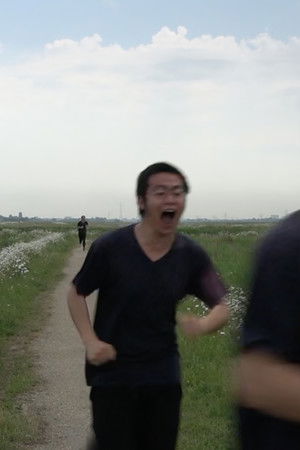
A peaceful path with grass along the sides is disturbed by a man that is running and screaming.
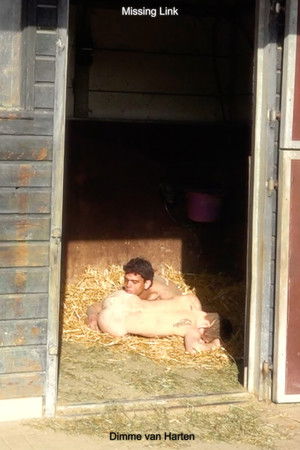
"Encouraged by a special encounter between myself and an animal, my research into the “humanimal” began. This is a performative exploration reflecting on the place of animals and humans in their changing relationships throughout time. The research spans from topics like the cohabitation of different human species, the prehuman, the posthuman, to domestication and the numerous animal watching webcams found in zoos and online. Missing Link reflects on the intimacy between the species and how it can be expressed through movement here and now. "
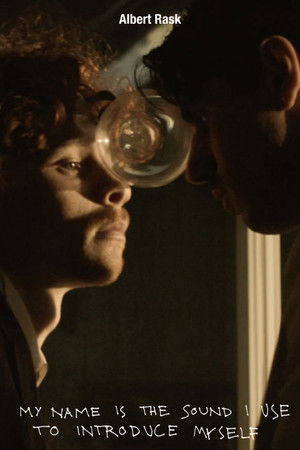
A group of young men waltz in pairs, balancing with a glass between their foreheads. In this captivating setting, director Albert Rask crafts a new code of conduct - an allegory reflecting the experience of growing up. A playful yet poignant exploration that reframes the burdens of responsibility, expectations and the rules of adulthood.
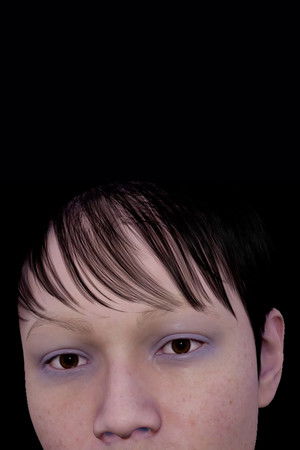
The Concrete Road is a three-channel installation work which was premiered during the Graduation Show 2021 at Gerrit Rietveld Academie. "Landscape shifts, unmodernised desires. This is a story comprising three avatars of myself talking to and interviewing each other, reflecting on memories and weaving a path on coming of age. Sticky childhood memory which never fades. Loosely fitted gender/racial identity struts in juvenile cravings. Self-loathing, negation of the past, and his frowning parents. The tyranny of modernism leaves a leaky path for the protagonist to escape and slobber in a dream of wet summer night. My highest appreciation towards Bertien van Manen, who not only provides images on memory bubbles, but also her images help me to develop the initial script for this work."
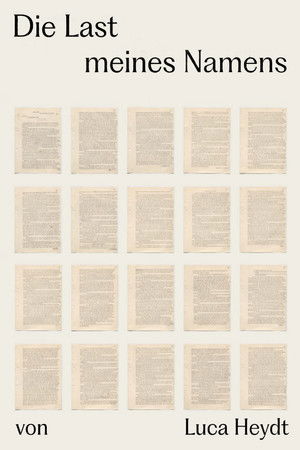
2-channel film installation 'Die Last meines Namens', wherein Heydt deals with an unpleasant part of his own family history. Heydt’s great-grandfather was a member of the NSDAP and mayor of the small town of Haselünne in Emsland for almost 10 years during the Third Reich. Based on interviews with his grandfather and research in various archives, Heydt develops a personal perspective on the subject. The film deals with how we construct identity from oral retellings, how we process family histories, and how we can find current and personal points of access to German remembrance culture. At the heart of the work are two conversations with his grandfather Heinrich Heydt, recorded at different points in the research process. In them, the grandfather describes his memories of his father, the time, and the two reflect on the subject and the results of the research.
"Water reflections are never static, its fluid form constantly plays with the light in new and totally unique ways. Trying to capture this process naturally leads to an imperfect representation. Embracing this, ‘a puddle of water held in shape by my thoughts’ plays with the materiality of the digital image with the border between digital grain and the movement of the water constantly blurring. This ongoing research project consists of clips recorded over the last two years. - During the Leaving Space exhibition (2024) the work was presented as an installation using an old LCD screen, a wash-stool and other spacial elements. The space where the screen was installed could only be observed from the outside through the glass doors but not entered.