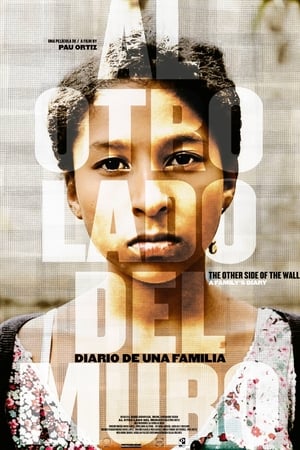
"Take my love" is a documentary film about "Las Patronas", a group of women who daily cook, pack and throw food to the migrants riding the "Beast" train.
Behind the scenes of a popular deli on New York's Upper East Side, undocumented immigrant workers face sublegal wages, dangerous machinery, and abusive managers. Mild-mannered sandwich maker Mahoma López has never been interested in politics, but in Jan. 2012, he convinces a small group of his co-workers to fight back. Risking deportation and the loss of livelihood, the workers team up with a diverse crew of innovative young organizers and take the unusual step of forming an independent union, launching themselves on a journey that will test the limits of their resolve. In one rollercoaster year, they must overcome a shocking betrayal and a two month lockout. Lawyers will battle in backroom negotiations, Occupy Wall Street protesters will take over the restaurant, and a picket line will divide the neighborhood. If they can win a contract, it will set a historic precedent for low-wage workers across the country. But whatever happens, Mahoma and his compañeros won't be exploited again.
It is winter at an emergency shelter for the homeless in Lausanne. Every night at the door of this little-known basement facility the same entry ritual takes place, resulting in confrontations which can sometimes turn violent. Those on duty at the shelter have the difficult task of “triaging the poor”: the women and children first, then the men. Although the total capacity at the shelter is 100, only 50 “chosen ones” will be admitted inside and granted a warm meal and a bed. The others know it will be a long night.
Mirage à l'italienne
A surprising look at the past of movie star Jackie Chan and the difficulties of Chinese families during the Culture Revolution.
The little-known story of Ukrainian children torn from their homes in the crush between the Nazi and Soviet fronts in World War II. Spending their childhood as refugees in Europe, these inspiring individuals later immigrated to the United States, creating new homes and communities through their grit, faith and deep belief in the importance of preserving culture.
Targeted for several failed redevelopment plans dating back to the days of Robert Moses, Willets Point, a gritty area in New York City known as the “Iron Triangle,” is the home of hundreds of immigrant-run, auto repair shops that thrive despite a lack of municipal infrastructure support. During the last year of the Bloomberg Administration, NYC’s government advanced plans for a “dynamic” high-end entertainment district that would completely wipe out this historic industrial core. The year is 2013, and the workers of Willets Point are racing against the clock to forestall their impending eviction. Their story launches an investigation into New York City’s history as the front line of deindustrialization, urban renewal, and gentrification.
One night, nine children from the same Tunisian village attempt the deadly crossing. Like a poem or a prayer, this film welcomes the words of bereaved mothers and gives dignity to their grief.
The story of the children who work 12-14 hour days in the fields without the protection of child labor laws. These children are not toiling in the fields in some far away land. They are working in America.
Oldemors reise
Between 1990 and 1993, at a time when rap was not yet on the radio in France, Olivier Cachin hosted a musical TV show on M6 called "RapLine". The show exclusively devoted to rap and other alternative music. This cult show presented all the facets of these emerging movements through interviews, lives and clips made especially for the show, around fifty clips were produced by RapLine. Another sequence of the show consisted of broadcasting new US rap clips subtitled in French.
As a letter to her son, the filmmaker testifies her experience as a photographer aboard the Aquarius, a ship that rescued 29,523 people in the Mediterranean between 2016 and 2018.
An exploration of immigration in Britain over the half century since Conservative MP Enoch Powell made his controversial speech. Issues surrounding race, religion, integration and multiculturalism are examined.
Football is both the place, the crystallization of sporting passion and the witness of identity imaginations. It is also an interesting and relevant area for discussing the migration issue. From the 1930s to the present day, football, notably with the composition of the French team, has reflected the plurality of the French population. Raymond Kopa, Michel Platini, Zinedine Zidane, Basile Boli... these four footballers alone illustrate the four major waves of immigration that France has experienced.
Two top baseball prospects in the Dominican Republic face fierce competition and corruption as they chase their big league dreams.
The documentary follows the life of Farroukh, a young Tajik immigrant who lives in Moscow outskirts with his family and does odd jobs in dreams of becoming an actor.
Boys on Film presents ten encounters from across the globe, where the dangerous allure of a risky attraction yields emotional results — proving that the age-old adage of taking the plunge is as relevant — and sexy — as ever before. The 10 short films are: My Uncle's Friend [O Amigo do Meu Tio] (2021); Budapest, Closed City [Budapest, zárt város] (2021); Eden (2020); Chaperone (2022); Break Me [Knus meg] (2018); By His Will [שעשני כרצונו] (2021); Red Ants Bite (2019); Jim (2022); Hornbeam (2022); Too Rough (2022).
Narratives of Modern Genocide challenges the audience to experience first-person accounts of survivors of genocide. Sichan Siv and Gilbert Tuhabonye share how they escaped the killing fields of Cambodia, and the massacre of school children in Burundi. Mixing haunting animation, and expert context the film confronts our notion that the holocaust was the last genocide.
A poetic retelling of the experiences of Joseph Murakami, a fourteen-year-old boy from Darwin, who is summarily rounded up and interned by his government on the basis of his ethnicity, leaving wounds unhealed to this day.
As a Palestinian refugee, Ahmad escaped from Lebanon to Germany 40 years ago. In a conservative and strict way, he raises his six children in Berlin Neukölln. His oldest son, the filmmaker, talks to his father, interviews his siblings and tries to understand how war, escape and exile affect a human being.