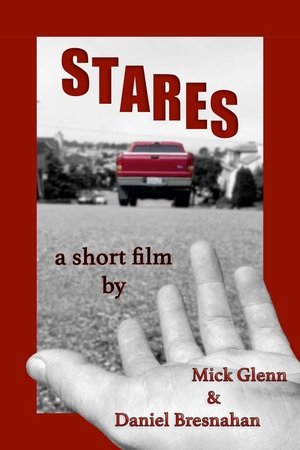
Winter. Somewhere between Tehran and Winnipeg. Negin and Nazgol find a sum of money frozen deep within the sidewalk ice and try to find a way to get it out. Massoud leads a group of befuddled tourists upon an increasingly-strange walking tour of Winnipeg historic sites. Matthew leaves his job at the Québec government and embarks upon a mysterious journey to visit his estranged mother.
When actress Nikki Grace gets the lead role in a cursed film, her world becomes more and more surreal, blending realities and ideas of infidelity, reincarnation, and supernatural forces.
A small group of French students are studying Mao, trying to find out their position in the world and how to change the world to a Maoistic community using terrorism.
Martina and Sonja, cross-dress in vampire capes and werewolf claws, re-enacting familiar horror tropes. A corresponding soundtrack of stock screams and "scary" music suggests that the girls' toying with gender roles and power dynamics may have dire consequences.
A silent film mourning the death of Analog television.
A new film by Sheik Althaf Hussain. The plot is unknown at this moment; currently in private screenings and festival submissions.
In 1960s France, a jazz musician becomes the subject of an impromptu documentary.
Three images of a person running in the void through the movement of speed and abstract images
Jean-Luc Godard is synonymous with cinema. With the release of Breathless in 1960, he established himself overnight as a cinematic rebel and symbol for the era's progressive and anti-war youth. Sixty-two years and 140 films later, Godard is among the most renowned artists of all time, taught in every film school yet still shrouded in mystery. One of the founders of the French New Wave, political agitator, revolutionary misanthrope, film theorist and critic, the list of his descriptors goes on and on. Godard Cinema offers an opportunity for film lovers to look back at his career and the subjects and themes that obsessed him, while paying tribute to the ineffable essence of the most revered French director of all time.
An Art and a Short Film in which the director records his childhood experiences and memories through the mischievous activities of a boy named Mohammad Saadh.
The lights and characters of Fortaleza's nightlife blend into a sensory experience through images stored in the memory of the devices.
Fifteen images of a camera running in a park and in obscurity searching the space of light through distorsion and the sensory of rapid motion.
In one of those wonderful coincidences of history, lumière, the French word for “light,” was also the last name of brothers Auguste and Louis, whose brilliant invention, the cinematograph, helped to inaugurate the most beloved art form of the last 130 years. Institute Lumière director Thierry Frémaux uses Lumière, Le Cinema! to guide the viewer through over a hundred shorts—some famous, some forgotten, some never before seen—directed by Lumière and company. In the process, Frémaux illuminates how the brothers employed the camera as a creative instrument as they (and their operators) mastered framing, staging, and subject selection for quotidian and exotic microdocumentaries as well as the first ever fictional motion pictures. The result is not only a glorious re(telling) of the genesis of cinema but a profound meditation on the beautiful world captured—and the mysterious world imagined—by the Lumières.
Longing for a baby, a stripper pursues another man in order to make her boyfriend jealous.
Gay, alienated Los Angeles teens have a hard time as their parents kick them out of their homes, they don’t have money, their lovers cheat, and they are harassed by gay-bashers.
A reflection on loss and nature’s quiet observance in a small nook of the Ozarks.
Amid Guanajuato's vibrant streets, an aging filmmaker becomes a modern Don Quixote, joined by a spirited young animator as his loyal Sanchia. Together, they navigate themes of mortality, unfulfilled dreams, and the fragile line between madness and clarity, uncovering the transformative power of light, art, and the landscapes that shape our souls.
Two children wake up in the middle of the night to find their father is missing, and all the windows and doors in their home have vanished.
The conventions of documentary, musical theater, and magical realism are combined and subverted to address issues of personal, national, and artistic identity through the eyes of a composer desperate to pull off one final backer’s audition whilst hounded by a disdainful documentarian named Charon.
An Imperial Message is a 1975 Hungarian experimental film directed by László Najmányi. The 'story' was based on Franz Kafka's short story Eine kaiserliche Botschaft.