An Experimental Film about Manchester's "Great Flood". In July 1872, Manchester's River Medlock overflowed its banks due to heavy and continuous rains, resulting in the "Great Flood." The flood severely damaged areas around the River Medlock, with parts of Ancoats and Hulme being particularly affected.
After tragedy strikes a bustling London neighbourhood, disarray ensues, and our hero becomes lost to their pain. A cherub-like spectre soon appears, embodying the change the community desperately craves. All bear witness as winds of hope and unity take shape and the seeds are sown for their growth out of grief
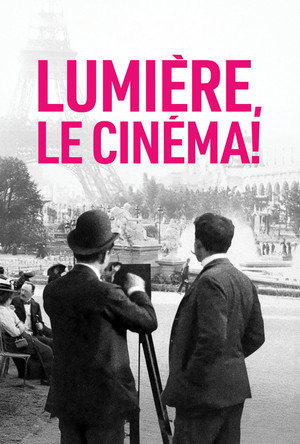
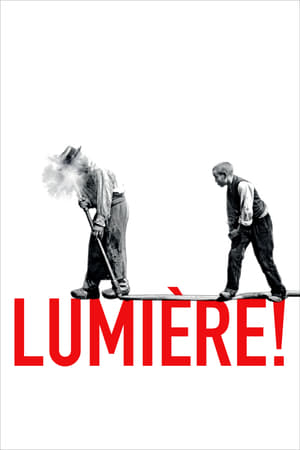
In one of those wonderful coincidences of history, lumière, the French word for “light,” was also the last name of brothers Auguste and Louis, whose brilliant invention, the cinematograph, helped to inaugurate the most beloved art form of the last 130 years. Institute Lumière director Thierry Frémaux uses Lumière, Le Cinema! to guide the viewer through over a hundred shorts—some famous, some forgotten, some never before seen—directed by Lumière and company. In the process, Frémaux illuminates how the brothers employed the camera as a creative instrument as they (and their operators) mastered framing, staging, and subject selection for quotidian and exotic microdocumentaries as well as the first ever fictional motion pictures. The result is not only a glorious re(telling) of the genesis of cinema but a profound meditation on the beautiful world captured—and the mysterious world imagined—by the Lumières.
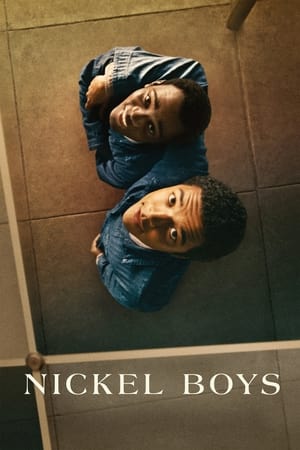
Chronicles the powerful friendship between two young Black teenagers navigating the harrowing trials of reform school together in Florida.
A walk through the life and work of the brilliant French filmmaker Georges Méliès (1861-1938), pioneer of special and visual effects.
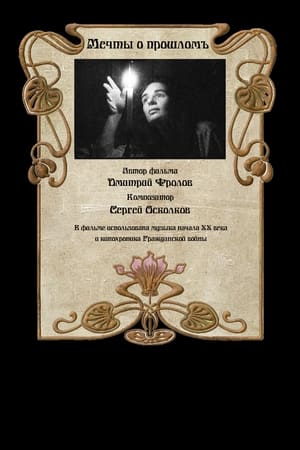
A film about peace, love and war. Dedicated to the 100th anniversary of the end of the Civil War in Russia. The film takes place at the end of the summer of 1917, when Russia and the whole world were at a crossroads between two eras. None of the people could even imagine how much his life would change in the very near future. In a strange way, the atmosphere of the film echoes our current reality and what is happening in Russia today. According to the form of visualization, the film belongs to experimental mockumentary cinema. To give greater authenticity to what is happening on the screen, the shooting was carried out on black-and-white negatives of 16 and 35 mm, hand-operated cameras were used and the material was developed in manual spiral tanks. The documentary chronicle of the Kolchak army of 1919 and the White army in the Far East of 1922 is embedded in the finale of the film.
A collection of restored prints from the Lumière Brothers.
«I often have dreams. Careless dreams. When the sun was shining. It was calm and quiet. And a peaceful sky overhead.» An experimental musical film on the theme of love. Memories of the past excite the imagination and make you evaluate what is happening in the present in a new way.
Through four nonlinear but interconnected Finno-Ugric storylines, approximately 7,500 years ago, traces of the Kaalo meteorite – that struck the Estonian island of Saarema – left a profound mark on the peoples living along the Baltic Sea, shaping local myths and legends.
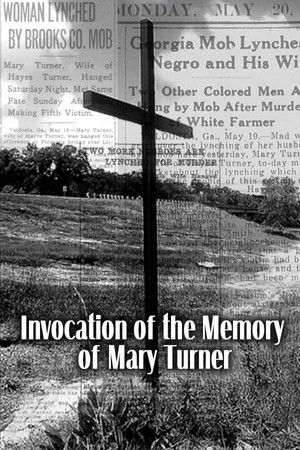
A stasis work invoking the memory of the lynching of Mary Turner, a young, pregnant African American woman in South Georgia. Publicly demanding justice after the murder of her husband, Turner was kidnapped by a mob, hung up in a tree, set on fire, her child cut out and killed, and shot hundreds of times before being buried on-site in 1918. Returning to the origins of cinema, filmed on the exact date and time of Turner’s lynching 105-years earlier, # 3 uses form, time, light, shadow, and landscape as metaphor to not only invoke the memory of Mary Turner, but to also ponder perspective relating to racial violence, violence against women, our failure to acknowledge our past, and the racial divide that continues to exist today in the schizophrenia of America life.
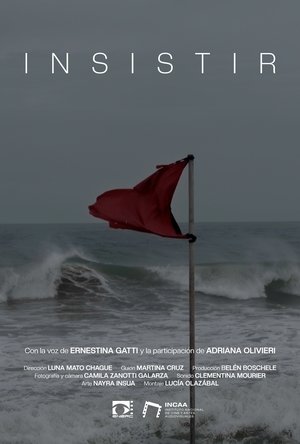
A documentary about the sea and memory. Its movement is its form. Its strength.
An experimental film about narrations of two journal photos from Iran's revolution in 1979.
Old ghosts celebrate the past as it intrudes on those who think it past.
An animated film using a multitude of techniques, in which a flower tries to grow while the planet is dying.
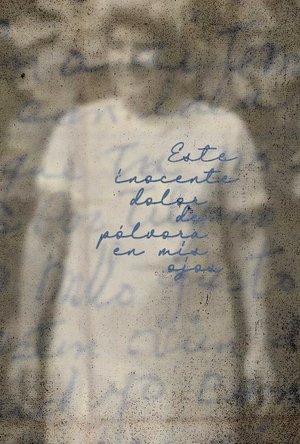
In 1967, Beulah struck Reynosa. Family survives through images from memory circling the wreck. Rituals of celebration and violence like hurricane, shift between dancing, cyanotypes, blue fire and lost family archive. We have come to see the damage that was done and the treasures that prevail. Thus invent colors that burn the eyelid like 火藥.
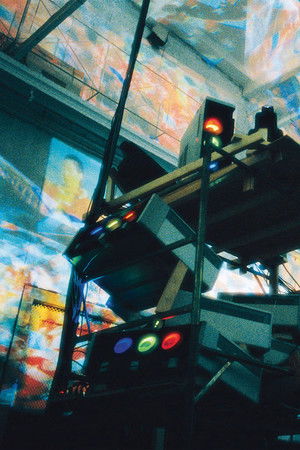
Sistine Chapel is an audio-visual collage of new footage and samples from Paik’s past videos, which featured many of his friends, collaborators, and public figures. It was Paik’s own way of summarizing his artistic career with video. The film installation consists of fast-paced and overlapping images that completely cover the gallery walls and ceiling—one of the most under-appreciated parts of architecture, according to Paik. With its electronic visuals and booming audio, interspersed with periods of silence, the immersive installation stands in stark contrast to the experience of its namesake.
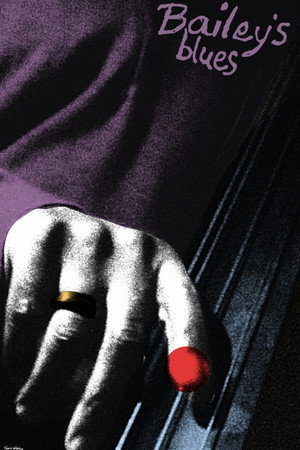
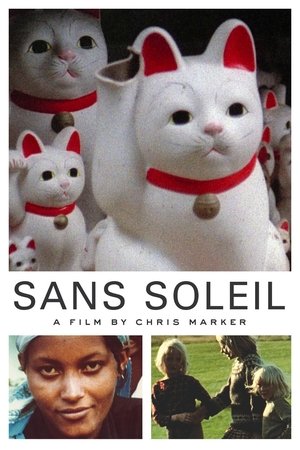
In 1960s France, a jazz musician becomes the subject of an impromptu documentary.
The sea is rumbling. My body was weakened by the south wind. Sea water seeped into the shivering veins. A king rises with new strength. The labuhan ritual was born as a form of gratitude. The fishermen continue this ritual. Offering after offering dissolves in the swish of the waves. Until one day a young man stood proudly. Human apathy towards nature ignites the anger of the sea. The waves crashed, the body moved uncontrollably. Dragged into the vortex of nature's punishment, his body twisted to the rhythm of the tide before finally being swallowed by the water.
A queer stop-motion animation live-action hybrid film following four women in a surrealist parallel narrative unconstricted to heteronormative space and time.
A wannabe film director becomes embroiled in a battle against the laws of time and space when his attempts to recreate the iconic black and white, photograph-only, time travel film, La Jetée, spiral out of control.