A critique of liquid love through sarcasm and crude humor. With the desire that the viewer empathize with the protagonists and reflect on the ephemerality of sexual-affective relationships in modern society. At the end of the short film, the transformation of people into mere consumer goods will be clear, which, once they have been used, are discarded
Documentary from Kiwi filmmaker Florian Habicht on the most successful haunted attraction in the Southern Hemisphere, Auckland’s Spookers.
The Soviet philosopher Evald Ilyenkov tries to purge Marxism of ideological cliches, but is rebuffed by his colleagues and the Soviet authorities. The struggle for a true philosophy turns into a tragedy for him and his family.
No Terreiro Mora Deus Também is a medium-length observational-participatory documentary produced by Retravo. It focuses on portraying and immersing the viewer in the cultural setting of Umbanda through interviews with workers and participants, interwoven with the full recording of the gira process. The project's aim is to demystify and break stereotypes associated with Umbanda's popular image in Brazilian culture, offering an emotional and personal perspective to bring the stories of those involved with the religion to the screen. It aligns with the general research areas of Communication: Ethics, Philosophy, and Religion, emphasizing religion (as a set of cultural systems, beliefs, and worldviews that establish symbols connecting humanity to spirituality and moral values), along with the specific research areas of narratives, memories, and identities.
Right alongside Jerusalem, in a Russian Orthodox Convent in the Mount of Olives, in the middle of the Arab quarter, lives the 82-year-old Estonian nun Mother Ksenya.
Kang Aries and Kang Oca are two cultural observers of Kujang who try to provide a justification perspective on the Kujang Philosophy made by one of the blacksmiths named Abah Jajang, where the general public often considers that Kujang is a sharp weapon. The two of them "Kang Aris & Kang Oca" entered the realm of the trial to defend the essence of Kujang, so as not to be considered misunderstood by the general public.
Despite Blacks making up only 7% of Madison WI's population, they are leading in so many important areas from education to politics, and are launching so many multi-million dollar projects that people describe this period as a "Black Renaissance."
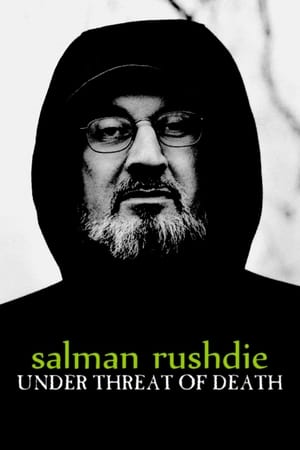
An intimate portrait, in his own words, of the Indian writer Salman Rushdie, author of The Satanic Verses (1988), thirty years after the fatwa uttered by the Iranian Ayatollah Khomeini: his youth in multicultural Bombay, his life in England, his many years of forced hiding, his thoughts on President Trump's United States of America.
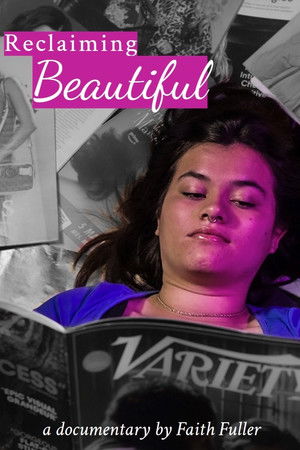
In this documentary, a group of young women discuss the varying definitions of the word "beautiful" and how these definitions have impacted them.
In 2019, some still consider homosexuality as a disease that needs to be cured. Focusing on movements with roots in the United States, which draw on both religion and psychiatry to justify so-called conversion therapies, an investigation into the devastating consequences of certain practices that seem to successfully avoid any control by European public authorities.
Recreation of facts and stories of both experts and people who met Maximilian Kolbe and were shocked by his words and actions.
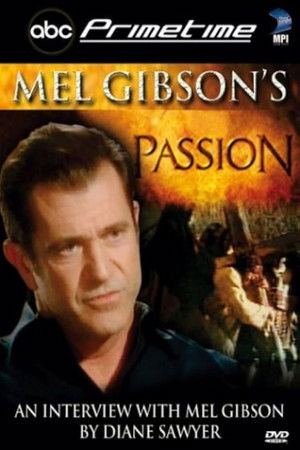
In this special edition of Primetime, ABC News' Diane Sawyer interviews filmmaker Mel Gibson about his highly controversial movie, ""The Passion of the Christ."" He responds to charges that the movie's portrayal of the Jewish role in the death of Christ will encourage anti-Semitism. He also elaborates on comments he's made about the Holocaust. In addition, Gibson tells why he felt it necessary to exhibit such a graphic depiction of Christ's crucifixion on film and discusses his decision to tell the story in Aramaic and Latin.
The Shrimp is a lush visualist's documentary that follows the life cycle of a shrimp along the marshes of Savannah, Georgia. Beautifully etched images and a canny audio soundtrack create a rich observational work about Southern culture, human folly and the interplay of natural and built environments.
Three leading figures in today's Buddhist-Christian dialogue share their personal journeys in the new documentary Jesus and Buddha: Practicing Across Traditions. We learn how following the path of the Buddha has informed and deepened their understanding of who Jesus was and what he taught. Their experience and insight bring these two liberating archetypes alive in a way that can help guide us through our own confusion and struggle toward lives filled with joy and gratitude, compassion and service.
Andrew Graham-Dixon explores the ancient Christian practice of preserving holy relics and the largely forgotten art form that went with it, the reliquary. Fragments of bone or fabric placed inside a bejewelled shrine, a sculpted golden head or even a life-sized silver hand were, and still are, objects of religious devotion believed to have the power to work miracles. The documentary features interviews with art historian Sister Wendy Beckett and Neil MacGregor, director of the British Museum.
The favourite places for thinking of the philosopher Friedrich Nietzsche - Sorrento, Engadine, Venice, Genoa, Rapallo, Nice, Turin - with passages from his letters and notebooks that explain why they were so important to him.
"Universe Designed" is a documentary that explores some of the evidences for God's existence with interviews from some of the world's top Christian apologists.
A documentary that brings together voices of clergy and laypeople who question the Church and society about the meaning of faith today—touching on the body, emotions, sexuality, and relationships—finding in the city the concrete, everyday place where faith is embodied. The documentary explores the beauty of contrast through life testimonies that foster listening and dialogue, opening a space where people feel welcomed and can be reborn. A collective reflection on the incarnate love of the Gospel, the beauty of relationships, and the complexity of a Church that wants—or should want—to truly be a home for everyone.
Martin Greenfield learned to sew while mending shirts for the Gestapo in Auschwitz and went on to make suits for U.S. presidents and stars. Now, at 95, America’s greatest tailor is grappling with his legacy.
Jonathan Santos, 22, documented his 37 days in Iraq on video and in writing; never knowing that day 38 would be his last. From high explosives to clandestine home brew, his video footage and witty narrative combine personal musings on life, death, and the future he imagined but would never see. His charming buddy, Matthew, who barely survived, brings the war home. Through Jonathan's handwritten words and videotape, the film tells a personal and profound story.