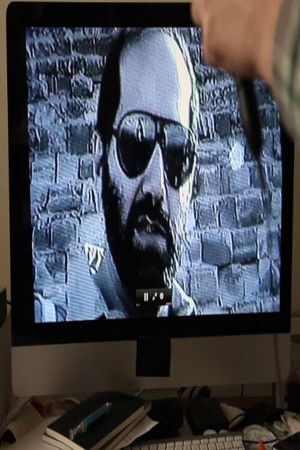
A love letter to cinema and a personal reflection on loneliness. Segment from Fringe Hippo's anthology film "Elegy Apokalypto".
In a world bedazzled by intractable images, do we need the essay film now more than ever? Kevin B. Lee weighs up this distinctively self-aware, searching form of cinema through both video and text.
There are two Bergmans. One speaks English, the other Italian. They fall in love and set off impulsively to live together. But reality is far from easy. As the rift between their emotions deepens, what choice will they make? And what kind of ending awaits them?
A video essay on Edward Yang's 2000 film "Yi Yi: A One and a Two..."
A video essay made on S. Craig Zahler's 2015 film "Bone Tomahawk".
Non-human animals have always been around us, shaping and being shaped by our shared worlds. Yet in the modern city, their presence is increasingly cast as a problem, and their ways of living as disruptions. By following their traces, this film essay points toward a different picture that questions the narratives we take for granted. Through more-than-human encounters filmed locally in Romania, and a critical detour from the official discourse, other ways of living begin to surface. Perhaps there’s more we can do to unmake the anthropocentric landscape. What would it take to coexist more justly with urban animals? This film strays with this question and its possible answers.
A video essay by filmmaker Kogonada exploring the use of doors in the 13 feature films of Robert Bresson
The New York of News from Home was filmed in 1976, while the one of Taxi Driver was filmed in the summer of 1975. Both works reflect the same decadent city. Two visions that shift from the everyday to the existential complement each other. A resignification of Akerman's images through the voice-over of Scorsese's work.
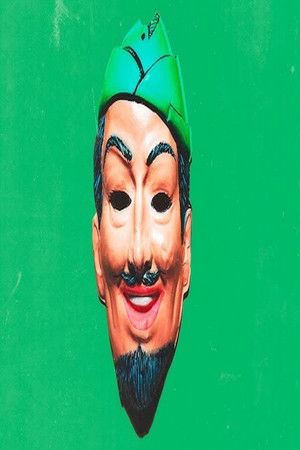
A video essay on the history and morality of the Robin Hood legend.
nostomanie
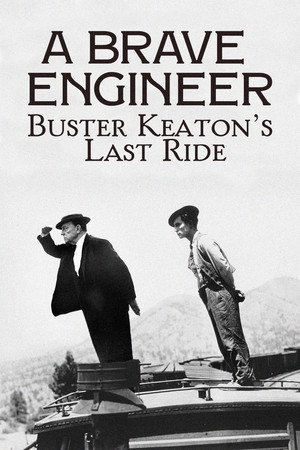
From 1920 to 1965, the great Buster Keaton made spectacular use of locomotives in his films. This video essay charts the course of his iconic cinematic career across the many tracks he rode along on screen: as a young man in the surge of his silent movie ascent in Our Hospitality, while making his masterpiece The General, and traversing the width of Canada on a railway speeder car as an old man in The Railrodder.
Visite banale du musée de l'oubli.
comment faire disparaître un corps.
A video poem about a house. The home, or at least its foundations, are what evoke memories of that childhood, now lost in time.
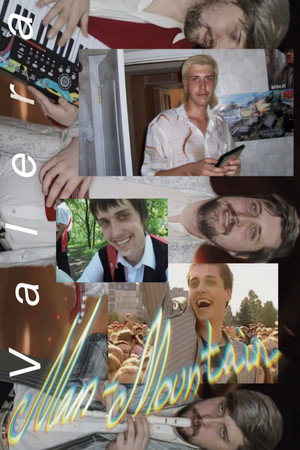
An experimental short assembled from YouTube videos of the director’s former classmate, TV fragments, and a 2006 graduation interview recorded in Alchevsk. What starts as an ironic play with early-2000s home-video aesthetics slowly falls apart. Through montage of personal and online material, Chepelev tries to reconnect with a man he once loved – a man whom war and time have made almost unrecognisable. Laughter loses its protective function and gives way to the impossible wish to return to a place that no longer exists.
After the making of my previous film (PLAY DEAD!), some unfinished business remained on my desktop. Home movies and various body horror films from my childhood cluttered my computer screen. Part medical treatise, part self-anamnesis, and a mashup tinged with nostalgia, this video essay returns the images emanating from my computer screen to the everyday gaze of a diabetic.
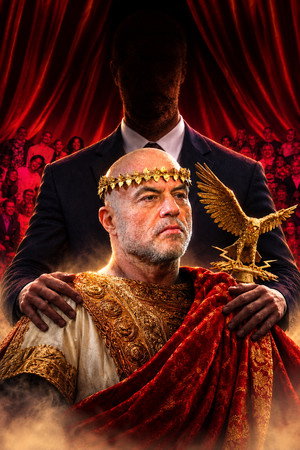
Human beings are on the precipice of the next migration era, and comedy is at the forefront of this new age. Some have already begun the journey. This is an ongoing investigation into how our current comedy era got to be so wonderful. How did this once beloved art form come to be run by an autocratic dictator? How it started. Why it won't end. The evolution of the podcast. The shadowy nature of identity. The cycles. Examining the tragic past and psychology that motivates its beloved Dear Leader: Joe Rogan. And wondering if the possession of unlimited power will make a despot of almost any man.
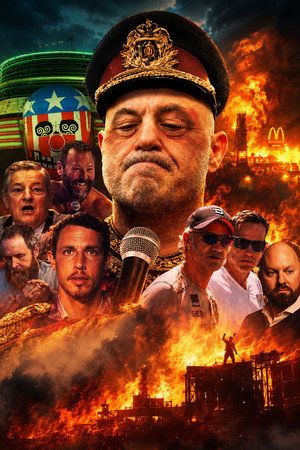
We continue our exploratory investigation into the depths of the comedy world, trying to figure out how and why it got so degraded and destroyed. Picking up from where our last exploration left off, we examine the current state of the comedy sphere, while probing the invisible techno algorithmic undertow that shapes our inner thoughts and outer behavior. We also consider humanity's innate and deeply subcortical instinct to belong to a group, and the amygdalar fear factory in our brain which influences us to stay with and protect that group. Comedy.
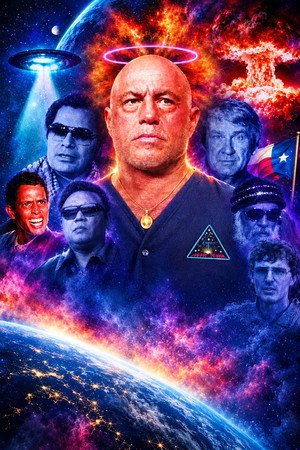
Continuing our investigation into how our current comedy era got to be so wonderful. They say that power doesn't corrupt, it reveals. Once a guy like Joe Rogan, the Comedy Czar, grabs hold of the reins of power, he can wield his power in any number of directions. We examine humanity's innate instinct to migrate, and where we head when there is nowhere else to go. How can the nature of subjective reality be leveraged and exploited. The complex psychological mechanisms behind the current comedy era. The powerful cult behind the destruction of everything that was ever good. Hyperreality, classic reality. And the cycles.
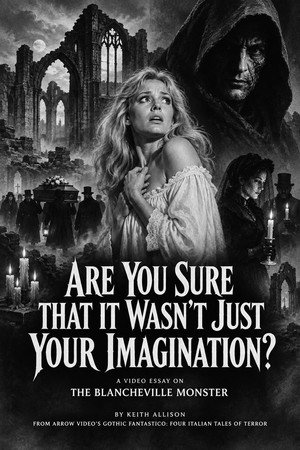
A video essay on the film by writer and pop culture historian Keith Allison where he gives a concise historical-and-critical companion to Alberto De Martino’s 1963 The Blancheville Monster—released in Italy as Horror. Rather than functioning as a production-history interview, it places the film within the early-1960s revival of Gothic horror and then reads its particular blend of Poe-inspired nightmare, old-dark-house melodrama, and psychological uncertainty.