19th release in 'The Smith Family' series of 2-reel comedies.
An off-the-wall comedy set around the dinner table. What at first glance seems like an awkward 'meet the parents' situation for Dade Klublershturf quickly turns into a game of cat and mouse between Nazis, his boy genius younger brother, Ollie, and a time machine (disguised as an Atari joy stick) the Nazis are trying to capture from him.
This fly on the wall-style documentary from 1961 won an Oscar for best documentary, and shows the changing patterns of human emotions during 24 hours in the life of Waterloo Station.
A young woman tries to go to Paris, but her garden and the whole village is flooded with water.
Dead Souls
Lucien Bull was a pioneer in chronophotography. Chronophotography is defined as "a set of photographs of a moving object, taken for the purpose of recording and exhibiting successive phases of motion."
It is a dramatic film, with its colossal explosion and smouldering remains. Within seconds of the chimney's collapse, crowds swarm in to inspect the site; issues of the crowd's health and safety are clearly not a concern, as people smile, wave and salute the camera.
Romance of a Boot and a Dancing Slipper
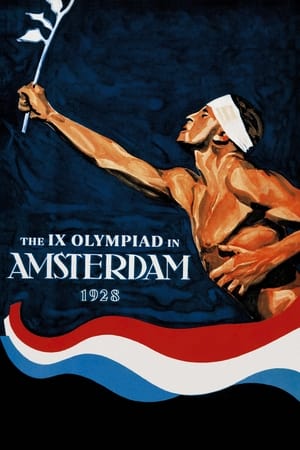
A documentary on the 1928 Olympic Games in Amsterdam. Made by Istituto Luce, there is an understandable focus on Italian athletes, but it is the first Olympic documentary that describes the techniques of certain events.
Finnish filmmaker and artist Sami van Ingen is a great-grandson of documentary pioneer Robert Flaherty, and seemingly the sole member of the family with a hands-on interest in continuing the directing legacy. Among the materials he found in the estate of Robert and Frances Flaherty’s daughter Monica were the film reels and video tapes detailing several years of work on realising her lifelong dream project: a sound version of her parents’ 1926 docu-fiction axiom, Moana: A Romance of the Golden Age.
At Thanksgiving, a tramp arrives in a homeless-hostile town.
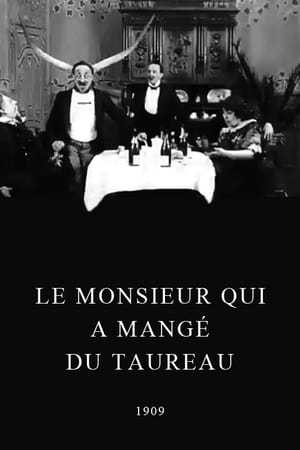
At a dinner party, a hostess serves her guests a dish made using meat from a bull. While most of them enjoy the meal, one man has a strange reaction: Taking a set of horns off the wall, he attaches them to his head and sets off on a rampage. After destroying the house and terrifying his hostess, her guests, maid, and neighbours, he takes to the streets. The police sends a telegraph to Spain asking for help, and in response a parade of matadors arrive in Paris, ready to slay the crazy beast-man. However, soon after the man-bull fight begins, the errant guest comes to his senses and is taken into custody by waiting policemen.
A troupe of gypsies takes a traveler along with them on their day trip.
On a market day in Kernascleden, two Breton women exchange their hair for a few coins. The hair becomes hairpieces. Last scene, an elegant Parisian removes her hat and exposes her generous wig skillfully coiffed.
The scene of the drama is a block of modern flats. Many of the residents are away at a dance, and the janitor and his staff decide upon a jollification of their own. They invite their friends to a fine high tea. Everybody is having a fine time, and their spirits are running high. We are now taken to the outside of the hall door, and watch with amusement the frantic pounding and bell ringing of the residents returning from their evening engagements and seeking admission to their apartments. The gay gathering inside are too busy with their own pleasure to heed the angry crowd outdoors. A policeman is called, but all to no purpose, and the tenants are all taken to the station for quarters for the night. Returning to the janitor's quarters we see that the jollifications have been concluded and the guests are all departing. The superior officer at the station concludes to make another effort to gain admittance in the building and, with the tenants at his heels, he approaches the flats.
Also known as The Operation of Dr. Alejandro Posadas. Filmed with early orthochromatic film in the Hospital de Clínicas de la Ciudad in Buenos Aires.
As a practical joke, an actor impersonates the screen monster he made famous. A lost film.
A short, early documentary work showing insects exhibiting extreme strength and agility.
A series of family entanglements develop around the changing will of Roger Bernhuses de Sars (Karl Mantzius), who wants his heritage to go to his illegitimate daughter Blenda (Greta Almroth). But love and fate also plays their cards. One of the most surprising films of Sjöström, close to Stroheim and some of the silent comedies of Lubitsch. Belonging to the golden age of Swedish film, this comedy offers one of the earliest explorations of the relationship between masters and servants on the screen, later developed by French masters like Renoir and Guitry. After acting in the diptych of Thomas Graal, Sjöström shows that he also dominates the “light genre” as director.
Le mogli e le arance is characterized by a wonderful sereneness. It is the kind of quietude which many of us connect immediately with the south. Everything seems to be in its perfect place, and time is just passing. In the setting of a sanatorium a nobleman is practicing idleness and slow-motion mind games. Does it sound boring? Yes, it does. But it is not, the uneventfulness is definitively enthralling. The film director tries to narrate time, time itself, as such, for its own sake: a rare experiment.