"If buildings could talk, what would they say about us?" CATHEDRALS OF CULTURE offers six startling responses. This 3D film project about the soul of buildings allows six iconic and very different buildings to speak for themselves, examining human life from the unblinking perspective of a manmade structure. Six acclaimed filmmakers bring their own visual style and artistic approach to the project. Buildings, they show us, are material manifestations of human thought and action: the Berlin Philharmonic, an icon of modernity; the National Library of Russia, a kingdom of thoughts; Halden Prison, the world's most humane prison; the Salk Institute, an institute for breakthrough science; the Oslo Opera House, a futuristic symbiosis of art and life; and the Centre Pompidou, a modern culture machine. CATHEDRALS OF CULTURE explores how each of these landmarks reflects our culture and guards our collective memory.
‘Podwórka’ captures six groups of neighbourhood youth as they play in seemingly deserted yards, offering an intimate portrait of daily life in Łódź, Poland. Shot with a fixed camera, this single-channel video projection highlights American artist Sharon Lockhart’s concern for the interrelationship between the still and the moving image.
A spiritual journey into the highlands of Harar, immersed in the rituals of khat, a leaf Sufi Muslims chewed for centuries for religious meditations – and Ethiopia’s most lucrative cash crop today. A tapestry of intimate stories offers a window into the dreams of youth under a repressive regime.
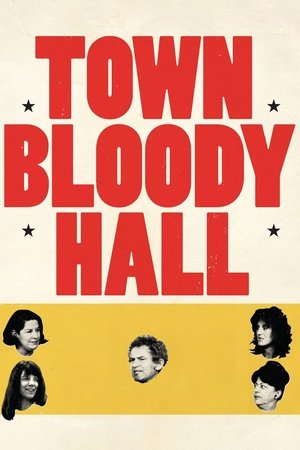
A comic, biting and revelatory documentary following a small group of prankster activists as they gain worldwide notoriety for impersonating the World Trade Organization (WTO) on television and at business conferences around the world.
A biography of the Portuguese-born Brazilian singer Carmen Miranda, whose most distinctive feature was her tutti-frutti hat. From her arrival in the US as the "Brazilian Bombshell" to her Broadway career and Hollywood stardom in the 1940s.
Nine men gather for a workshop on a rooftop. There they perform confrontations of everyday life, with the police and at the workplace. In the process, the actors engage a space between the theatrical and the real. This is not a film about workers. The factory is a microcosm, a miniature Egypt.
After giving birth, Joyce attempts to regain her position as a filmmaker while also caring for her new baby. The changes to both her and her husband’s professional lives are remarkable and frustrating. The new parents love the baby but must recognize the limitations she puts on their careers.
The children of immigration, here to stay, are the new Americans. How we fare in welcoming them will determine the nature of this country in the 21st century and beyond. The International High School is a New York City public school dedicated to serving newly arrived immigrant teenagers, with more than 300 students speaking two-dozen languages from 50 countries. The students strive to master English, adapt to families they haven't seen in years, confront the universal trials of adolescence, and search for a future they can claim as their own. In "I Learn America," five resilient immigrant teenagers come together over a year at the International High School at Lafayette and struggle to learn their new land. Through these five vibrant young people, their stories and struggles, and their willingness to open their lives and share them with us, we "learn America."
Six blind Tibetan teenagers climb the Lhakpa-Ri peak of Mount Everest, led by seven-summit blind mountain-climber Erik Weihenmayer.
This documentary tells the untold story of the Sachsenhausen camp that between 1936 and 1945 was a Nazi concentration camp, and between 1945 and 1950 a Soviet special camp.
Inês Etienne Romeu was an opponent to the Brazilian's dictatorship. She was kidnapped, tortured and raped in jail, where she stayed for almost 100 days. She was later sentenced to life imprisonment. She stayed ten years in prison, from 1971 to 1979. Delphine Seyrig directed this film in 1974, when Inês was still in prison, protesting against this imprisonment and in support to Inês.
A shantytown built inside the antique necropolis of Alexandria. An archaeological visit leads us to meet a few people, taking the time to be really close to them. Each encounter reveals a new novel. And we discover how people survive daily, with an incredible strength for life and a crazy capacity for happiness, that enables them to grin and bear the harshness of the materials conditions.
For decades, American touring ice shows dominated family entertainment with their dazzling production and variety acts. This documentary honors them through interviews and archival footage, and depicts one skater's quest to keep this history alive.
A document of the Riot Grrrl and Queercore scene in the 1990s.
In 2013, three women emerged from a flat in Brixton. They had been held there for decades by Aravindan Balakrishnan, a revolutionary Maoist who controlled the women with brainwashing techniques and tales of a sinister, world-controlling machine he called 'Jackie'.
Three children living in a displacement camp in northern Uganda compete in their country's national music and dance festival.
Examines the public scandal and private tragedy which led to legendary director Roman Polanski's sudden flight from the United States.
The '40s and '50s were a classic period in New York City nightlife, when the saloonkeeper was king and regular folks could drink with celebrities like Frank Sinatra and Jackie Gleason. In this documentary, Kristi Jacobson profiles her grandfather, the king of kings: Toots Shor of the eponymous restaurant and saloon, which was once the place to be seen in Manhattan. Edward R. Murrow called Toots Shor the owner of America’s greatest saloon. He became the unlikely den-mother to the heroes of America's golden age. Politicians and gangsters, sports heroes and movie stars - Sinatra, Gleason, DiMaggio, Ruth, Costello, Eisenhower, Nixon, Warren - for 30 years, they all found their way to Toots' eponymous saloon on New York's West 51st Street.
Carole Laganière dives deeply into personal territory in this beautifully crafted exploration of absence and loss and its painful effect on daily lives. Inspired by her mother’s steadily advancing Alzheimer’s and the inevitability of her estrangement, Laganière weaves their story with the stories of others wrestling with loss: Ines, an immigrant who returns to her birth country of Croatia to find the mother who abandoned her during the war; Deni, an American author who’s finally able to search for his Quebec roots; and Nathalie, who’s desperately looking for her missing sister. Through their experiences the film ponders how absence is often the catalyst for a quest—a quest for information, understanding and often acceptance. Through its many voices, Absences speaks to us of the immense fragility and resiliency of human emotions.
The film follows the story of Jamie, a struggling butch lesbian actress who gets cast as a man in a film. The main plot is a romantic comedy between Jamie's male alter-ego, "Male Jamie," and Jill, a heterosexual woman on set. The film's subplots include Jamie's bisexual roommate Lola and her cat actor Howard, Lola's abrasive butch German girlfriend Andi, and Jamie's gay Asian friend David.