Ich lebe in der Gegenwart - Versuch über Hans Richter
Cornelia Hesse-Honegger has been drawing and painting mutated insects since Chernobyl. Her large-format pictures make the invisible visible. For a long time, she was ridiculed for this. When photos of deformed butterflies from Fukushima went around the world, she felt vindicated. In the laboratory of Japanese biologist Joji Otaki on the island of Okinawa, it became obvious: radiation causes mutations.
Thierry Le Luron, l'humour de ma vie
In 1986, during the Paris-Dakar rally, singer Daniel Balavoine, who was leading a humanitarian operation, was killed in a helicopter crash alongside Thierry Sabine. Nicolas Mathieu, his assistant, Léo Missir, his artistic director, HSH Albert of Monaco, and Charles Belvèze discuss the artist's career and his political and humanitarian commitments. Pierre Fauque and Anne Amado retrace the last moments of his life, from his arrival in Tamanrasset on January 6 to the day of his death in the desert, in the midst of a storm.
A documentary about autism and sensory perception that features live-action and animated segments.
This documentary profiles contemporary artists Wangechi Mutu, Barron Claiborne, and Sanford Biggers. Each monologue is a reflection of their life experiences, letting the viewer discover how their observations have shaped the art they create.
Made shortly before Robert Motherwell’s death in 1991, is an exploration of the Abstract Expressionist movement and a portrait of one of its last survivors. Having come to New York in the early 1940s, Motherwell found himself on the battleground of American art. He and a group of painters set out to change the face of American painting. The film charts this epic battle led by Jackson Pollock, Willem de Kooning, Mark Rothko, Franz Kline, and Robert Motherwell, who endeavored to make American painting equal to painting elsewhere and, in the process, shifted the center of modern art from Paris to New York.
The fascinating portrait of Ion Bârlàdeanu. The touching and inspiring story of a man who literally lived in the gutter for 20 years - and in the meantime managed to create paintings and collages which are now exhibited alongside works by Andy Warhol or Marcel Duchamp.
British surrealist Leonora Carrington was a key part of the surrealist movement during its heyday in Paris and yet, until recently, remained a virtual unknown in the country of her birth. This film explores her dramatic evolution from British debutante to artist in exile, living out her days in Mexico City, and takes us on a journey into her darkly strange and cinematic world.
TWO OR THREE THINGS I KNOW ABOUT EDWARD HOPPER is an immersive experience in 3D, that takes its viewers on a journey into the world of Hopper, sharpening their senses for some aspects of his unique work.
English artist, writer, curator and teacher Sir Lawrence Gowing narrates a personal exploration of some of the great Florentine painter Masaccio's key works.
This surreal abstract film falls into three sections, or movements, the first taking place on the ground, the second in the air and the third again on the ground. In the first movement various motifs or themes are introduced, which are again picked up and developed in the third movement. Six spheres, evolved in the first movement, become the sole subject matter–or “dancers”–of the second movement, which consists of a simple type of ballet using the floor-plan choreography or traditional ballet as a basis of interest.
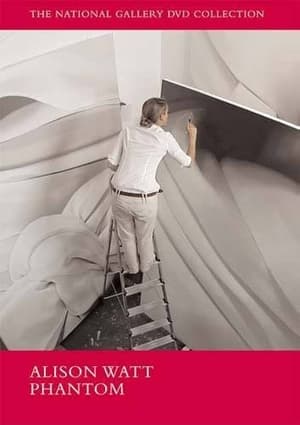
Alison Watt became the National Gallery's Seventh Associate Artist in 2006. This art film records her two-year residency, as she created paintings inspired by masterpieces in the National Gallery. She already had a lifelong attachment to paintings in the collection, yet the prolonged contact, particularly with Saint Francis in Meditation by Francisco de Zurbarán, led her to notice new details and unexpected nuances which influenced her own art. Through a series of interviews with Watt, this art film documents the formation of this exhibition, with particular emphasis on the creative process.
To mark the artist Fernando Botero's 75th birthday, Peter Schamoni made a documentary film about his moving life. Fernando Botero is immediately recognizable by his colourful and exuberant works. Schamoni convinces us that, behind the cliché of the naïve, Fernando Botero is an artist who also devotes himself to serious and profound themes. Schamoni not only accompanies Botero to Tuscany, where he creates his sculptures, and to his Parisian painter's studio. The film also takes us on a journey to Colombia, where Schamoni lets the viewer take part in the world in which the artist lives and works, in the highs and lows of his life.
Destroying your own artwork. For many artists it is unmentionable, but Loes Heebink from Kolderveen irreparably destroyed her artwork "Fluisteraars" herself and came up with the idea for a documentary of the same name, directed by Saskia Jeulink.
Josef Mánes II.
The Haywain by John Constable is such a comfortingly familiar image of rural Britain that it is difficult to believe it was ever regarded as a revolutionary painting, but in this film, made in conjunction with a landmark exhibition at the V&A, Alastair Sooke discovers that Constable was painting in a way that was completely new and groundbreaking at the time. Through experimentation and innovation, he managed to make a sublime art from humble things and, though he struggled in his own country during his lifetime, his genius was surprisingly widely admired in France.
A documentary about the German-American movie poster artist Will Williams made by his close friend Eckhard "Ecki" Baum.
Jonas Mekas assembles 160 portraits, appearances, and fleeting sketches of underground and independent filmmakers captured between 1955 and 1996. Fast-paced and archival in spirit, the film celebrates the avant-garde as its own “nation of cinema,” a vital community existing outside the dominance of commercial film.
Lawrence Jordan's portrait of the reclusive artist Joseph Cornell.