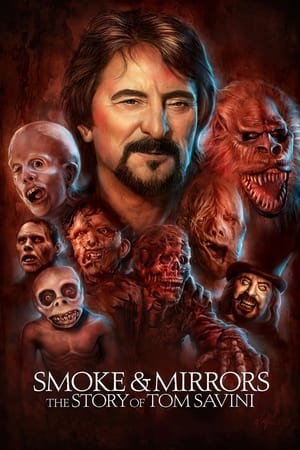
Tom Savini is one of the greatest special effects legends in the history of cinema, but little is known about his personal life until now. For the first time ever a feature length film has covered not only Tom's amazing career spanning over four decades, but his personal life as well.
The untold stories of six Australian army nurses who served at the only Australian field hospital in the Vietnam War.
A short documentary that explores a blue-collar community’s growing unease with the Vietnam War. It was produced in response to President Nixon’s famous November, 1969 speech when he contrasted the unlawful and vocal anti-war protesters to the respectful “silent majority” who were in favor of remaining in Vietnam to fight communism. This film explores the thoughts and opinions of the “silent majority” represented by the folks living in the Garfield Ridge neighborhood on the southwest side of Chicago.
Looking back on the creation of the Vietnam Memorial, this Emmy-nominated documentary chronicles the controversy surrounding the monument's construction and touches on the history of the polarizing war that inspired it. Fueled by the vision of Vietnam veteran Jan Scruggs and brought to life by then-fledgling designer Maya Lin, the memorial would eventually become the nation's most visited monument. But its success was a hard-fought victory.
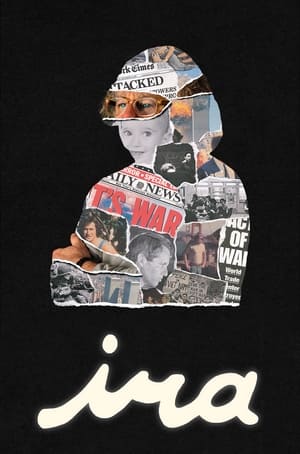
Das Mädchen und das Foto
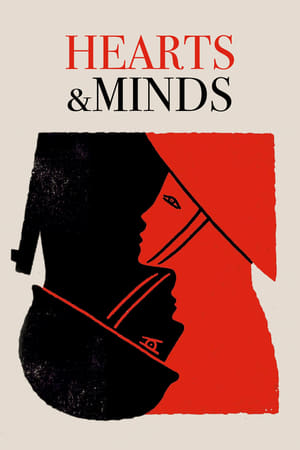
An anti-war film about the personal suffering behind the hard statistics, which show that more than four million Vietnamese died during the Vietnam War, as opposed to 58,000 Americans. We hear South and North Vietnamese, including émigrés to the United States, describing how huge numbers of friends met their deaths, caught as they were between government forces, the Vietcong, and the Americans; how political boundaries divided not only the country, but also families; how mothers deserted their children because their fathers were American soldiers; and how the war cruelly lingers on long after hostilities ceased, in the lives of children born crippled by chemical weapons.
In okay bye-bye, so named for what Cambodian children shouted to the U.S. ambassador in 1975 as he took the last helicopter out of Phnom Phenh in advance of the Khmer Rouge, Rebecca Baron explores the relationship of history to memory. She questions whether, "image and memory can occupy the same space." Building on excerpts from letters, found super-8 footage of an unidentified Cambodian man, iconographic photographs from the Vietnam War and other partial images, Baron combines epistolary narrative, memoir, journalism, and official histories to question whether something as monumental as the genocidal slaughter of Cambodians during the Pol Pot regime can be examined effectively with traditional methodologies.
The events of the film occur during the initial implementation of President Nixon's policy of Vietnamization, which called for US troops to turn over the war effort to the South Vietnamese Army. Caught in that transition, Firebase Kate receives no support from the South Vietnamese troops in the area, leaving them severely outmanned and outgunned, and in imminent danger of being overrun. Their only option is a desperate late night escape and evasion through a jungle filled with NVA soldiers.
The story of the resistance of the people of the Vinh Linh area of Vietnam which was heavily bombed by the United States during the Vietnamese War. (Note: The film crew itself was bombed; three crew members passed away and chief cameraman was heavily injured. The director re-shot the destroyed film albeit in shortened form.)
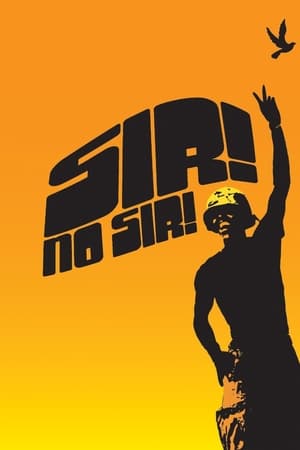
Historians, veterans, politicians, and anti-war leaders discuss the history of the military draft in the United States through the Vietnam War, and examine the consequences of its replacement with an all-volunteer professional force currently comprising less than one-half of one percent of the population.
Spring 1970: Godard and Gorin, on the road, visiting colleges, speaking with Andrew Sarris, and explaining, through illustrated notebooks, their newest Dziga Vertov Group project, a film on Palestine.
American Experience looks at the 1968 Democratic National Convention in Chicago where Vice President Hubert Humphrey won his party's nomination for president amid massive civil unrest and violence perpetrated by Chicago Police and anti-Vietnam War protesters.
The enigmatic nature of the Nixon presidency combined comparatively progressive legislative initiatives with a flagrant abuse of presidential power and the public trust. His achievements in expanding peaceful relations with China and the Soviet Union stand in stark contrast with his continuation of the war in Vietnam. Finally brought down by scandal and duplicity, his administration did much to erode the citizenry's faith in government.
This brief interview film, released in 1970, is one of the last given by Ho Chi Minh, and one of the rare ones in colour.
The Vietnam War protest movement from the student point of view is the basis for this documentary shot in the San Francisco Bay area and dealing mainly with a protest march from the University of California to the Oakland Army Terminal in 1966.
Short documentary on the solidarity of the Cuban people with Vietnam during the war against the United States.
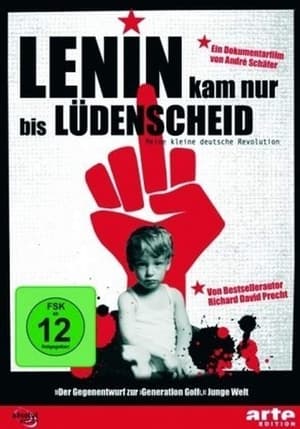
The free, almost naive view from the perspective of a child puts the "68ers" in a new, illuminating light in the anniversary year 2008. The film is a provocative reckoning with the ideological upbringing that seemed so progressive and yet was suffocated by the children's desire to finally grow up. With an ironic eye and a feuilletonistic style, author Richard David Precht and Cologne documentary film director André Schäfer trace a childhood in the West German provinces - and place the major events of those years in completely different, smaller and very private contexts.
Standup comedian Fred Le hears the stories of a diverse range of young overseas-born Vietnamese who made their way back to the land that their parents left following the end of the Vietnam War. The Empathizer explores identity and the impact of trauma among Việt Kiều who grew up a generation removed from tragic events of the past.
Henry Fonda-narrated 1966 ABC documentary that follows a wounded soldier in Vietnam from the field, through the medical system, and back home to the USA. It aired on ABC TV October 24, 1966 and again in January 1967. Time Magazine: "Henry Fonda narrates a documentary recording the everyday heroism of helicopter pilots, doctors and flight nurses in Viet Nam." TV Guide: " The thrilling story of combat medical teamwork in a jungle war ... of the inconspicuous heroes who risk their lives to save others. In a word, the story of courage...."
On May 8, 1970, construction workers violently clashed with students demonstrating against the Vietnam War in lower Manhattan. The workmen, who came to be known as “hardhats,” were at the cutting edge of a new kind of class war. With the war in Vietnam raging on, it was the sons of the working class who were doing most of the fighting. Workmen saw the protesting students as privileged “draft dodgers” disparaging the country and those who fought for it. On the other side, many student activists saw the workers as pawns, unwilling to see the changes that America needed. Hard Hat Riot tells the story of a struggling metropolis, a flailing president, a divided people, and a bloody juncture when the nation violently diverged ― culminating in a new political and cultural landscape that radically redefined American politics and foreshadowed the future.