THE PERFUMED GARDEN is an exploration of the myths and realities of sensuality and sexuality in Arab society, a world of taboos and of erotic literature. Through interviews with men and women of all ages, classes, and sexual orientation, the film lifts a corner of the veil that usually shrouds discussion of this subject in the Arab world. Made by an Algerian-French woman director, the film begins by looking at the record of a more permissive history, and ends with the experiences of contemporary lovers from mixed backgrounds. It examines the personal issues raised by the desire for pleasure, amidst societal pressures for chastity and virginity. The film discusses pre-marital sex, courtship and marriage, familial pressures, private vs. public spaces, social taboos (and the desire to break them), and issues of language.
Traces the making of UC-Davis professor Darrell Hamamoto's first-ever Asian American porn movie ("Skin on Skin") from planning to production. Hou interviews filmmakers Justin Lin ("Better Luck Tomorrow") and Eric Byler ("Charlotte Sometimes"), professor Elaine Kim and playwright David Henry Hwang to get at whether Asian America truly needs its own "porno practices" as a way of decolonizing the community's collective sexual imaginations and confronting how sexuality and masculinity are treated in the Asian American community.
THE ARYANS is Mo Asumang's personal journey into the madness of racism during which she meets German neo-Nazis, the US leading racist, the notorious Tom Metzger and Ku Klux Klan members in the alarming twilight of the Midwest. In The ARYANS Mo questions the completely wrong interpretation of "Aryanism" - a phenomenon of the tall, blond and blue-eyed master race.
A view of the religious tensions between Muslims and Buddhist through the portrait of the Buddhist monk Ashin Wirathu, leader of anti-Muslim movement in Myanmar.
Chronicles the rise of Collab Crib, one of the first mainstream Black creator mansion, exclusively documenting their whirlwind drive to achieve social media stardom in 90 days.
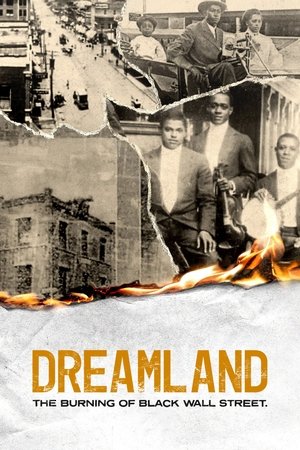
Documents the race riot of 1921 and the destruction of the African-American community of Greenwood in Tulsa, Oklahoma. With testimony by eyewitnesses and background accounts by historians.
An analysis of the impact on the United States Latino community of immigration policies promoted by President Donald Trump.
OJ: TRIAL OF THE CENTURY, premiered on June 12, 2014 and it chronicles the twists and turns of the OJ Simpson murder trial and allows viewers to relive every moment of the investigation first-hand.
A key overview of twentieth-century American fascism and antifascism produced in 1991 by the John Brown Anti-Klan Committee.
An American story. Traces the career of Joe Louis (1914-1981) within the context of American racial consciousness: his difficulty getting big fights early in his career, the pride of African-Americans in his prowess, the shift of White sentiment toward Louis as Hitler came to power, Louis's patriotism during World War II, and the hounding of Louis by the IRS for the following 15 years. In his last years, he's a casino greeter, a drug user, and the occasional object of scorn for young Turks like Muhammad Ali. Appreciative comment comes from boxing scholars, Louis's son Joe Jr., friends, and icons like Maya Angelou, Dick Gregory, and Bill Cosby.
Approximately, because so-called "ethnic" statistics are prohibited, there are an estimated 3.3 million black French citizens. Distant descendants of slaves from the Caribbean or "indigenous" peoples from the French colonial empire in Africa, they constitute a minority that is often discriminated against. Isabelle Boni-Claverie, a mixed-race woman raised in the affluent neighborhoods of Paris, daughter of an Ivorian politician and granddaughter of Alphonse Boni, a Black man who became a magistrate of the French Republic in the 1930s, examines what is blocking the social advancement of Black French people and the full recognition of their citizenship.
In 1971, after being rejected by Hollywood, Bruce Lee returned to his parents’ homeland of Hong Kong to complete four iconic films. Charting his struggles between two worlds, this portrait explores questions of identity and representation through the use of rare archival footage, interviews with loved ones and Bruce’s own writings.
Exploring the fallout of MIT Media Lab researcher Joy Buolamwini's startling discovery that facial recognition does not see dark-skinned faces accurately, and her journey to push for the first-ever legislation in the U.S. to govern against bias in the algorithms that impact us all.
Three men seeking asylum in Ireland find themselves on the streets, caught between restrictive migration policies and an increasingly aggressive far-right movement. Dennis Harvey captures an explosive sequence of events on the streets of Dublin.
I was about seven years old the first time someone called me \"black\" on the street. I turned around to see who they were talking to, until I realized they were talking to me.
Two actresses take us through a series of 'raps' and sketches about what it means to be beautiful and black.
Documentarian Jeffrey Morgan set out to the track one woman's search for the truth about her great-great-aunt's 1908 murder. But his film quickly became a fascinating study of racism, revenge and family secrets. In the process of uncovering information about her ancestor's violent death at the hands of an African-American suspect, the woman learns that her family tree might have also produced a few murderers.
A film about small Ontario town's struggle to restore a desecrated African-Canadian cemetery and the resulting turmoil over it.
Briser le code
When a black teenager is shot and killed attending a bonfire party in Jay, Florida, the town's racist past becomes its present and leads to the uncovering of a shockingly similar murder in 1922 that changed the community forever.