Documentary about human impact on the world.
How far does your participation in global warming go? What is the real X-ray of the ongoing climate changes, and how can we—if at all—reverse the path we are all on? You’ll find these answers in “Global Warming”, a work featuring sixteen Brazilian experts discussing, detailing, and contextualizing climate change and its effects worldwide, especially in Brazil.
Terra Brasil - Especial Paraty
Terra Brasil - Especial Pico dos Pontões
Eco-Terrorist: The Battle for Our Planet follows the most wanted environmentalist today, Captain Paul Watson. In this unique and groundbreaking film, Brown takes a deeper look into what really goes on behind the scenes in the deep waters of our world. More pranks, the glory of successful missions, and fiercer encounters with some of the most infamous and illegal marine hunters, while stopping at nothing to protect wildlife on a global scale. The film takes the audience right to the frontlines of the modern day environmental movement via those who started it.
The environmental problems caused by fracking in America have been well publicized but what's less known are the gas industry's plans for expansion in other countries. This investigation, filmed in Botswana, South Africa and North America, reveals how gas companies are quietly invading some of the most protected places on the planet.
Ekodomy aneb Život v rovnováze
Jacq Vaucan, an insurance agent of ROC robotics corporation, routinely investigates the case of manipulating a robot. What he discovers will have profound consequences for the future of humanity.
Ribnitz-Damgarten, the jewel at the coast of the Baltic Sea, is located directly at the Saaler Bodden, between Stralsund and Rostock. The town and its surrounding area are made for vacationing. This documentary from 1989 also shows the other side, like, for example, how the increasing population density and the industrial production influence the ecological balance of the region. A community for the protection of the Bodden landscape is actively making an effort for conservation. At the institute for deep-sea fishery, research about the fish population is conducted, and agriculture as well is looking for solutions to preserve an intact environment.
Guillaume has made it: A machine that can clean dirty air by simply sucking all dirt into air balloons and then shipping them far far away so his explanation. Some Japanese business guys, after dinner with a lot of alcohol, order 5,000 pieces. His only problem: His production capacity is way to small so he gets to produce the machines in his private house. His wife Bernadette is far from being happy about it. Her private life goes down the line so she decides to leave Guillaume and to finally have revenge she candidates for major against her husband...
A family in eco-fever. The Schuhmann Weils are radical environmentalists and mother their 19-year-old son like a small child. One day, when a chunk of ice hits the family home and the family seek shelter in a bomb shelter, Tom seizes the opportunity to escape to freedom and self-determination...
Narrated by former President and Nobel Peace Prize Laureate José Ramos-Horta, this short documentary leads us to three rural farming communities in Timor-Leste, a small island state in South East Asia. How can we protect our land, culture and our ancestors’ traditions while at the same time creating better lives for future generations? Three Stories. One country. Beautiful Timor-Leste. (Official Overview)
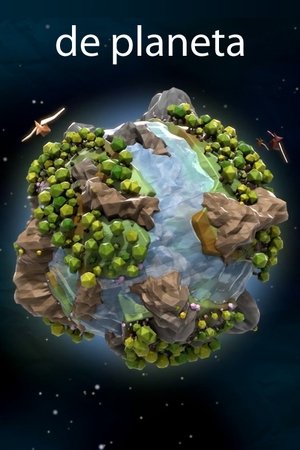
De Planeta
A deep and visually stunning survey of age-old ideas about food, ecological connectedness, and personal happiness. The film's warm cast guide audiences on a transformational journey through Japan, Korea, and the United States.
Sprout. In the vacant lots against the hammering of buildings always under construction, between walls of granite, cement and sheet metal with rust, moss and cats; on the hillside between the train and the river, next to the traffic on the highway, facing the subway, vegetable gardens sprout. In this city, the choreography of ancient gestures of cultivating the land is repeated day after day, without fail. Sowing, digging, harvesting, watering, eating, talking, resting and returning the next day. The longest day of the year brings S. João and nobody goes to bed, but when the sun rises, the discreet gestures of resistance will restart.
A compilation of Earth First! shows from 1986.
A campaign video made for the 1994 Cove Mallard campaign.
Greenpeace the story
In 2061 CE, humanity's indiscriminate pollution of space has substantially hindered the development of space travel. In response, an international federation has designated the sun as a natural incinerator, federally establishing a treaty with the goal of first processing hazardous waste on Jupiter and forming the space environment defense force Cosmo Ecology. However, polluters evading surveillance networks continue to illegally dispose of radioactive waste directly into the sun. As a result, increased solar flare activity is on the verge of turning the Earth into a desert.
“…It is a film that tells in hurried film sequences and a resonant musical score juxtaposing the sublime, funereal despair of Bartok agains tthe gut-bare tones of folk music. Gates has through his filming technique and meticulously selected mining sites, captured all the outrage and sorrow and indignity to the land and its people that strip mining represents. The film is one that all Americans should see, for it shows extremely well the price we have to pay for strip mined coal.” - Dale A. Burk, The Montana “Missoulian”