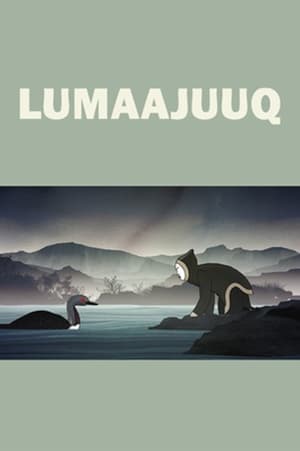
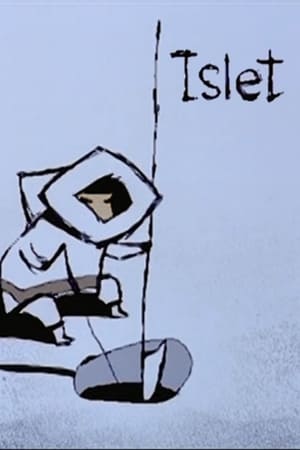
A lonely fisherman drifts into haunted waters in search of food and finds much more than he bargained for. Based on an Inuit folktale.
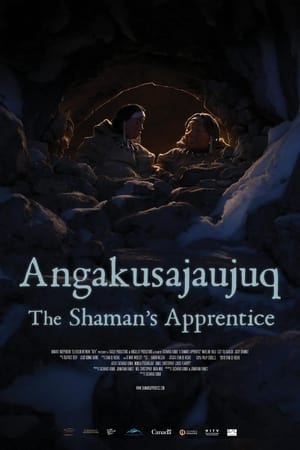
A young shaman must face her first test: a trip underground to visit Kannaaluk, The One Below, who holds the answers to why a community member has become ill.
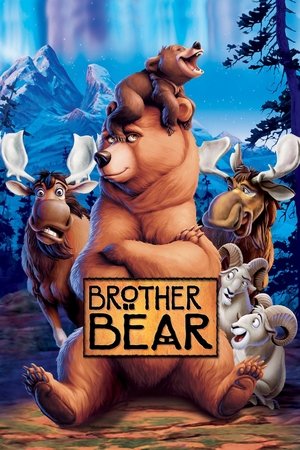
When an impulsive boy named Kenai is magically transformed into a bear, he must literally walk in another's footsteps until he learns some valuable life lessons. His courageous and often zany journey introduces him to a forest full of wildlife, including the lovable bear cub Koda, hilarious moose Rutt and Tuke, woolly mammoths and rambunctious rams.
Combining figurative abstraction with magic realism, this animated short depicts a world in which whales fall out of the sky and fish turn into balloons. It is a black and white evocation of the real world, transformed by the director's special sense of whimsy. With bold lines reminiscent of the stark simplicity of Inuit art, this cautionary tale is a reminder of the interconnectedness of all things. We are all affected by the fate of the Arctic, which each year is disappearing a little farther into the ocean.
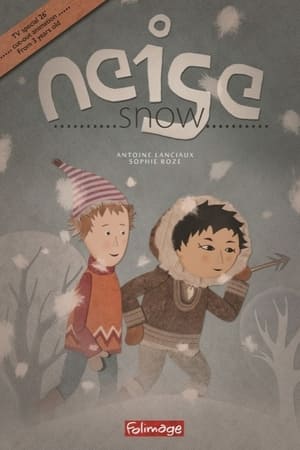
On the eve of summer vacation, Prune leaves her parents for the traditional "end-of-year school trip." But once she's gone, an incredible snowstorm hits the small town where her family lives. Philémon, her younger brother, then makes an astonishing discovery: an Inuit family has settled on a roundabout. The meeting of these two worlds sets the stage for a wonderful adventure.
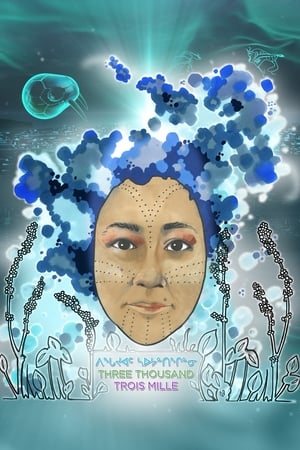
Taqralik Partridge asks what if every language that had been lost to English — every word, every syllable — grew up out of the ground in flowers? Taqralik’s grandmother’s Scottish Gaelic and her father’s Inuktitut unfold in memories of her family, of pain, and of love.
A polar bear is hunted by Eskimos. But suddenly the hunt gets interrupted. Preserved by the Academy Film Archive.
In this animated short from the Canada Vignette series, the camera explores, in exquisite detail, the daily hunt, fishing scenes and children at play as etched in black on an ivory Inuit pipe.
This collection assembles the first animated films to be made by Inuit artists at the NFB. Featured is work by Solomonie Pootoogook, Timmun Alariaq, Mathew Joanasie, and Itee Pootoogook Pilaloosie—all participants in the Cape Dorset (Baffin Island) Film Animation Workshop, established to teach animation skills to local artists. The soundtrack features performances by Aggeok and Peter Pitseolok. Commentary is provided in a blend of Inuktitut and English.
In this animated short the artist tells the story of an Inuit hunter who clubs a seal pup on the ice and then later dies himself. The film's ethereal images are created and transformed in sand.
Three young Inuits set off in search of a promised land to save their clan from starvation.
He was called "He Who Has Two Souls". He was beautiful as a woman. And handsome as a man. He hesitated.
In the folklore of most cultures around the world there are stories of magical little folk. And the Arctic is no exception. Inuit traditional knowledge is filled with references to many different races and tribes of little folk. These beings always try to avoid human encounters, but over the years Inuit hunters and shaman have gathered stories and experiences to help us understand these small inhabitants. This short introduces viewers to the little folk of the Arctic.
This animated short is a tragic and twisted story about the dangers of revenge. A cruel mother mistreats her son, feeding him dog meat and forcing him to sleep in the cold. A loon, who tells the boy that his mother blinded him, helps the child regain his eyesight. Then the boy seeks revenge, releasing his mother’s lifeline as she harpoons a whale and watching her drown. Based on a portion of the epic Inuit legend “The Blind Boy and the Loon.”
His recent animation Kablunât: Legend of the Origin of the White People (2016) draws from a Nunatsiavummiut legend recorded by a Moravian missionary. Making use of archival photographs collected over nearly nine years, Gear reinterprets the legend for a contemporary Inuit audience, while framing the story as a reclamation from colonial retellings. “I wanted to literally insert myself in that narrative, break it apart and see what was there in a kind of dreamlike way,” he notes.
The Inuit folktale of an old woman and the orphaned polar bear cub she took in as her own child.
Centered on a confrontation between the last monster bear and an Inuit hunter, Giant Bear is a chilling short that brings an ancient story out of the North.
Inuit artist Asinnajaq plunges us into a sublime imaginary universe—14 minutes of luminescent, archive-inspired cinema that recast the present, past and future of her people in a radiant new light. Diving into the NFB’s vast archive, she parses the complicated cinematic representation of the Inuit, harvesting fleeting truths and fortuitous accidents from a range of sources—newsreels, propaganda, ethnographic docs, and work by Indigenous filmmakers. Embedding historic footage into original animation, she conjures up a vision of hope and beautiful possibility.
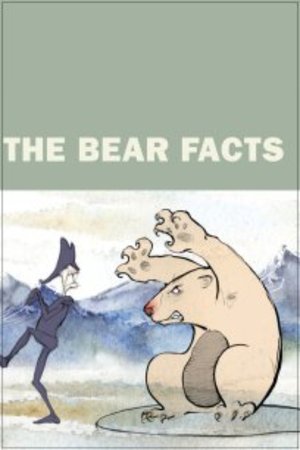
In this animated short, a self-important colonial explorer emerges from a sailing ship and plants a flag on the Arctic ice, as a bemused Inuit hunter looks on. Then the explorer plants another, and another, and another, while the hunter, clearly not impressed that his land has been “discovered,” quietly goes about his business. In this charming and humorous re-imagining of first contact between Inuit and European, Jonathan Wright brings us the story of a savvy hunter and the ill-equipped explorer he outwits.
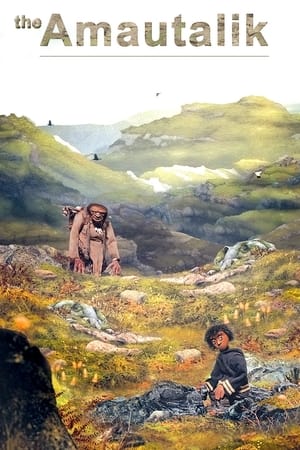
It begins as an average hunting trip for two young men, but when they find themselves lost, the only safe haven to be found for miles—a mysterious village filled with the sounds of drum dancing and revelry—turns out to be even more dangerous than the frigid ocean.