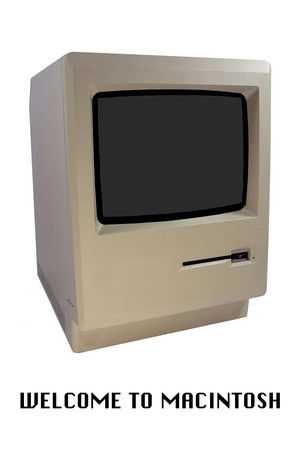
"Welcome to Macintosh" is a documentary that mixes history, criticism and an unapologetic revelry of all things Apple. Whether a long time Mac fanatic or new to computers, Welcome to Macintosh explores the many ways Apple Computer (now Apple, Inc.) has changed the world, from the early days of the Apple-I to the latest the company has to offer.
In The Realm of the Hackers is a documentary about the prominent hacker community, centered in Melbourne, Australia in the late 80's to early 1990. The storyline is centered around the Australian teenagers going by the hacker names "Electron" and "Phoenix", who were members of an elite computer hacking group called The Realm and hacked into some of the most secure computer networks in the world, including those of the US Naval Research Laboratory, Lawrence Livermore National Laboratory, a government lab charged with the security of the US nuclear stockpile, and NASA.
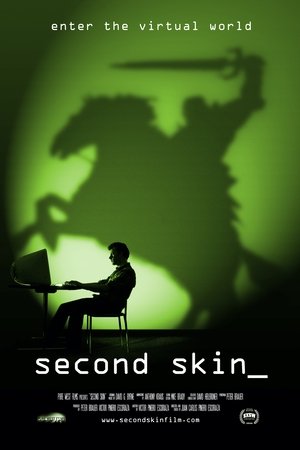
Second Skin takes an intimate look at three sets of computer gamers whose lives have been transformed by online virtual worlds. An emerging genre of computer software called Massively Multiplayer Online games, or MMOs, allows millions of users to interact simultaneously in virtual spaces. Of the 50 million players worldwide, 50 percent consider themselves addicted.
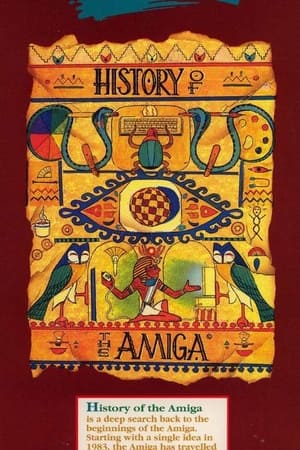
The story of the Commodore PET, VIC-20, C64 and Amiga from engineers, games developers and how Commodore influenced the first 8-bit generation users.
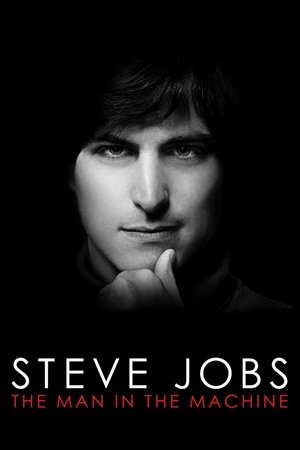
When Steve Jobs died the world wept. But what accounted for the grief of millions of people who didn’t know him? This evocative film navigates Jobs' path from a small house in the suburbs, to zen temples in Japan, to the CEO's office of the world's richest company, exploring how Jobs’ life and work shaped our relationship with the computer. The Man in the Machine is a provocative and sometimes startling re-evaluation of the legacy of an icon.
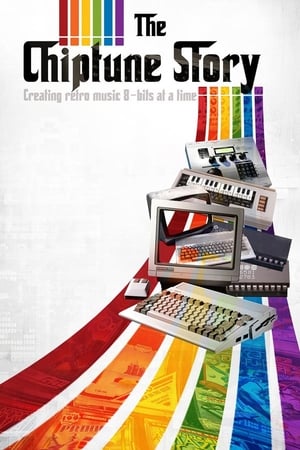
The ChipTune Story focuses on 8-bit music and the C64 SID chip. Featuring interviews with games 8-bit music composers Rob Hubbard, Chris Huelsbeck, Ben Daglish, Mark Knight. We look at the history of ChipTune from 8-bit to 16-bit sampling.
In 1986, astronomer turned computer scientist Clifford Stoll had just started working on a computer system at the Lawrence Berkeley Laboratory when he noticed a 75-cent discrepancy between the charges printed by two accounting programs responsible for charging people for machine use. Intrigued, he deduced that the system was being hacked, and he determined to find the culprit. This is the re-enactment of how he tracked down KGB cracker Markus Hess through the Ethernet to Hannover, Germany.
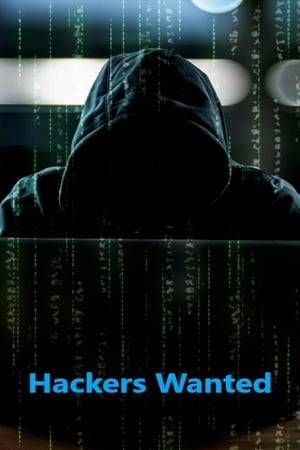
Hackers Wanted explores the origins and nature of hackers and hacking by following the adventures of Adrian Lamo, and contrasting his story with that of controversial figures throughout history.
A desktop documentary about the online afterlife of the late French filmmaker, Chris Marker.
In 1942, when computers were human and women were underestimated, a group of female mathematicians helped win a war and usher in the modern computer age. Sixty-five years later their story has finally been told.
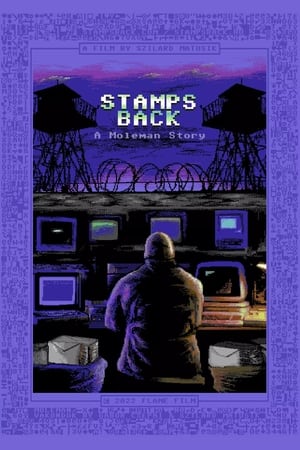
In the 1980's, something changed the world forever. Computer technology, mostly due to the appearance of affordable Commodore 64's, entered households worldwide, providing the opportunity for everyone to create digital art. Moleman 2 is about the demoscene subculture, told by mostly Hungarian sceneres, but it features also some other nationalities.
The onset of the 21st Century will be an era in which the very nature of what it means to be human will be both enriched and challenged as our species breaks the shackles of its genetic legacy and achieves inconceivable heights of intelligence, material progress, and longevity. While the social and philosophical ramifications of these changes will be profound, and the threats they pose considerable, celebrated futurist Ray Kurzweil presents a view of the coming age that is both a dramatic culmination of centuries of technological ingenuity and a genuinely inspiring vision of our ultimate destiny.
Exploring America’s consumption of computers and the hazardous waste we create in pursuit of the latest technology, Terra Blight traces the life cycle of computers from creation to disposal and juxtaposes the disparate worlds that have computers as their center. From a 13-year-old Ghanaian who smashes obsolete monitors to salvage copper to a 3,000-person video game party in Texas, Terra Blight examines the unseen realities of one of the most ubiquitous toxic wastes on our planet.
The WDR Computer-Night tells the Story from the first Computer and PCs the Start of the WWW, Searchengines, Social Networks, Cybersex and Cyberspace, Web 2.0, Smartphones and Flashmobs.
Cortney
"Give me ten million dollars and trust me, we'll deliver a low-cost microprocessor compatible with Intel". This was former IBM Fellow and Dell Senior VP Glenn Henry's 1995 pitch to start a microprocessor company focused on low-cost Intel-compatible processors ("x86"). This documentary follows Henry and his team as they race to complete their latest chip, and offers an inside look at Centaur's unique management environment.
Das digitale Ich - Computer, Menschen, Emotionen
In 1981, Wau Holland and other hackers established the Hamburg based Chaos Computer Club (CCC). The idiosyncratic freethinkers were inspired by Californian technology visionaries and committed themselves to hacker ethics. All information must be free. Use public data, protect private data. But not everyone followed the rules. Computer technology was still in its infancy and the emerging Internet became a projection screen for social utopias. What has become of them? The story of the German hackers, told by the protagonists themselves in a montage of found video and audio material.
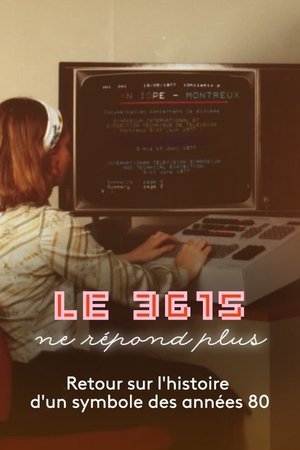
The adventure of the minitel, a small cubic terminal with a folding keyboard that began in the 1970s in the labs of France Telecom, is closely linked to Alsace. Alsatians had then in hand the future tools of interactive communication. What remains today of all those minitel years? Like a nocturnal and intimate road-movie, this documentary went to meet the last people who are still interested in the minitel, this strange beige box of access to telematic services, corny today, but pioneers at the end of the last century.
Six young women programmed the world's first all-electronic programmable computer, ENIAC, as part of a secret US WWII project. They changed the world, but were never introduced and never received credit. These pioneers deserve to be known and celebrated: Betty Snyder Holberton, Jean Jennings Barik, Kay McNulty Mauchly Antonelli, Marlyn Wescoff Meltzer, Ruth Lichterman Teitelbaum, and Frances Bilas Spence.