Registration of the first theatre program by the Dutch comedian Theo Maassen.
First aid is my passion and my life. One traffic light turns red, another turns green: there's always something to do in Almelo. One of Herman Finkers' most famous quotes. Herman Finkers has been writing and performing theater programs since 1979. His programs are difficult to describe. He was probably best described in the Utrechts Nieuwsblad: 'master of the double punchline,' 'witty excess that does no harm,' 'sublime nonsense.' EHBO is my passion and my life is Herman Finkers' fourth program, recorded in the Leidse Schouwburg.
Destressing? Do that at home, will you! In 'Adéhadé', everything goes in overdrive, with many Dutch celebrity impressions.
Comedian Patrick Laureij grew up in Rotterdam-Zuid and uses his life experience to talk about underage drinking, kickboxing, and playgroups.
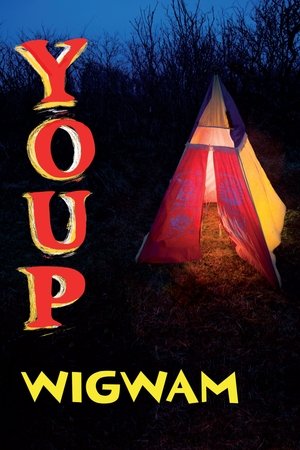
Youp van 't Hek cheerfully flits between the following four questions: What are we willing to die for? How high will we rise in heaven? What does heaven have to offer us? Why is life on earth such hell for so many people? Youp doesn't give any real answers because he simply doesn't know them, but his jokes do lighten the mood.
TV registration of the third theatre program by the Dutch comedian Henry van Loon. The show is about insomnia.
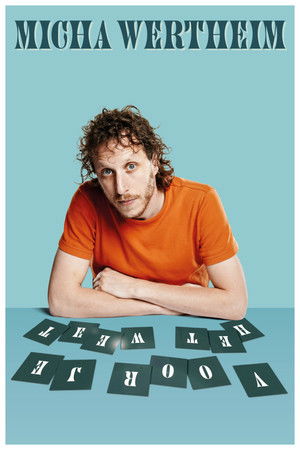
Micha Wertheim asks himself and his audience how to live and survive in a gloomy future perspective. Populism seems to have been taken for granted by both right-wing and left-wing parties. Racism, sexism, anti-Semitism seem to be increasing. The planet is dying. The factory farming industry is still booming. We have reached a dead end and we are standing with our noses against a blank wall. All we can do now is turn around to see how we got here, with our backs against the wall.
This comedy/theatre show is the sequel to 'Micha Wertheim: Somewhere Else'. This second show starts exactly where the first show ended: in the same theatrical scenery, with the same robot. But this time Wertheim surprises his audience by showing up. He tells about how the first experimental comedy show was received and contemplates about the magic of theatre and art in a society about the right to exist of art in a society that allows less and less doubt and confusion. When Robot falls into a depression, the boundaries between theater and reality begin to blur.
Registration of the successful show "Play" by dutch cabaret duo Acda en de Munnik. Cabaret in their usual style, interspersed with songs from the album Night Music. The show is made in HD quality, the image director was Joram Lürsen, known from Alles is Liefde. With the assistance of musician David Middelhoff. Directed by: Ruut Weissman. Produced by: Joram Lürsen Recorded in the Zaantheater, Zaandam on the 20st, 21st and 22st of January 2009.
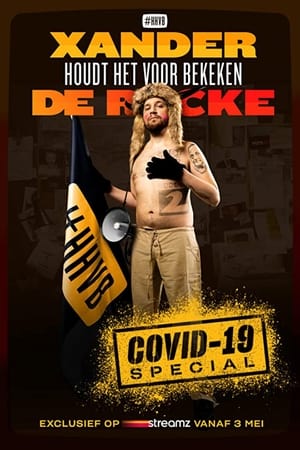
The Dutch comedian Hans Teeuwen gradually loses his sense of reality when he has to stay inside because of the "intellegent lockdown" during the COVID-19 pandemic. He recorded a corona comedy special at his home.
In September 2013, it was exactly 12½ years ago that Bas Hoeflaak and Peter van de Witte launched their first full-length theater show 'Teer' under the name Droog Brood. The very best from six theater programs will be collected and forged into a magnificent and classic theater evening. Includes intermission and show trap. It will be fun. For the gentlemen of Droog Brood – who have finally found a reason to perform precious scenes one more time (there is talk of itchy fingers) – but of course also for the audience, who will be presented with an evening of hilarious highlights and will be able to enjoy themselves immerse yourself in a warm atmosphere of sweet melancholy. In short: the ladyfingers have been bought, the Smurfs have been called and Soekeloekie has pulled his proverbial nose out of the grease to frequently put it around the corner.
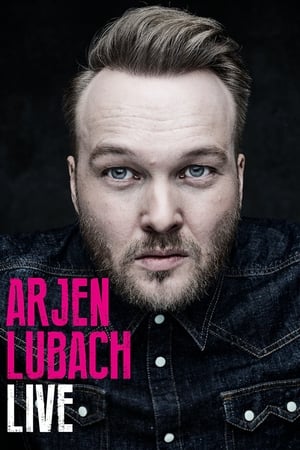
Registration of the theatre program by the Dutch musical comedy duo Het Monica Da Silva Trio (Tim Kamps and Arjen Lubach).
The bigger the audiences for Dutch comedian Micha Wertheim’s shows became, the less he had to do to make them laugh. In one early show, he suggested that the audience would be better off without him. So in 2016, he acted upon this suggestion with an experiment that made theater history: he wasn't physically present onstage but somewhere else. The audience wasn't aware of this in advance, though they did get a hint in the form of a pre-recorded "live" radio interview from a remote studio. "I see my audience as my children," Wertheim says in this interview. "You have to educate them, and that’s what I’ve been doing for the past 15 years. At first you have to constantly be there watching them, but there comes a time when you have to trust them to get on with it without you." With some help from a robot, a printer, a stereo and a set of headphones, the members of his audience were able to make their own performance.
The Dutch musical comedians Theo Nijland, Maarten van Roozendaal, Jeroen van Merwijk and Kees Torn sing and play a selection of their songs to promote the Dutch theater song.
Registration of the fourth theatre program by the Dutch comedian Theo Maassen.
TV-adaptation of the fourth solo show by Dutch comedian Louise Korthals. In her own words: "This show is about what we pass on to the next generation."
A video-registration of the revue/cabaret show 'Showponies 2' by the Alex Klaasen Revue. In this sequel to the first Showponies-show, Alex Klaassen explores to what extent he cares about what (the still quite heteronormative) society thinks. Klaassen considers coming out for a second time, because he feels like he has ended up in a second closet after his first coming out.
In his fifth comedy show the Dutch comedian Kees Torn reflects on addictions. Torn himself struggles with a dependence on whiskey and cigars, but also rhyme, Bach and his girlfriend José.
In his ninth and last comedy show the Dutch comedian Kees Torn tells about his passion for science and on what he wants to do after his last tour.
The Lord sends his archangel Raphael to earth to finish some unresolved matters. Raphael ends up in Amsterdam and gets entangled in local troubles, including womenemancipation, secularisation and the impending restructuring of the city center. The musical alludes to local, then topical issues. This musical was on the occasion of the seven hundredth anniversary of the city of Amsterdam, and loosely based on 'Gijsbrecht van Aemstel', the 17th-century history play by Joost van den Vondel.