A short film based on the book by Slovak author Pavol Zeleňák, "Keď sú tajomstvá iba služobné" (When Secrets Are Only Official). In four tragicomic short stories—banking, confessional, medical, and state secrets—the viewer learns what can happen when bank clerks, priests, doctors, and ministers reveal or abuse official secrets. Regardless of the reason for their actions, they can cause curious problems or even tragedy.
An omnibus movie derived from five real events experienced by some urban Jakarta residents during maghrib.
An early satirical anthology of socially conscious shorts.
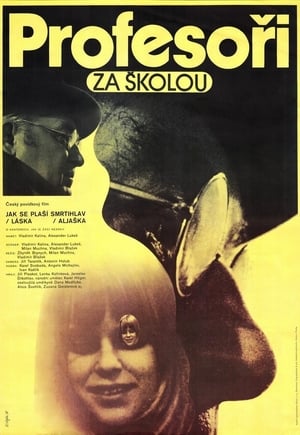
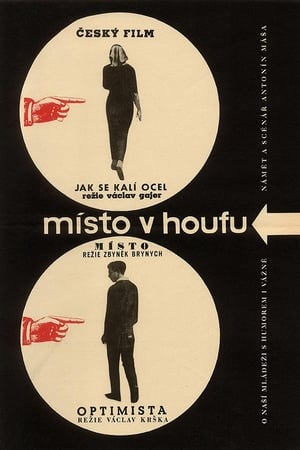
Three stories (Gabriela, Eda and Jana), two of which are dedicated to girls. They share a common motif of disillusionment when the protagonists encounter scorn and disinterest.
A two-part feature directed separately by Shimizu and his colleague Keisuke Toyoshima. Unrelated to each other, both have a common goal: to bring ghosts and aliens together in pure, referential and absurdistic delirium, including neo-Nazi specters, zombie yakuzas and nasty aliens.
Izzy seeks out everything in her power to stop her partner from transitioning. Meanwhile, Michaela tries her best to be a good person.
An anthology of four diverse stories about identity and belonging through prism of love and loss, sexuality, marriage and wish to fulfill dreams.
A group of Mumbai up-and-comers search for love and struggle for success in this ensemble drama that centers on an eager young call centre executive.
Four different couples have a romantic week over New Year's Eve. Both coming out of failed marriages, Ji-ho and Hyo-young are not open to the possibility of new love, while Jin-ah heads to the other side of globe and encounters Jae-hun.
Seven episodes, each taking place on a different day of the week, on the theme of suicide and violent death.
An anthology film that takes you to different eras in the history of Kerala through three stories about relationships and emotions.
Commissioned by South Korea's National Human Rights Commission, If You Were Me is an innovative omnibus film project to promote tolerance and human rights and shed light on the hardships disadvantaged people face in Korea. This third installment continues the If You Were Me tradition. Directors Jeong Yun Cheol (Marathon), Kim Hyeon Pil (Wonderful Day), Lee Mi Yeon (L'Abri), Noh Dong Seok (Boys of Tomorrow), Hong Gi Seon (The Road Taken), and Kim Gok and Kim Sun (Capitalist Manifesto: Working Men of All Countries) participated in If You Were Me 3, creating shorts on human rights issues of their choosing, ranging from labor conditions to gay rights to discrimination.
Five O. Henry stories, each separate. The primary one from the critics' acclaim was "The Cop and the Anthem". Soapy tells fellow bum Horace that he is going to get arrested so he can spend the winter in a nice jail cell. He fails. He can't even accost a woman; she turns out to be a streetwalker. The other stories are "The Clarion Call", "The Last Leaf", "The Ransom of Red Chief", and "The Gift of the Magi".
Four darkly funny tales about Lebanon: Activists planning a protest descend into internal strife. Three sisters and their mother argue while an incompetent plumber destroys their flat. Depressed life coach Malek wants to die and seeks help from a «death coach». A stand-up comedian who jokes about a meteor strike that could put Lebanon out of its misery, is blamed when it appears to come true.
Ep.01 My wife's healing Yumi and Hyun-tae are on a journey of reconciliation overnight to overcome bourgeoisie. Eating dinner together I'm going to join the couple who stayed in the next room. Jae-yong informs Lee Hyun-tae that he can overcome boredom ... Ep.02 Soap Scent Eun-su, who was tired of her boyfriend, told a Chinese housekeeper I am at a glance, and both of them cross over the lines I should not cross ... EP.03 Singularity Family The family of Sehun, who is reconciled with other family members, enjoys each other's private life in the evening. Sehun went to the bathroom in the middle of the night and witnessed a scene he could not imagine Sehun himself confesses his family to the absurd fact ...
Queer Boys and Girls on the Shinkansen brings together ten filmmakers and artists who consistently affirm what it means to be gay or lesbian in their work. Habakari chose ten filmmakers to make a five-minute work each, developed around a gay or lesbian theme, and compiled the resulting shorts in random order to create this omnibus film. The result is a queer film, by queer filmmakers, for a queer audience. Each short is its own short story, and the styles range from drama and experimental film and animation. (2024 complete version includes all eleven films, 65 mins.)
Obsession
Eight visually rich vignettes drawn from Kurosawa’s own dreams—fox weddings and vanished orchards, a soldier’s ghosts, a walk through Van Gogh’s canvases, nuclear nightmares, and a water-mill utopia—meditate on childhood, art, mortality, and humanity’s uneasy bond with nature.
New York, I Love You delves into the intimate lives of New Yorkers as they grapple with, delight in and search for love. Journey from the Diamond District in the heart of Manhattan, through Chinatown and the Upper East Side, towards the Village, into Tribeca, and Brooklyn as lovers of all ages try to find romance in the Big Apple.
This omnibus release consists of three playlets filmed and aired during television's Golden Age, and starring some of the legends of film and television. The collection originally ran as a two-hour segment on December 14, 1959, on the anthology series The Play of the Week, broadcast locally in New York City via the independent radio station WNTA. Each "tale" in the anthology was adapted from a single tale by the inimitable Sholom Aleichem, regarded by many as the "Yiddish Mark Twain". Included are: "A Tale of Chelm" starring Zero Mostel and Nancy Walker in the story of a bookseller attempting to buy a goat; "Bontche Schweig" about a poor man (Jack Gilford) whose recent arrival in Heaven makes the angels cry; and "The High School" about a Jewish merchant (Morris Carnovsky) persuaded by his wife (Gertrude Berg) to let their son attend a particular high school despite the enforcement of quotas for Jewish students.