The film's main theme is obsession. An obsession with love, with art, originality, copying, with success, money and... with oneself. Sooner or later, if we lose our rational upper hand over it and let ourselves be dragged down by it, every obsession leads to destruction. But it is only when being dragged down, in spite of all the cuts and bruises, that we find a unique DELIGHT, if only for a few short moments - and what else is life really about? It is like a drug. What at first seems to be weak and trivial is capable of expanding and growing into a serious problem that can appear to be absolutely incomprehensible and absurd to those who have never experienced anything like it.
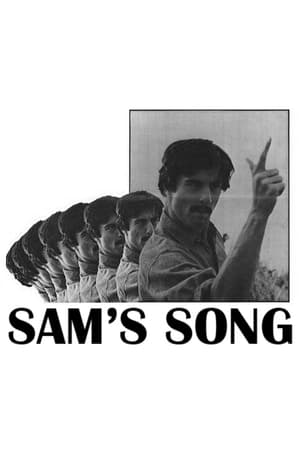
A political filmmaker finds himself in Long Island for a weekend where he finds himself entangled with a high-living, jet set crowd. At first it is exciting, but soon he finds himself disillusioned by their shallowness.
A film editor breaks up with his girlfriend, unsure if he is in love.
Evan, an orphaned 22-year-old who grew up in the foster care system, buys a vintage 8mm camera in a yard sale from an elderly man, ends up with reels of the man's old home movies, and begins to live vicariously through these home movies.
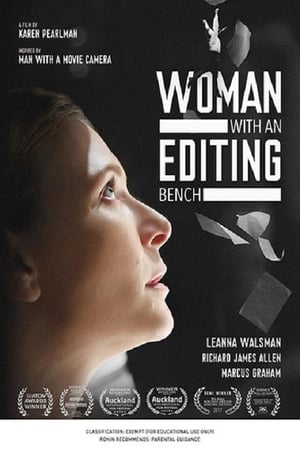
Inspired by the woman who edited "Man with a Movie Camera" (1929), "Woman with an Editing Bench" reveals the personal impact of Stalin’s censorship of cinema on a woman navigating politics, bureaucracy and the impetuous outbursts of collaborators to create something beautiful despite the odds.
Julien, a movie director, is on the phase of editing his new film, "Juliette sacrifiée". Hurried by his producer, he asks for the help of a professional editor. It is Anne, with whom Julien is soon falling in love. During the whole of the movie, both are sitting in front of the editing table, where they listen to music, talk about politics and what movies should and should not be about.
Marcos, an independent film and video editor, works editing late into the night. On a typical night at work, he has a seizure that causes him to lose consciousness. Upon waking up, he discovers that his way of perceiving life has changed in such a way that he now lives everything and sees it in the same way as a cinematographic montage.
A film director and sound designer discover a disturbing sound cue hidden in the mix of their short film, forcing the director to confront demons from his past.
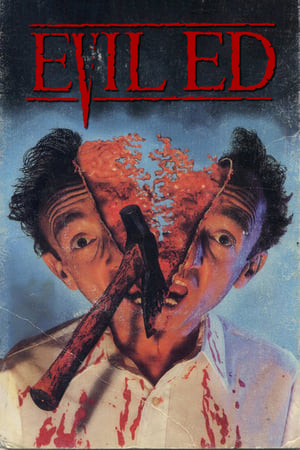
Edward is a friendly, harmless film editor in the splatter and gore department of a horror film company. Ed is assigned to work on the new Loose Limbs series of horror films after the previous editor killed himself with a hand grenade. Later his reality begins to twist and distort into a horrifying world where nothing is as it seems. Soon enough this turns Ed into Evil Ed!
An editor and his daughter work to restore a family heirloom — an old silent horror film — unaware that each frame inches them closer to a dark spirit.
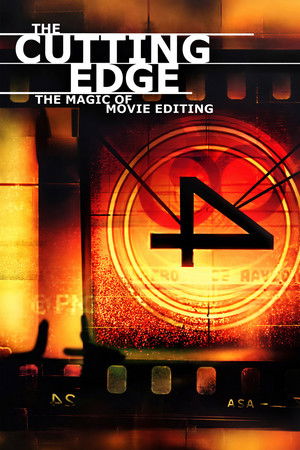
Documentary about the art of film editing. Clips are shown from many groundbreaking films with innovative editing styles.
This film tells the life story of Ziva Postec, emphasizing the period when she was editing Shoah from 350 hours of footage.
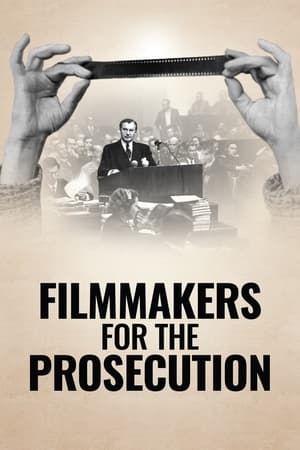
In 1945, two young American soldiers, brothers Budd and Stuart Schulberg, are commissioned to collect filmed and recorded evidence of the horrors committed by the infamous Third Reich in order to prove Nazi war crimes during the Nuremberg trials (1945-46). The story of the making of Nuremberg: Its Lesson for Today, a paramount historic documentary, released in 1948.
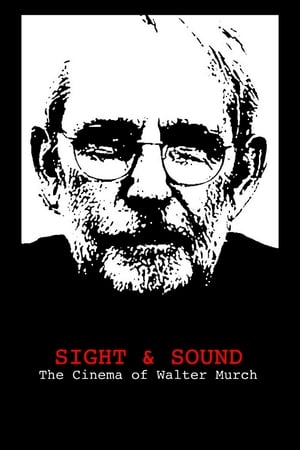
Legendary film editor and sound designer Walter Murch talks about his work and philosophy. (Based on over 50 hours of Murch's lectures, interviews, and commentaries.)
Observing the behind-the-scenes experiences full of stories, film editors struggle alone in silence, facing time pressure and demands for perfection, as they try to maintain mental balance amidst the endless routine.
The second movie in David Hare's Johnny Worricker trilogy. Loose-limbed spy Johnny Worricker, last seen whistleblowing at MI5 in Page Eight, has a new life. He is hiding out in Ray-Bans on the Caribbean islands of the title, eating lobster and calling himself Tom Eliot (he’s a poet at heart). We’re drawn into his world and his predicament when Christopher Walken strolls in as a shadowy American who claims to know Johnny. The encounter forces him into the company of some ambiguous American businessmen who claim to be on the islands for a conference on the global financial crisis. When one of them falls in the sea, their financial PR seems to know more than she's letting on. Worricker soon learns the extent of their shady activities and he must act quickly to survive when links to British prime minister Alec Beasley come to light.
Sylvia returns to Sweden after having lived abroad for six years. She visits her sister Karin, and is shocked to see how her husband and children regard her as a live-in housekeeper. She convinces Karin to take a vacation with her in Stockholm.
When a boy is too confused to speak with his non-communicative family, words eventually lose their meaning. He decides to communicate with his dandruff and a cup of cold coffee instead. His father ignores these eccentricities, assuming it is just a ploy to get attention. Meanwhile, the boy's sister likes exercising seductively in front of men and is better able to capture her father's attention than her brother. Their mother is oblivious, perpetually talking to people on her mobile phone and the space the family occupies grows narrower and narrower.
A man with a clipboard asks passersby a survey question: "Are you the favorite person of anybody?" He has a scale, from "very certain" on down. His manner is open. He offers oranges to one respondent. He talks, one at a time, to three people. Their answers, however brief, are revealing.
Simon Templar creates false identities named after saints in order to steal money from various criminal organizations and redistribute the wealth to others.