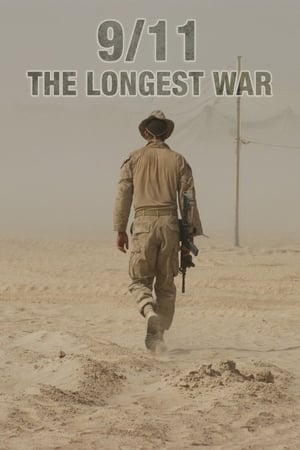
In honour of the 15th Anniversary of 9/11, National Geographic Channel is looking back at the very best reporting we have done since this world-changing tragedy first happened using extended excerpts from past specials that relate directly to events leading up to and following the attacks on New York City and Washington DC.
In March 2001, the ruling Taliban destroyed Afghanistan's foremost tourist attraction, the 1600 year-old Buddhas of Bamiyan. This film follows the story of one of the refugees who now lives among the ruins….an eight-year-old boy named Mir.
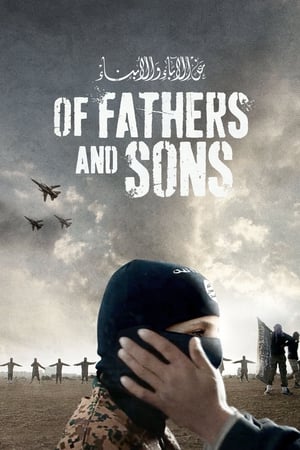
Talal Derki returns to his homeland where he gains the trust of a radical Islamist family, sharing their daily life for over two years. His camera focuses on Osama and his younger brother Ayman, providing an extremely rare insight into what it means to grow up in an Islamic Caliphate.
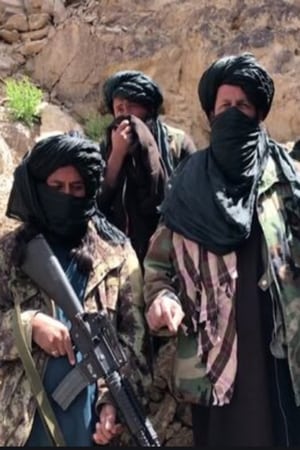
"Inside the Talibans" - What will happen if the Talibans return to power? Swedish journalist Magda Gad travels the Herat and Wardak provinces of Afghanistan to meet with the Taliban fighters.
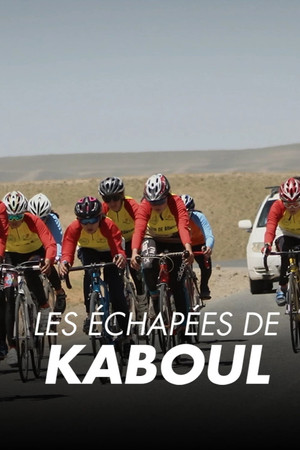
Les échappées de Kaboul
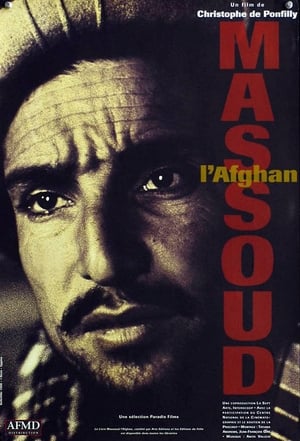
The friendship between Christophe de Ponfilly and Commander Massoud, a legendary figure of the Afghan resistance against the Soviet invader, goes back to the filmmaker's first film, "A Valley Against an Empire", made in 1981. Fifteen years later, weakened, isolated, betrayed by many of his own, the "Lion of Panshir" has not surrendered to his new and implacable enemies, the Taliban. While preparing his next offensive, he evokes his commitment and his fights, and bears witness to a history in which he has been one of the main actors for twenty years. At the same time, the director questions the role and power of the media, as well as his own approach as a filmmaker. Commander Massoud was killed in an attack in September 2001.
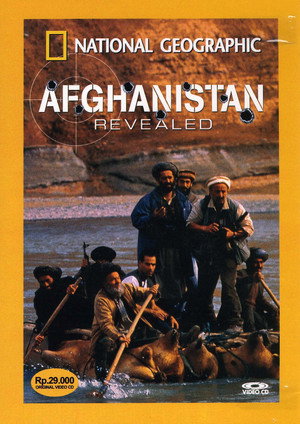
Take a harrowing journey with author Sebastian Junger and photographer Reza deep into Afghanistan for an in-depth interview with the assassinated resistance leader, Ahmed Shah Massoud. With never-before-seen footage, Afghanistan Revealed explores this war-torn country and the lives of its people as they continue their struggle against the Taliban.
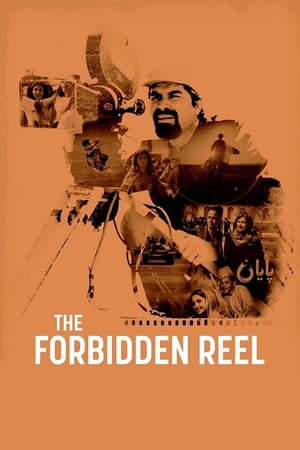
According to the official history of Afghanistan, ruthless destruction has always prevailed over art and creation; but there is another tale to be told, the forgotten account of a diverse and progressive country, seen through the lens of innovative filmmakers, a story that survives thanks to a few brave Afghans, a small but very passionate group that secretly fought to save a huge film archive that was constantly menaced by war and religious fanaticism.
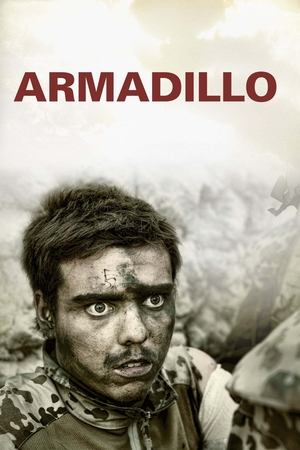
Danish soldiers are sent to Afghanistan in 2009 for 6 months, to help stabilize the country against the Taliban. They're stationed on Armadillo military base in Helman province. Unlike other war movies, this is the real deal – no actors.
The story of the last months of the 20-year war in Afghanistan through the intimate relationship between American Green Berets and the Afghan officers they trained.
On August 15, 2021, Afghanistan descends into chaos. In one day, the completion of the withdrawal of Western forces precipitated the debacle of the regime in place: the army vanished, the leaders fled and the Taliban took Kabul without a fight. The great Central Asian country opens a new chapter in its tragic history, twenty years after the "war on terror" launched by George W. Bush in response to the attacks of September 11, 2001. The undisputed masters of 40 million trapped Afghans, the "students of religion" are back and are savoring their revenge by posing as the United States' victors. Their program will surprise no one: to restore the Islamic emirate and set up the "true" sharia, i.e. a perfect world, with divine commandments applied to the letter as in the time of the prophet.
Each World Trade Center tower consisted of 110 floors. Each floor has a story. In this two-hour special, survivors from two of those floors, many speaking publicly for the first time, tell their stories. Focusing on one floor in the North Tower and one in the South, this film will provide a never-before-achieved intimacy with what it was really like to be inside the Twin Towers on 9/11.
A flamboyant Afghan interpreter risks his life and his family to assist U.S. Marines against the Taliban.
Directors Hetherington and Junger spend a year with the 2nd Battalion of the United States Army located in one of Afghanistan's most dangerous valleys. The documentary provides insight and empathy on how to win the battle through hard work, deadly gunfights and mutual friendships while the unit must push back the Taliban.
In 2007, the Taliban kidnapped 24-year-old Ajmal Naqshbandi and an Italian journalist. Naqshbandi was one of Afghanistan's best "fixers" -- someone hired by foreign journalists to facilitate, translate, and gain access for their stories.
Tells the story of two men, Abu Jandal and Salim Ahmed Hamdan, whose fateful encounter in 1996 set them on a course of events that led them to Afghanistan, Osama bin Laden, 9/11, Guantanamo, and the U.S. Supreme Court.
Almost five years after their return to power, a new era has dawned under the yoke of the Taliban, an inflexible fundamentalist regime. Under their rule, the former republic has disappeared, replaced by an ultra-rigid power structure closed off from the rest of the world and the foreign press. An "Islamic Emirate of Afghanistan", largely unrecognised, even by Islamic theocracies. After four shoots, mainly carried out outside the official framework, "The Taliban Country" offers a glimpse into the heart of this new Afghan reality. Through the eyes of the men and women facing these upheavals, the film paints a portrait of a paradoxical and radical system. It offers an in-depth look at the workings of a state characterised by extreme rigour, unparalleled in the contemporary world.
By immersing themselves in a Taliban village, and after gaining very rare access to major institutions, the directors shed a disturbing light on today's Taliban society, and on the workings of this ultra-conservative parallel state. whose leaders have just symbolically moved into the presidential palace, to assert a stranglehold that foreshadows the Afghanistan of tomorrow.
Explores U.S. Special Forces role in the massacre of about 3,000 unarmed Taliban prisoners of war in Afghanistan from the battle of Mazar-e-Sharif by Northern Alliance soldiers.
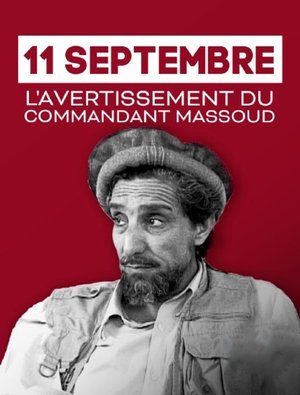
On September 9, 2001, Commander Massoud, a hero of the Afghan resistance, was assassinated by two members of al-Qaeda posing as journalists. Two days later, the terrorist organization struck the United States. However, a few months earlier, during a visit to France, Commander Massoud had come to warn the West about the disastrous plans of al-Qaeda and the rise of the Taliban. He asked the West to exert pressure on Pakistan, a country that supplied arms, supported and sheltered the Taliban, but which was also a major buyer of French arms. He was not listened to.