The story of the Second World War through the personal accounts of a handful of men and women from four American towns. The war touched the lives of every family on every street in every town in America and demonstrated that in extraordinary times, there are no ordinary lives.
The Islamic Revolutionary Guard Corps or IRGC is the protector of the Islamic Republic of Iran and the military arm of the Supreme Leader. Also known as the Pasdaran, this deep-state mafia comprising 120,000 men has extensive powers, ensuring bloody repression of the people. No strangers to smuggling and trafficking, the IRGC’s economic empire is worth hundreds of billions of dollars. The Supreme Leader Khomeini has allowed the organization to infiltrate the state and its members are now mayors, members of parliament and ministers, cultivating their networks at the highest levels. The IRGC is responsible for Iran's nuclear and ballistic missile programs, and cultivates not only the art of deterrence, but also a strategy of asymmetrical warfare via the militias and terrorist organizations they finance, arm, and control across the Middle East.
Albert Lin adventures to the ends of the earth, using advanced technology to strip back the layers of time and reveal ancient lost cities.
The life story of Madalena das Dores Oliveira, the first woman to reach the rank of Brigade Chief of the PIDE (the Estado Novo secret police), who became known by the inhuman way in which she acted.
Elegidos
Paleoanthropologist Ella Al-Shamahi reveals humanity's incredible story across 300,000 years of human evolution – and how the story is stranger and more surprising than ever imagined.
The series covers the life and work of leading science fiction authors of the last couple of centuries. It depicts how they predicted and, accordingly, influenced the development of scientific advancements by inspiring many readers to assist in transforming those futuristic visions into everyday reality.
British show about possible x-files style stories.
Paris, une histoire capitale
Hosted by the iconic Henry Winkler, each 60-minute episode of this nostalgia-drenched series tells the stories of the things we did—for fun, for money, or out of plain boredom—that you can’t do anymore. Pastimes, practices, and products that were once allowed—even encouraged—which you will never see again in modern America.
Michael Palin attempts to copy the exploits of fictional character Phileas Fogg, by trying to travel around the world (without flying) in 80 days.
Michael Palin undertakes an epic journey of 23,000 miles, traveling from the North to the South Pole across 17 countries with a minimum of air travel, all on a tight deadline.
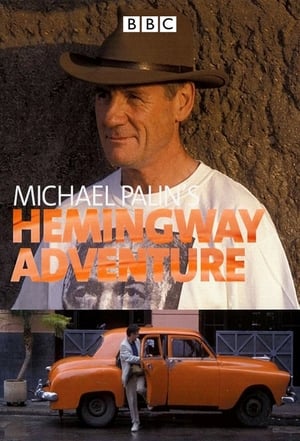
Michael Palin's Hemingway Adventure is a 1999 BBC television documentary presented by Michael Palin. It records Palin's travels as he visited many sites where Ernest Hemingway had been. The sites include Spain, Chicago, Paris, Italy, Africa, Key West, Cuba, and Idaho. After the trip was over Michael Palin wrote a book about the journey and his experiences. This book contains both Palin's text and many pictures by Basil Pao, the stills photographer who was on the team.
The American Revolution was at once a war for independence, a war of conquest, a civil war, and a world war, fought by neighbors on American farms and between global powers an ocean or more away. It impacted millions from Vermont’s Green Mountains to the swamps of South Carolina, from Indian Country to the Iberian Peninsula. In defeating the British Empire and giving birth to a new nation, the American Revolution turned the world upside-down. Thirteen colonies on the Atlantic Coast united in rebellion, won their independence, and established a republic that still endures. The American Revolution will present the story of the men and women of the Revolutionary generation, their humanity in victory and defeat, and the crisis that they lived through.
On May 25, 1961, President John F. Kennedy made a historic speech where he pledged to send astronauts to the moon before the end of the decade. Eight years later, on July 20, 1969, Apollo commander Neil Armstrong stepped out of the lunar module and made a giant leap for mankind - a step that symbolized one of the most remarkable feats in human history. From that moment on, the exploration of our universe has achieved unimaginable feats with hundreds of missions stretching light years into the distant galaxy. This exciting documentary series takes viewers into the past, present and future of NASA.
Examine how ancient civilisations built some of the most magnificent structures on the face of the Earth, many centuries before the industrial revolution.
Following three iconic train journeys from the air and on the ground, we discover the iconic landscapes of New Zealand, a country with the geographic diversity of an entire continent. On the way we learn about the extra-ordinary construction challenges of the 4,000 kilometre network.
Ancient investigations turn tech as specialists harness an advanced digital forensics lab and use the latest scientific discoveries to solve the biggest mysteries of ancient history.
Ramen is a savory combination of umami-packed broth and perfectly cooked noodles. This program offers an encyclopedic view of this delectable dish, taking you on a journey across Japan to discover ever-evolving local variations. Join us as we explore a tapestry of local customs and food culture through the lens of ramen.
With the 00s now firmly in our rear view mirror, the decade is ripe for re-evaluation. From 9/11 to the financial crisis, the decade shows not only a period of turmoil in the United States but its also a golden age when the Internet hadnt been colonized by corporations, when social media was still young and fresh and when it was easy to make money.