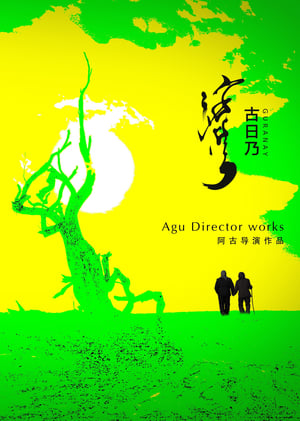
This film is a realistic record of a sixty-year-old couple living in a remote village (Gurenay) in the Badain Jaran Desert of Alashan, Inner Mongolia plant thousands of mu of ammodendron and euphratica to fight against expanding deserts.
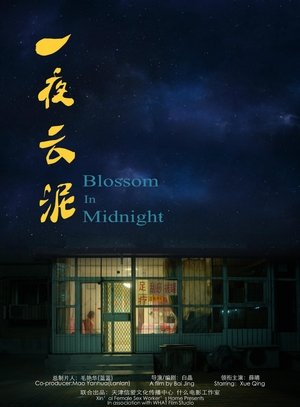
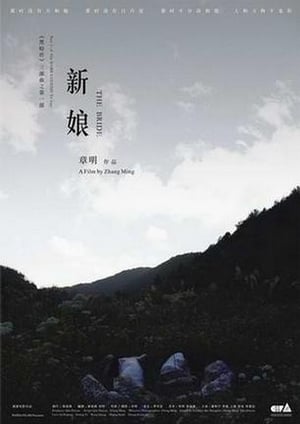
The film is about a woman from a rural area and works in a small restaurant as a cleaner with very low pay. As she has to support her family (mother and daughter), she has no money for herself for better makeup or dress up. She has low esteem. She later was fired by the boss. Because of no money and no home, she goes to the massage parlor and works there a sex worker. It happens that the first customer is the chef of previous restaurant. She has admired him for a while. In this first sex exchange, she is well satisfied both emotionally as well as economically. She starts sex work this way and becomes more confident.
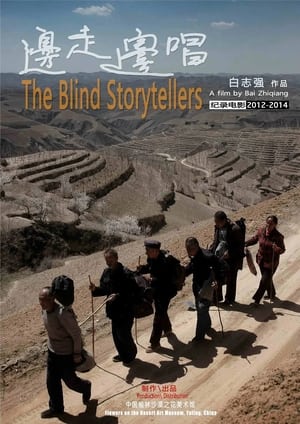
Li Shouwang is the leader of a blind storytellers team, learned storytelling at the age of 19. His childernare living hard in other cities. Li's money amost goes to his children's pocket every year. But with urbanisation, the storytellers have lost almost all their audience. As the conflict between the storytelling team and the village team intensified, his son, who was far away from home, became the only spiritual sustains... When he was excited that his son would be taking his family home for Chinese New Year, what's await is a sigh.
An exploration of the Cultural Revolution that depicts both its chaotic later years – through the story of a squad of Red Army guards running amok in the countryside – and its continuing legacy in today’s China.
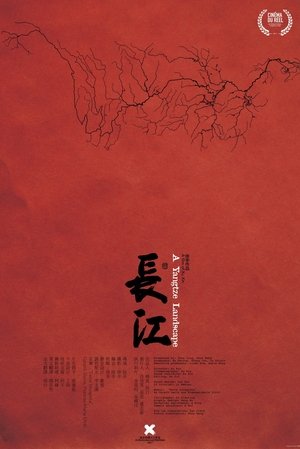
A Yangtze Landscape utilizes a non-narrative style, setting off from the Yangtze's marine port Shanghai, filming all the way to the Yangtze River's source, Qinghai/Tibet - filming a total distance of thousands of kilometers. Experimental music and noise recorded live on scene are used in post-production, painstakingly paired with relatively independent visuals, creating a magically realistic atmosphere contrasted with people seeming to be 'decorative figures' right out of traditional Chinese landscape scrolls.
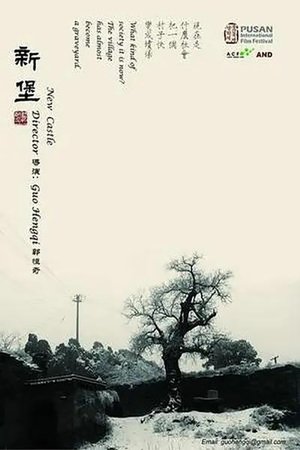
New Castle is a remote rural village where houses and mountains have been distorted due to excessive mining. Under the "New Village" campaign, all the villagers will be moved into the nearly completed Luxury Buildings. The documentary depicts the life of two groups of people, miners and villagers. The miners who are from all over the country, lost their jobs because of the Olympic Games in Beijing - the mine was shut down to make the air less polluted. The villagers had no better luck. Granny Fan lost two sons and two grandsons in a mining accident. Old Han and Old Wang are still farming. Some youngsters are gambling in the house of Han Bin, who was crippled in another mining accident. In the film, you can also see the village election, the service of local Christians, and people worshipping for a better year to come.
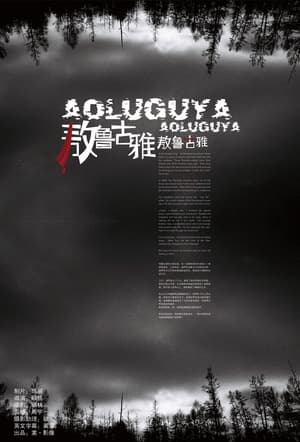
Aoluguya, Aoluguya is the first film in Gu Tao’s Ewenki Trilogy. A tale that unfolds in the Aoluguya forest, featuring such unique characters as a mother who dulls her sadness over the absence of her son, Yuguo, with alcohol; her brother; and Maria, the tribal chieftain who watches over them.
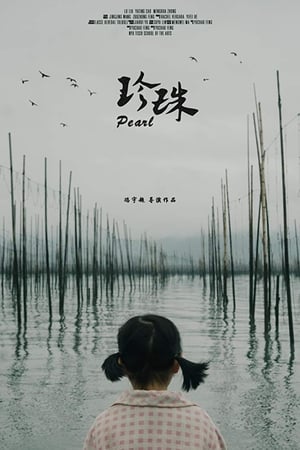
Six-year old Lin resides in an isolated fishing village with her brother and their widowed mother. When the family gets an opportunity to start a new life, Lin has a startling revelation. A melancholic tale inspired by real events.
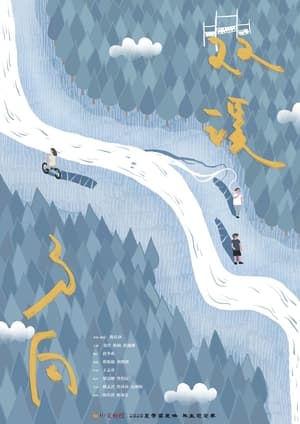
Yang Xin dropped out of school and returned to his hometown, but felt uncomfortable with the popular culture represented by live broadcast/ Douyin culture gradually becoming the mainstream of society. I wanted to return to my familiar hometown to find a sense of identity, but found that my hometown is no longer the same as in the past. The social atmosphere of my hometown and my own memories are all different. The only similarity that can be found is the river in the hometown, but the river that has been flowing has maintained its original consistency.
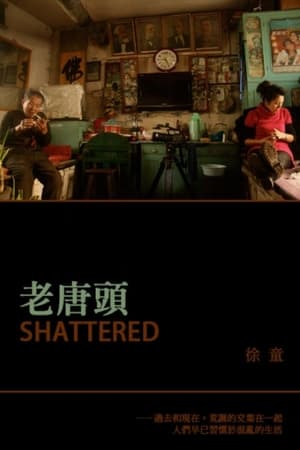
A microcosm of China past and present flows through Xu Tong’s intimate docu “Shattered,” in which the maverick indie filmmaker continues to refine his techniques and concerns shown in his previous “Wheat Harvest” and “Fortune Teller.”
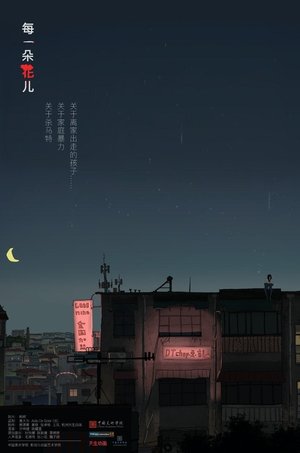
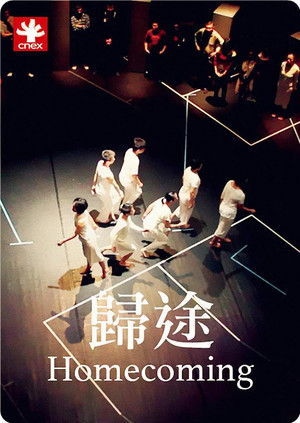
Her, not only her, they are all the only children in the family, Typical underachiever, they often escape away from their broken family r ,Humbling every day with others young people like her in Internet cafes . when she finally plans to go home, she only to find that her family had moved away… ….She became one of them.
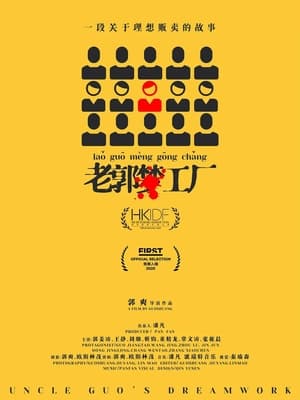
As a person who has taken art exams, Guo Jiang chose to enter the industry of "art exam training" after graduating from university. His role is that of both an educator and a businessman, although most of the time he prefers to appear as "Mr. Guo". The stage on which Mr. Guo's skills are put to use is a small county in central Henan, which is also his hometown. This documentary is about Guo Jiang's career and life.In short, hovering between the desire and the so-called ideal, adhere to or let go, he needs to make a choice.
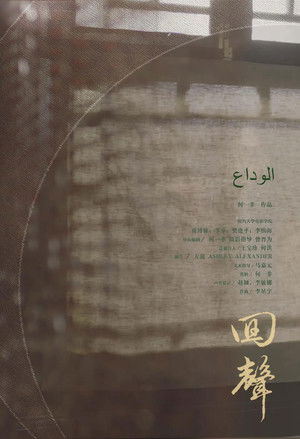
Danni, a young Chinese girl, comes home to pay her respect to her late grandfather. Out of place in the traditional Muslim environment, she unearths a hidden secret of her past and thus embarks on a journey, against her parents’wishes, in the suppressed but mesmerising world of Islamic culture in modern China.
In a city that worships money, there is a group of people who still insist on living the philosophy of "people are not living on food alone." Instead of choosing to live in seclusion, they choose to actively enter the world, improve their hearts, and influence others through artistic creation. Their innovation has not only driven the art world in Hong Kong but more importantly, through their enthusiasm for creation, they have made us understand that as long as we have a "heart", no matter how difficult the environment is, we can persist in a "love".
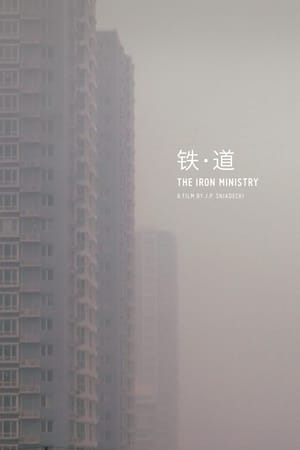
Filmed over three years on China’s railways, The Iron Ministry traces the vast interiors of a country on the move: flesh and metal, clangs and squeals, light and dark, and language and gesture. Scores of rail journeys come together into one, capturing the thrills and anxieties of social and technological transformation. The Iron Ministry immerses audiences in fleeting relationships and uneasy encounters between humans and machines on what will soon be the world’s largest railway network.
The pool table faces shattered statues. Nobody. Broad fishnets drape crumbling walls. Nobody. Bikes chained to pillars. Nobody. Three caryatids gunned down. Nobody. The asphalt sea will surge here soon. Nobody. On the beach, one horse. Nobody. If you stand here, you're an extra, nobody. Nobody, nobody keeps watch at home.
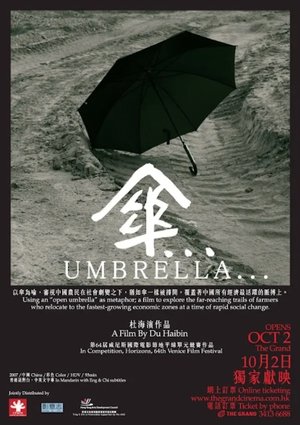
Workers, peasants, soldiers, students and merchants were five groups of Chinese society in the 1950s, after the so-called elimination of the exploited class. Borrowing this concept, the umbrella is taken as the clue to rediscover changes in various social classes after the economic reform, and to analyze the social problems in China. Workers making umbrellas, merchants selling umbrellas, students looking for jobs in the rain. Umbrella is used as a metaphor that can be seen everywhere. As the raindrop, what we see is sometimes clear, sometimes untraceable.
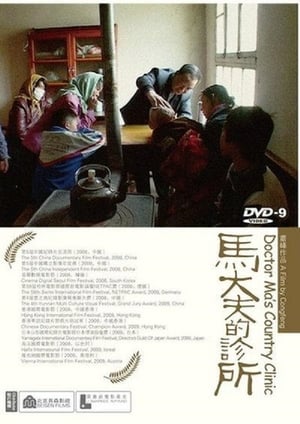
"Huangyangchuan, Gansu province, China. It's an arid mountain area with poor roads. Ma Bingcheng is well-respected local doctor, so many patients (most of them farmers) come to see him every day. In his small clinic, people chat with each other about their lives, local conditions, or the people they know. The clinic seems to open up like a microcosm, the information and experiences of different people intertwine, revealing the conditions of typical Chinese farmers, and the typical fates of both young and old--"
Chinese film directed by Zhang Ming,
The Chinese police visit head-teacher Chen at home. Her daughter, a dissident filmmaker living in Hong Kong, plans yet another critical film about China's colonization of the small autonomous territory. The authorities demand that Chen travel to her daughter to stop the film project. What they do not take into account is that Chen and her daughter lost contact long ago.