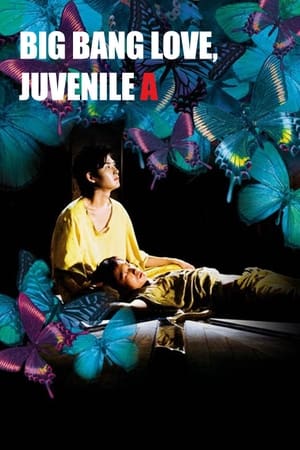
An unknown future. A boy confesses to the murder of another in an all-boy juvenile detention facility. More an exercise in style than storytelling, the story follows two detectives trying to uncover the case. Homosexual tension and explosive violence drives the story which delivers some weird and fascinating visuals.
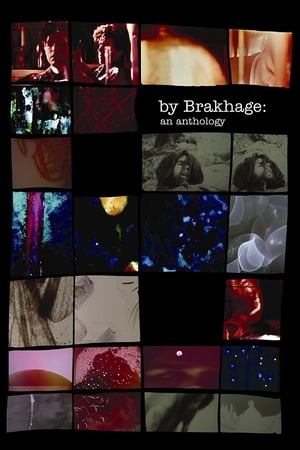
Working completely outside the mainstream, the wildly prolific, visionary Stan Brakhage made more than 350 films over a half century. Challenging all taboos in his exploration of “birth, sex, death, and the search for God,” he has turned his camera on explicit lovemaking, childbirth, even autopsy. Many of his most famous works pursue the nature of vision itself and transcend the act of filming. Some, including the legendary Mothlight, were made without using a camera at all, as he pioneered the art of making images directly on film, by drawing, painting, and scratching.
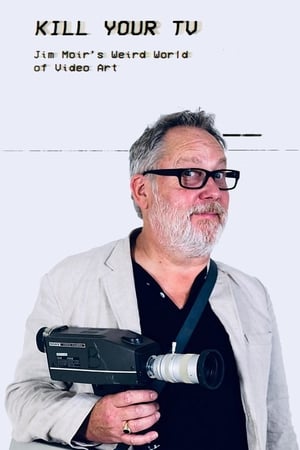
Jim Moir (aka Vic Reeves) explores Video Art, revealing how different generations ‘hacked’ the tools of television to pioneer new ways of creating art that can be beautiful, bewildering and wildly experimental.
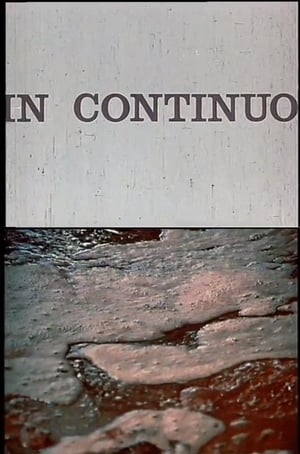
"In continuo" uses slaughterhouse imagery to present the warlike nature of man, first depicting the cleaning and mechanical preparations for the slaughterhouse and then the killing, however, the animal slaughter itself isn’t shown.
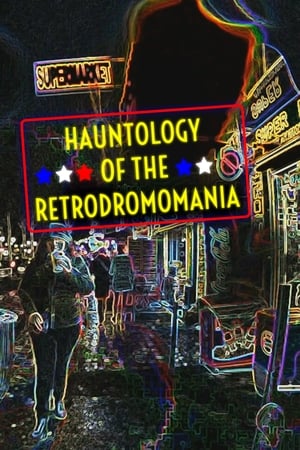
Hauntology of the Retrodromomania is an essayistic motion picture, a locomotory legwork, a deambulatory non-rural land survey, a casual journeying in a punctual dissertation around the phenomenon of the nostalgic feeling, discoursing on a late capitalistic landscape of social emotions, which are of yore, yet coloured of the postmodern tint of pixelated neo-noir, a socio-philosophical flâneur’s trip in critical theory escorted by the spirits of French post-structuralists. For a Sociology of Nostalgia revisited.
An intense and disturbing horror short film made in 2008 for the "CUT!" competition. British channel Zone Horror. The work explores the sinister atmosphere behind the production of a snuff film from the director's point of view. It was selected among the 10 finalists of the competition.
An anthology of one-minute films created by 51 international filmmakers on the theme of the death of cinema. Intended as an ode to 35mm, the film was screened one time only on a purpose-built 20x12 meter public cinema screen in the Port of Tallinn, Estonia, on 22 December 2011. A special projector was constructed for the event which allowed the actual filmstrip to be burnt at the same time as the film was shown.
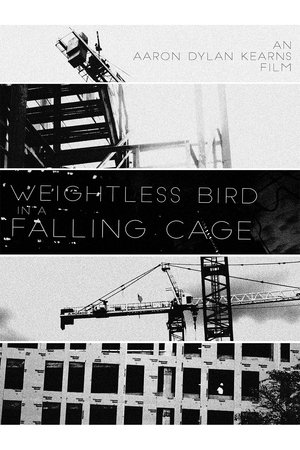
A faceless protagonist witnesses the alienation of gentrification as his home is overtaken by development. the forces behind it are demanding him to leave, but also consequently push him further and further into his not-home.
In Burlesque, the young journalist and film critic Kucera concocted a playful mixture of Surrealist trick shots and newsreel material to express his pacifist sentiments through hidden poetic associations.
Maria Lang is my very close filmmaker friend who lives in the southern german countryside. We see her gardening and visiting an exhibition of female impressionist painters.
Europe, 2028. A humanlike creature washes ashore, carrying with him a motionless body he calls his mother. He is on a mission of some kind, reporting on the dwindling human activity in an increasingly automated world.
.TV is a found footage essay film: Voicemails left by an anonymous caller from the future guide us to the remote islands of Tuvalu, a place the global media has described as “the first country to disappear due to rising sea levels”. Surrounded by thousands of miles of open water, much of Tuvalu’s revenue comes from its country-code web extension .TV, a popular domain choice among global video-streaming and television industries. The caller describes how heat, digital screens, and distance gave him no choice but to leave his sinking home and escape into cyberspace where rising waters will never reach him.
This apocalyptic linguistic comedy meditates on the relationship between language, meaning and social decay and is scripted from "double-speak" language found in a variety of media sources. Drawing its title from the Pentagon's term for crash, Involuntary Conversion evokes the hollowness and free-floating anxiety that characterizes late 20th century culture. In a voice that could belong to a hypnotist or a government spokesman, a disembodied speaker recounts a string of events whose common thread is a sense of impending disaster. The mood is suspended somewhere between nightmare and deadpan and is propelled by a narrative as enigmatic as the language it exposes. The iconic shape of a fighter jet floating in a perfect sky has the creepy feel of a video game and the texture of television is used to make the images feel domestically ingrained.
Two halves split by the perseverance of a scorpion. Come on, feet.
A monkey films himself eating bananas for an online audience.
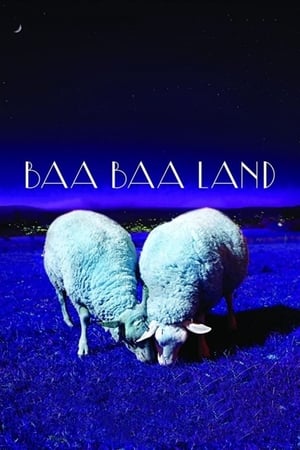
An eight-hour contemplative epic, entirely starring sheep.
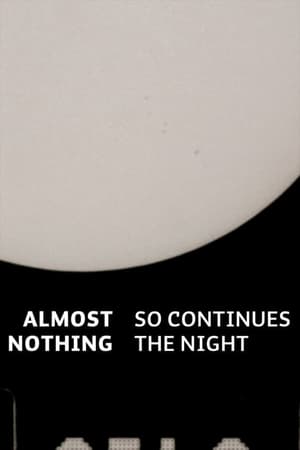
For us, a thought always presupposes a society, a culture and above all the consciousness of time. We are haunted by immortality, human notion par excellence. As if the world was here to fascinate us. And to disappoint us. The film travels around the bulb like the Earth around the Sun. Light makes the film visible. A fragile film, like our existence. In the orbit of the film tragedy and our reality, the image resists the cruelty of the experiment.
In the 1920s, Man Ray directed four films which, although largely unknown by the general public, made him into a major figure in avant-garde cinema. His films were to be as radical as his images or objects. Included: Le Retour à la Raison, Les Mystères du Château du Dé, Emak-Bakia, L'étoile de Mer and collected shorts.
CRISP., wherein a jealous man's attempt to steal a delicious apple crisp causes reality to break down and begins a chain of events leading to an endless cyclical loop of jealousy and theft.
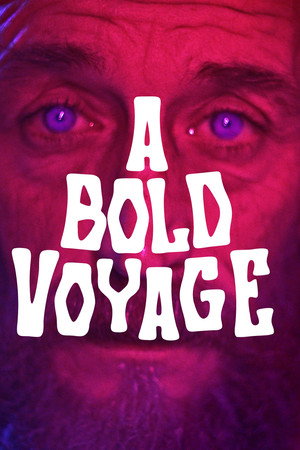
A tragic story of a musician taking a bold voyage in the pursuit of creation, ambition, and need. Letting life choose for him, as part of the art itself and coming to terms with his decisions.