A group of hometown friends come together after the loss of a loved one.
Blending candid interviews, experimental moments, and reflective narration, this 55-minute personal doc explores what it means to grow up when the people who love you also struggle to accept who you are. Through screen-recorded calls with friends, street interviews, and distant footage of everyday life, I examine my upbringing as a queer non-binary trans person—where love, expectation, and shame often coexisted—among a sea of other stories about adolescence. Anchored by a conversation with a close friend and fellow artist, the film sits in the tension between care and rejection, asking if anyone is even really special—or maybe all of us are.
A celebration of home and belonging in South London. This is a film that tows the line between documentary and narrative, and celebrates neighborhood and the rhythms of everyday life in South London. Friends for over a decade, their closeness runs through the piece; rooted in lived relationships, it resists spectacle in favor of quiet intimacy.
After consolidating itself as a tourist destination in the mid-1960s, this small coastal village has become the dormitory town for the workers of a Nuclear Power Plant. With the liberal promise of prosperity and socioeconomic wellfare, many workers left their homes to move to the small city and started working at the new Nuclear Power Plant. The collective unrest and the silence, cut off by the great gusts of wind, articulate the landscape of the village that is now under the aid of the Nuclear Power Plant.
They pass each other everyday, obscured by the crowds. They will always be there, always crossing paths, alone.
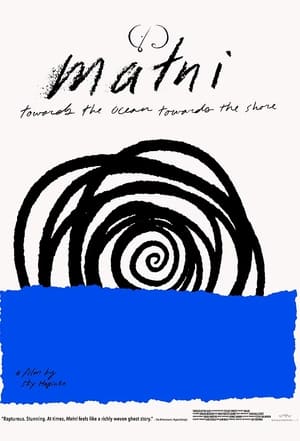
Roads fall into the sea and a travelogue breaks against the landscape.
A calling inhabits the blank pages, unfolding a secret writing of hers. The unseen written traces seep from the murmuring land, pushing through fragmented voices to become new forms, beings made material. Framed as a dialogue with my grandmother, this film explores an alternative form of personal writing by Chinese women in political shifts, absent and abundant. The 'blank' becomes an image, carrying a search for agency; of land transformed and of women unheard. By breaking down linguistic structures, the film opens a space for imagining, reading, and performing, allowing for emergence.
Having lost her memory, A. could barely recall glimpses of her childhood in Argentina. After her death, her son visits the empty house for the last time. A sensory journey through a house without objects but filled with memory.
A short documentary and character study about a woman's complex relationship with religion and family.
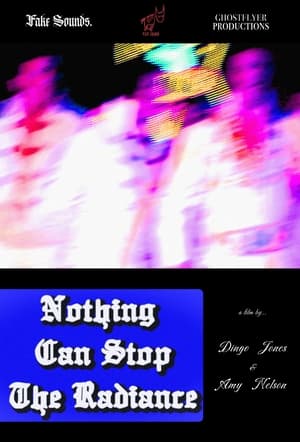
Filmmakers Sam and Amy journey into rural Australia to explore how the legacy of an American legend has transmitted and warped itself over time, and across the globe, resulting in the 30th annual Parkes Elvis Festival.
An experimental look at the origin of the death myth of the Chinookan people in the Pacific Northwest, following two people as they navigate their own relationships to the spirit world and a place in between life and death.
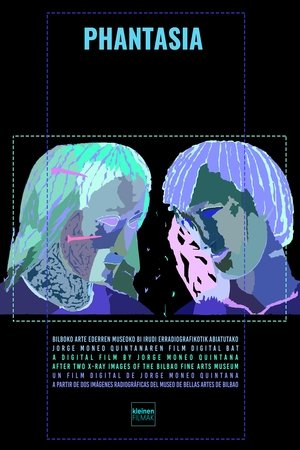
X-ray images were invented in 1895, the same year in which the Lumière brothers presented their respective invention in what today is considered to be the first cinema screening. Thus, both cinema and radiography fall within the scopic regime inaugurated by modernity. The use of X-rays on two sculptures from the Bilbao Fine Arts Museum generates images that reveal certain elements of them that would otherwise be invisible to our eyes. These images, despite being generally created for technical or scientific purposes, seem to produce a certain form of 'photogénie': they lend the radiographed objects a new appearance that lies somewhere between the material and the ethereal, endowing them with a vaporous and spectral quality. It is not by chance that physics and phantasmagoria share the term 'spectrum' in their vocabulary.
Departing from peripheral details of some paintings of the Bilbao Fine Arts Museum, a female narrator unravels several stories related to the economic, social and psychological conditions of past and current artists.
A documentary about a person who cleans his room with a vacuum cleaner, filled with disasters and mishaps.
After a premonition of an unusual bird, a father loses his voice. His daughter undertakes a search to rediscover him, through an intimate narrative that explores the past, the new facets and the silences of a man who is no longer the same.
"Are WE Beautiful?” is an exploration of the way societal views affect the Black self-image. Told through a series of interviews with real New Yorkers of different ages and gender expressions, exploring and discussing the titular question: are we beautiful?
Archive footage from 2006 - 2010 of a young girl growing up during the ages of four to eight. Only fragments of what is remembered exists. Words from a transgender man float to the surface as fleeting memories go on.
Dan and Doris both find themselves single in their 70s after their spouses of decades have passed away. After using an online dating service during the pandemic for older singles, they talk on the phone for three months and fall in love before meeting in person. Now living in Austin, Texas, and married for three years, the two wear lavish matching outfits, go out dancing several nights a week, and have an active sexual life rooted in both fantasy and intimacy. With a deep awareness of their mortality guiding their choices, Dan and Doris are not afraid to show up in the world as their true selves, disregarding cultural norms for how older people should look, love, and move through the world.
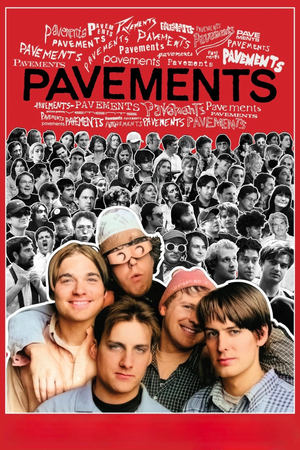
'90s indie-rock band Pavement reunites for their sold-out 2022 tour. But as preparations get underway, surreal tributes emerge: an off-Broadway musical adaptation of their songs, a museum devoted entirely to the band’s legacy, and a shamelessly awards-baiting Hollywood biopic.
- The human being. The camera. The body. The machine. The face. The register. The expression. The exploration -