Jorge and Jeczebel left their four children behind in Venezuela, for what they hoped would be a better life in America. They didn’t expect a bus would bring them from Texas to New York. They also didn’t expect to encounter a city overwhelmed by one of the largest humanitarian crises in its history. The film explores the migrant experience from a deeply personal perspective as they struggle to live in the US and to support their children back home.
For the 750 dogs that live in a Moroccan shelter, the daily routine consists of eating, resting, a bit of fighting and eating again. Could they possibly expect more from life? A pointed, cinematic commentary on mass confinement.
J'aime
In 1991 three teen girls called Midi, Maxiand Efti became celebrities over night and the suburb Akalla was suddenly known all over Sweden. Fifteen years later two old friends try to make a film about the phenomenon. But Midi, Maxi and Efti no longer have contact, and they are not at all interested in talking about the past. A melancholically journey to the past by two friends who have a hard time letting go. "I like it like it is and I like it like it was but I'm not so sure any more any any more..." From the song "Bad Bad Boys" by Midi, Maxi & Efti.
A short documentary exploring the ways LGBT couples show affection, and how small interactions like holding hands in public can carry, not only huge personal significance, but also the power to create social change.
Sergio Citti talks about a video he shot in 1975 after Pier Paolo Pasolini's death.
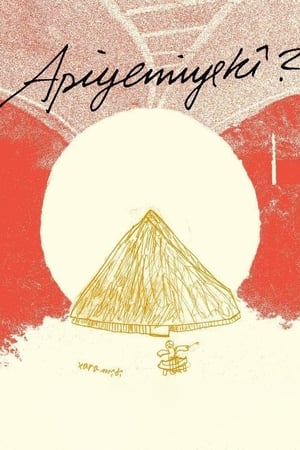
Apiyemiyekî? addresses the genocide of the Waimiri-Atroari people in 1970s, when during the Brazilian dictatorship indigenous lands in the mid-west were invaded for the construction of the national road BR-174 and the installation of a mining company. Illustrations about the period, created by the indigenous population, including children, reveal a traumatic history, referring us to the present day.
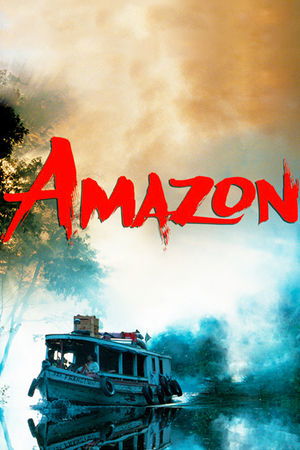
Explore the mysterious Amazon through the amazing IMAX experience. Amazon celebrates the beauty, vitality and wonder of the rapidly disappearing rain forest.
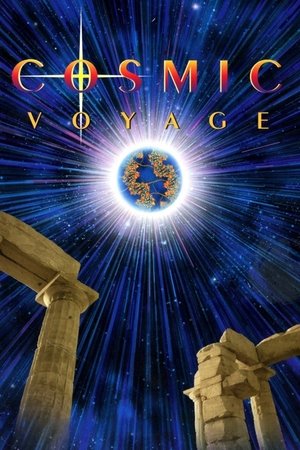
The Academy Award® nominee Cosmic Voyage combines live action with state-of-the-art computer-generated imagery to pinpoint where humans fit in our ever-expanding universe. Highlighting this journey is a "cosmic zoom" based on the powers of 10, extending from the Earth to the largest observable structures in the universe, and then back to the subnuclear realm.
The social democrats of the sixties and seventies worked on their grand plan to build a highway network in Germany that every German citizen could reach within five minutes of their home. The little film hangs around between and on the streets of this network - where the country discos, pedestrian zones, shopping centers, hospitals and roads home are behind noise barriers.
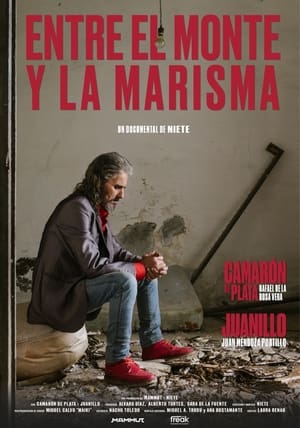
Entre el monte y la marisma
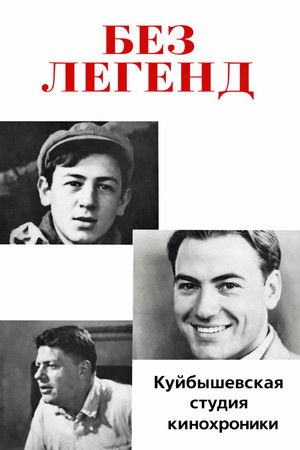
In 1968 Herz Frank made Without Legends (Bez leģendām) at the Kuibishev studios, together with Aloizs Brenčs and Aleksandr Sazhin. The film is based on the memoirs of Hero of Socialist Labor Professor Ivan Vasilyevich Komzin, former head of construction of the V. I. Lenin Volga Hydroelectric Power Station; Hero of Socialist Labor excavator operator V. Klementyev; Honored excavator operator Viktor Vasilyevich Starikov; and writer Konstantin Kirillovich Lapin. Documentary filmmakers from Kuibyshev were making a film about the excavator operator and Hero of Socialist Labor, Boris Yegorovich Kovalenko. However, the material turned out to be too ambiguous to create a film about a model Soviet working man. They turned for advice to the Riga-based documentary filmmaker Herz Frank. He shot additional footage and edited the collected material in such a way that it became a story without legends—about an ordinary person.
One of the highest achievements of the new wave of Kirghiz cinema, which emerged in the mid-1960s. This story of a boy building sandcastles on the shores of the Issyk-Kul Lake becomes a documentary parable on the tensions between an artist and society.
This poetic core in youngsters is also touched in Stanukina's less known Your very personal poetry (Свои, совсем особые стихи, 1982), a wonderful film about a poetry class. It is here that one recalls Kogan's admiration of Lyalya's emotional documentary skills. And it is here that one recalls Kosakovsky's depiction of Lyalya as a person of extraordinarily prosperous feelings, sensitive and energetic, childish and female, shrill and quiet. The young poets are marvellously sneaky, respectfully adoring and creatively playing with - maybe even deconstructing - "Aleksandr Sergeevich", Mr. Pushkin, Russia's exclusive trade mark of high culture and literature.
Movie-lesson observations in the classroom teacher of the Leningrad Conservatory honored artist of the RSFSR N..The Serval. Forty physical steps from the Leningrad Conservatory to the Kirov (Mariinsky) theatre - the way of the artist, overcome, physically and emotionally exhausting rehearsals. Great camera work.
The film tells a story of Kosynka, a pregnant mare, and her owner, a battered old man. Kosynka leads the “horse walker,” designed to train young horse to walk steadily and at a pace. Set to a soundtrack of Bach and Russian folk music, this film is another example of a parable-like narrative, which became more popular in Soviet documentary in the early 1970s.
Documentary about the rave and techno scene of the 90s.
The film recounts an experience, that of a director and his two actors at grips with a play: from the first meeting to the initial readings, the rehearsals done at home, the ones done on stage and finally the first performance. But an experience that took place in the peculiar situation in which the whole of Italian culture found itself in the days between the first and second wave of the pandemic, when it really seemed possible to restart and the feeling of euphoria was accompanied by the illusion that the worst was behind us. Once again we were suddenly checked in our desire for beauty, for life.
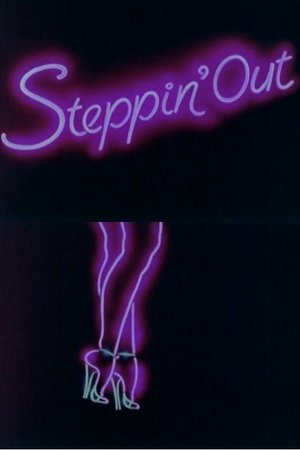
Short documentary film on the fashionable nightclubs and the trendy pop culture scenes that were famous in London on the late 70's. Released as a support feature to the first Alien (1979) movie.
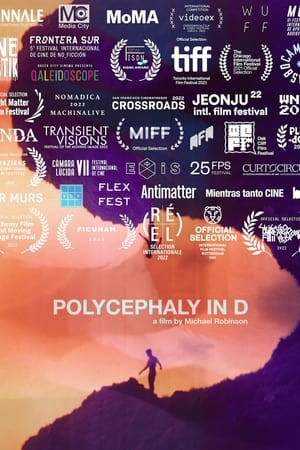
Informed by an underlying sense of anxiety and anguish, Michael Robinson’s Polycephaly in D nestles fragments of narrative within a collage of sound, image, and text that oscillates between the elegant and the discordant.