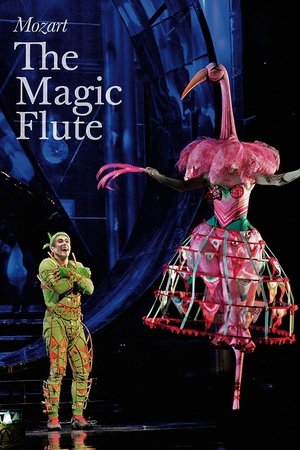
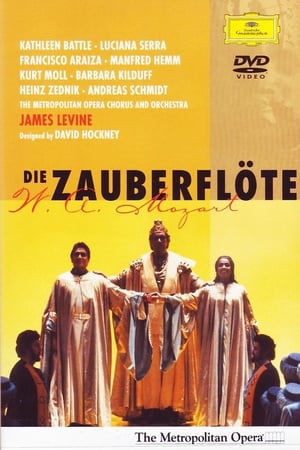
The Queen of the Night enlists a handsome prince named Tamino to rescue her beautiful kidnapped daughter, Princess Pamina. Aided by the lovelorn bird hunter Papageno and a magical flute that holds the power to change the hearts of men, young Tamino embarks on a quest for true love, leading to the evil Sarastro's temple where Pamina is held captive.
The water fairy Rusalka falls in love with an earthly prince. In vain, Father Aquarius warns her. Her sincere feelings are met with human treachery...
Visionary artist Matthew Barney returns to cinema with this 3-part epic, a radical reinvention of Norman Mailer’s novel Ancient Evenings. In collaboration with composer Jonathan Bepler, Barney combines traditional modes of narrative cinema with filmed elements of performance, sculpture, and opera, reconstructing Mailer’s hypersexual story of Egyptian gods and the seven stages of reincarnation, alongside the rise and fall of the American car industry.
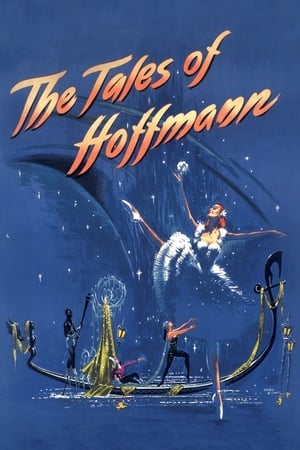
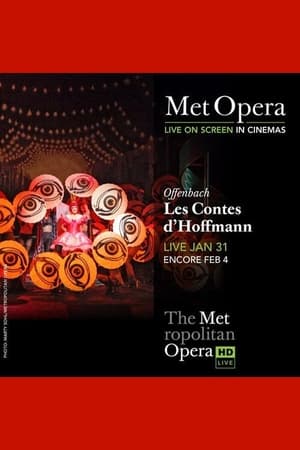
A melancholy poet reflects on three women he loved and lost in the past: a mechanical performing doll, a Venetian courtesan, and the consumptive daughter of a celebrated composer.
Dark fairytale about a demonic doctor who abducts a beautiful opera singer with designs on transforming her into a mechanical nightingale.
The Queen of the Night enlists a handsome prince named Tamino to rescue her beautiful kidnapped daughter, Princess Pamina, in this screen adaptation of the beloved Mozart opera. Aided by the lovelorn bird hunter Papageno and a magical flute that holds the power to change the hearts of men, young Tamino embarks on a quest for true love, leading to the evil Sarastro's temple where Pamina is held captive.
Tamino, a handsome prince, and Papageno, a bird-catcher, are sent by the Queen of Night to rescue her daughter Pamina from captivity under the high priest Sarastro. Julie Taymor's abridged, English-language production of the classic Mozart opera.
This vivid film of Wagner's romatic opera succeeds in conveying what has famously been called "the wind that blows out at you whenever you open the score", including Daland's boat anchoring against the Sandwike cliffs, the red-sailed phantom ship, and the ghost crew rising from the dead. "Scenes that recall classic horror films... Brilliantly successful" (Nürnberger Nachrichten), "Captures the works' essence" (Süddeutsche Zeitung). With a superb cast; conducted by Wagner authority Wolfgang Sawallisch.
The Queen of the Night has begged Prince Tamino to free her daughter Pamina from the clutches of the High Priest Sarastro, who has abducted her. Together with the bird-catcher Papageno, Tamino enters Sarastro's realm to seek her. When he finds her, the two fall in love, but they have to have to undergo ordeals before they can be together. At the end, Papageno is also rewarded with his Papagena.
New tenor star Vittorio Grigolo takes on the title role in Offenbach’s fantastical opera, giving a tour-de-force performance as the tortured poet unlucky in love. He is joined by a trio of leading ladies: Erin Morley sings the mechanical doll Olympia, Hibla Gerzmava is the fragile Antonia, and Christine Rice sings Giulietta, the Venetian courtesan. Bartlett Sher’s colorful production, seen here in its second Live in HD presentation, also stars Thomas Hampson as the sinister Four Villains and Kate Lindsey as Niklausse, Hoffmann’s friend and muse. Yves Abel conducts.
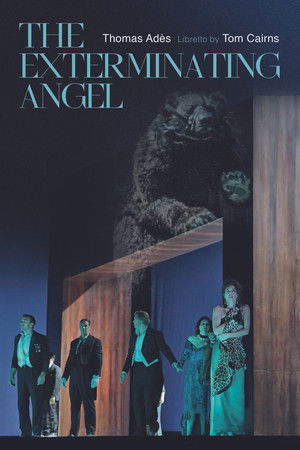
After the acclaimed Met premiere of Thomas Adès's "The Tempest" in 2012, the composer returned with another masterpiece, this time inspired by filmmaker Luis Buñuel's seminal surrealist classic "El Ángel Exterminador", during the 2017–18 season. As the opera opens, a group of elegant socialites gather for a lavish dinner party, but when it is time to leave for the night, no one is able to escape. Soon, their behavior becomes increasingly erratic and savage. The large ensemble cast tackles both the vocal and dramatic demands of Adès's opera with one riveting performance after another. Tom Cairns, who also penned the work's libretto, directs an engrossing and inventive production, using a towering wooden archway to trap the characters onstage. And Adès himself takes the podium to conduct the frenzied score, which features a host of unconventional instruments, including the eerie electronic ondes Martenot.
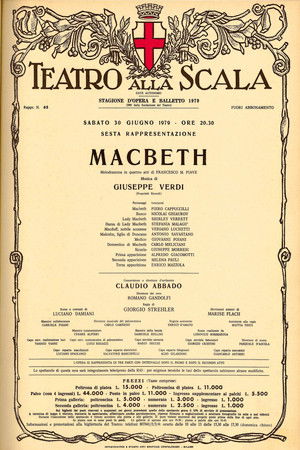
Piero Cappuccilli and Shirley Verrett lead Verdi’s sombre masterpiece, drawn from one of Shakespeare’s most celebrated tragedies. Filmed for television at Teatro alla Scala in 1979, Claudio Abbado conductes a night to remember.
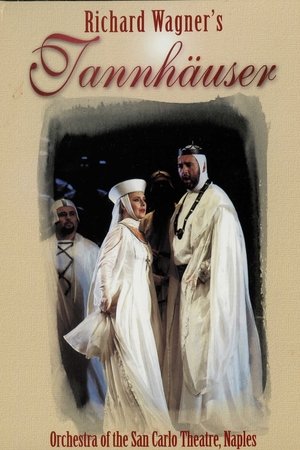
A romantic opera in three acts with music and libretto by Richard Wagner, performed by the Orchestra of the Teatro di San Carlo. The original title, Tannhauser und der Sangerkrieg auf Wartburg, reveals the real nature of the opera, born by a fusion of two traditional sagas and dedicated to the dualism of spirituality and sensuality and the possibility of redemption through love. Composed between 1843 and 1845, Tannhauser has a tormented musical theme, made up of constant variations. It debuted in Dresden in 1845 when Wagner was just over 30.
German composer Richard Wagner wrote Parsifal, which is a three-act opera that tells the story of the title character's quest to save the Knights of the Holy Grail by returning the Holy Spear, healing King Amfortas, and carrying out the sacred ceremony of uncovering the Holy Grail.
Portrait of a Knight is a musical romance about the way in which historic ideals inform contemporary urban life. Rachel is a young archivist living and working in Wellington, New Zealand. Feeling alone and disconnected from life, she projects her romantic fantasies onto the paintings she loves, until one day her song brings Reginald - a Knight of the Realm - to life. His carefree innocence and zest for life begin to open Rachel up to the beauty around her, but the fates have a way of making trouble when miracles occur...
Based on Gluck's masterpiece and performed entirely on location in and around the environs of the Baroque Theatre at the Cesky Krumlov Castle in the Czech Republic; it's an opera production designed specifically for the film with outstanding sets and production values. Countertenor Bejun Mehta sings the role of the torn main character and acts as an artistic advisor, making for an involving and impeccably performed opera.
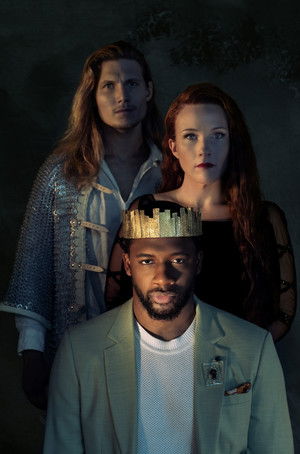
Idealism, treachery, honor, and perfidy collide in this richly lyrical opera by French composer Ernest Chausson. This opulently scored work, which premiered in 1903, lays bare the tragedy of King Arthur’s betrayal at the hands of his queen Genièvre and his trusted knight Lancelot. Considered one of the finest examples of French romanticism, King Arthur (Le roi Arthus) was composer Chausson’s only opera—his own composing career was tragically cut short by his early death at age 44. Performed by a stellar cast, helmed by baritone Norman Garrett, mezzo-soprano Sasha Cooke, and tenor Matthew White, this production of King Arthur takes us to a world in the midst of upheaval where long-standing codes of honor and loyalty no longer hold sway.
Aldo and his girlfriend Lucy reopen an abandoned opera house, but find out that the place is inhabited by a group of Phantoms wearing the Claude Rains 1943 Phantom of the Opera costume.
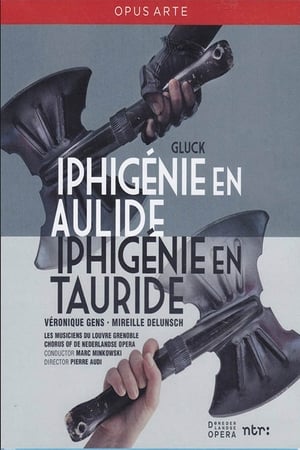
Before the Trojan War, Agamemnon gathered the Greek armies at the port of Aulis. The goddess Diane sent unfavorable winds to prevent the Greeks from sailing. Her oracle set a condition for Agamemnon: to earn the right to sail forth and destroy an innocent country, he would have to sacrifice his own daughter. Agamemnon accepted these terms and killed his young daughter Iphigénie on the altar. In his play Iphigenia in Tauris Euripides imagines that Diane plucked Iphigénie from that altar and delivered her to a temple in distant Tauride, where Iphigénie began to serve the enemy Scythians as Diane’s high priestess—all the while Iphigénie’s family believing her dead.
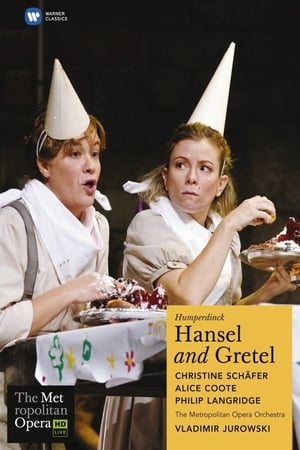
This deliciously dark take on the beloved Brothers Grimm fairy tale, appealing to audiences of all ages, was part of the Met’s popular English-language holiday series. Alice Coote and Christine Schäfer star as the famous siblings lost in the woods, who battle the ravenous Witch—a zany portrayal by tenor Philip Langridge—while the Met orchestra, under the baton of Vladimir Jurowski, glories in the rich, folk-inspired score.