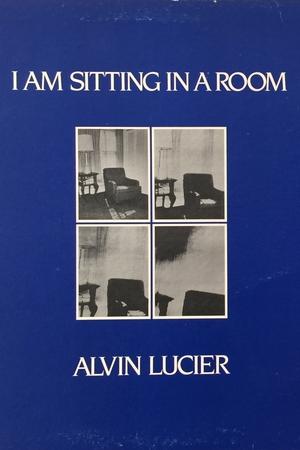
I am sitting in a room is a sound art piece by American composer and sound artist Alvin Lucier composed in 1969. The first performance of the work was in 1970 at the Guggenheim Museum in New York. In collaboration with his partner Mary Lucier. The piece features Lucier recording himself narrating a text, and then playing the tape recording back into the room while re-recording it. The new recording is then played back and re-recorded, and this process is repeated. Due to the room's particular size and geometry, certain resonant frequencies are emphasized while others are attenuated. Eventually the words become unintelligible, replaced by the characteristic resonance of the room.
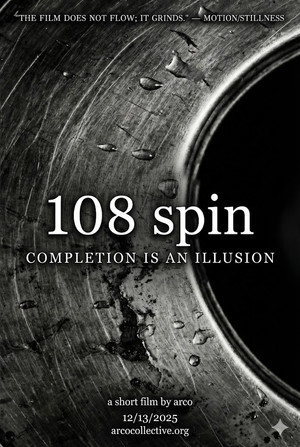
A kinetic prayer and structuralist intervention. Shot entirely on an iPhone 11 in a desolate Midwest laundromat, 108 spin documents the mechanics of impermanence. The film shifts from heavy turbulence to suspended repetition—not as a path to completion, but as a study of the loop itself. Featuring a layered soundscape, the work asks the viewer to stare into the rotation until the noise becomes a mantra.
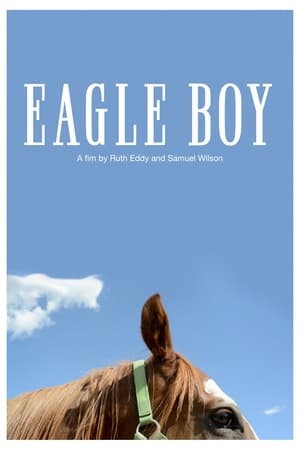
A fearless horse bonds two men to each other and to the traditions that define their community.
Global travel with nothing but a bum bag. Sharing the realities of 'true minimalist travel' and a choice to live simply. A travel adventure with a difference, there’s no luggage! Experienced traveller and amateur filmmaker Benjamin Luke Mitchell (Lost Yet Free), explores the possibilities of freedom if one opens up their mind and leaves the backpack behind. No packing or carrying necessary, the philosophy here is to live simply, without restraints. Our curiosities spur the way, and an ultralight approach allow us to access places and global gifts beyond the reach of a big, heavy sack. This is a personal quest, an introspective story about a man learning how to confront that continual feeling of bewilderment.
SOME COLORS
A short philosophical satire that wanders between the absurd and the profound. From a silent bed stare to a prophetic lentil, Cryptex explores the rituals of modern existentialism — one cup of coffee and one book at a time.
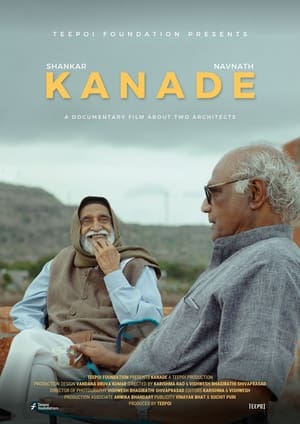
Widely considered an important milestone in Indian Architectural history, the Kanade brothers are a testimony of how life and work can coexist with honesty as the fundamental driving factor. The film ‘Kanade’ gives an insight into the journey and experiences of Shankar & Navnath Kanade as architects and teachers.
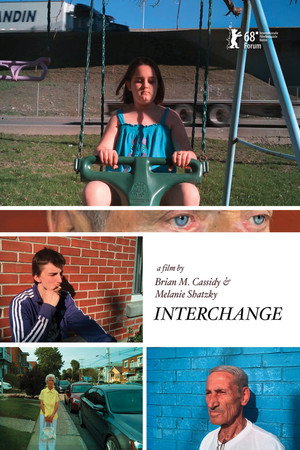
Bathed in the uncanny glow of late afternoon sun and set against a noisy highway, Interchange depicts the melancholy and isolation of a small working-class neighborhood on the outskirts of Montreal.
The New Mother Earth is a documentary film by Michael Lanfield, based on his book of the same name. With forewords by Damien Mander, Freelee the Banana Girl, and Oberom, and an afterword by Aurora Ananda, the work offers a spiritual and philosophical call to awaken from cycles of fear, violence, and disconnection. Exploring humanity’s need to return to love, truth, and compassion, it presents a vision of healing and unity with animals, the Earth, and one another. Through its message of sovereignty, nonviolence, and higher consciousness, The New Mother Earth invites viewers and readers alike to imagine a more harmonious way of living, rooted in reverence for all life.
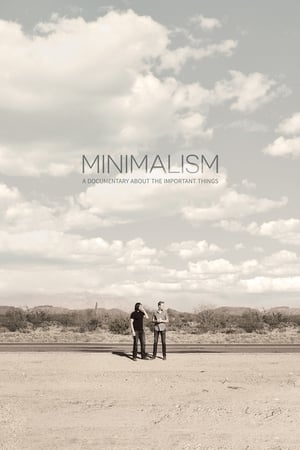
They've built a movement out of minimalism. Longtime friends Joshua Fields Millburn and Ryan Nicodemus share how our lives can be better with less.
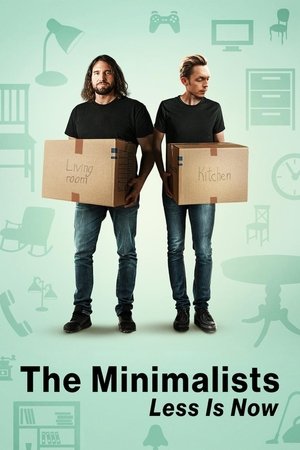
How might your life be better with less? The popular simple-living duo The Minimalists examines the many flavors of minimalism by taking the audience inside the lives of minimalists from various walks of life.
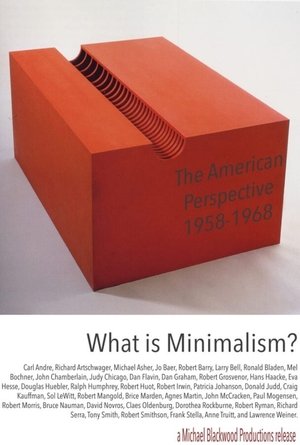
Featuring notable Minimalist artists such as Bride Marden, Claes Oldenburg, and Donald Judd, What is Minimalism: The American Perspective 1958-1968 explores the movement during an explorative exhibit at the Museum of Contemporary Arts in Los Angeles. Exhibition curator, Ann Goldstein, walks us through multiple rooms of the exhibit and offers her insight on Minimalism and its role in our society, stating that "It marked a fundamental, and critical and pivotal and irrevocable change in the course of art history," (Ann Goldstein). This film observes and analyzes the compelling creative choices behind some of the featured artists most applauded works of art.
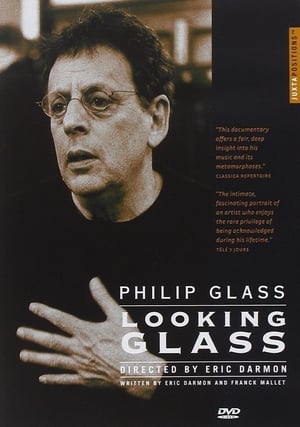
This documentary captures the overflowing energy and activity of one today's greatest composers, Philip Glass, and allows us to follow him from New York to London and from Paris to Boston. He speaks about his beginnings, his moving to Paris for two years of intensive study with Nadia Boulanger, his meeting with Indian musician Ravi Shankar and director Robert Wilson, who had a deep influence on his career. The film also shows him at work on the last details of his opera The Sound of a Voice, directed by Robert Woodruff and conducted by Alan Johnson. Éric Darmon's camera, with its poetic shots and original framings, takes us for a musical journey into seven months of the life of the composer who, rising from the underground scene of the seventies, brought on a revolution in modern theater.
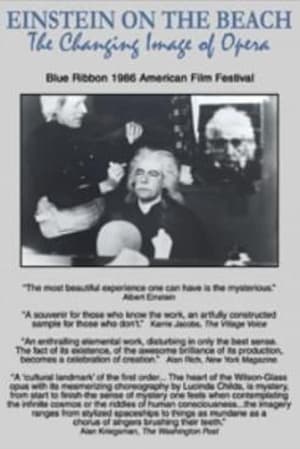
The creative processes of avant-garde composer Philip Glass and progressive director/designer Robert Wilson are examined in this film. It documents their collaboration on this tradition breaking opera.
A muffin thief troubles Mr. Baker, so he seeks help from a sleek detective. They agree to catch the thief at night in the bakery in Baker Street.
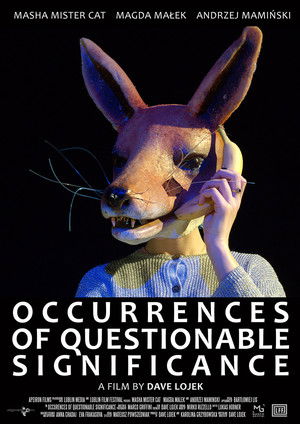
When forest animals invade our cities, the world is in disarray. Office vixen Fiona struggles with her banana phone addiction. Will she succumb to it? Temperamental bunny Barbara only gives her stag sugar daddy Nestor his special massage, after he dines her and plays the big spender. This obscure short film pinpoints postmodern tropes of consumerism, eroticism, and art with an homage to the theater stage and references to literature. This work uses a fantasy language and needs no subtitles.
Comedic surreal misadventures starring stickmen
One of Takahiko Iimura's (and modern art's) earliest works in conceptual video, A Chair entirely consists of a steady (and usually ghosted) image of a chair to the accompaniment of the firecracker pops of television static. While formally minimal, A Chair is conceptually challenging in its simplicity and its demand that the audience zero in on, of all things, a simple chair. - Tom Fritsche
A young adult silently drowning in trauma, yearning to let out what’s inside of him, navigates a series of encounters—each revealing fragments of his inner struggle, toxic masculinity, and unspoken vulnerability, as well as the painful dissonance between his desires and his actions.
A young man performs 'pranayama' sitting against a bleak wall. We observe him through a frame that seems to be connected to him in some way. As we go on to witness the nature of the frame, will the images presented to us be able to convey his intentions, thoughts, and ultimately, his fate? This experimental feature film is comprised of 7 parts of black and white imagery with no sound at all.