Juan Méndez Bernal leaves his house on the 9th of april of 1936 to fight in the imminent Spanish Civil War. 83 years later, his body is still one of the Grass Dwellers. The only thing that he leaves from those years on the front is a collection of 28 letters in his own writing.
Every fall, The Center for Cartoon Studies invites 20 aspiring cartoonists to White River Junction, Vermont for a no-holds-barred education in comics. Those who complete the two-year program earn a Master of Fine Arts degree and are ready to face the hardship of a career in one of the world's most drudgery-inducing art forms. This is their story.
'Figure I' uses a feminist perspective to frame and deconstruct patriarchal techniques of control. This film asks: how was a patriarchal gaze construct-ed, and how has it come to effect biological processes? How have specific tools (like Dürer's Grid) come to shape our technological present and possible futures? Are modern Western scientif-ic/mathematic/technological/medical structures rooted in extractive patriarchal philosophies? 'Figure 1' is composed of re-drawn illustrations of allegorical art historical paintings and etchings, alongside archival footage, Obstetric photography, and rotoscoped animation.
When asked a question on politics, late Palestinian poet Mahmoud Darwish once answered: “I write about love to expose the conditions that don’t allow me to write about love.” In TWO TRAVELERS TO A RIVER Palestinian actress Manal Khader recites such a poem by Mahmoud Darwish: a concise reflection on how things could have been.
Experimental short film that explores the rise and decline of the Soviet Union, from the revolutionary spark of 1917 to the challenges and sacrifices endured during World War II, until its dissolution in 1991.
We observe the daily routines of an elderly couple. Within the quiet flow of time, a longing for youth and irretrievable memories begin to surface. This piece reflects the sorrow hidden in the stillness of old age and the deep yearning for the past.
For more than a decade, Reichsmarschall Hermann Goering, Adolf Hitler's right-hand man during the infamous Third Reich, assembled a collection of thousands of works of art that were meticulously catalogued.
A ritual of grids, reflections and chasms; a complete state of entropy; a space that devours itself; a vertigo that destroys the gravity of the Earth; a trap that captures us inside the voids of the screen of light: «That blank arena wherein converge at once the hundred spaces» (Hollis Frampton).
Jamila reads aloud a stack of printed emails written to individuals and organisations delaying, postponing, or cancelling work due to illness from her sickbed.
From the cabinets of curiosities created in Italy during the 16th century to the prestigious cultural institutions of today, a history of museums that analyzes the social and political changes that have taken place over the centuries.
The word kewaaj (কেওয়াজ) is colloquially used to explain chaos, noisiness or annoyance. "Kewaaj" is an audiovisual attempt to give you a glimpse into how the people of Dhaka function in one of the most unliveable cities, according to the Global Liveability Index.
A reframing of the classic tale of Narcissus, the director draws on snippets of conversation with a trusted friend to muse on gender and identity. Just as shimmers are difficult to grasp as knowable entities, so does the concept of a gendered self feel unknowable except through reflection. Is it Narcissus that Echo truly longs for, or simply the Knowing he possesses when gazing upon himself?
I enjoy religion, I appreciate belief systems and how they offer structure to people's lives. I also appreciate how spirituality manifests itself in Asian cultures as this almost earthbound presence guiding people through every day life and when they need an extra bit of help they need only ask whichever deity holds dominion over their desire. Here is an experimental film I made with videos from my iPhone. Shot across Taiwan and South Korea. An experimental film I made with videos from my iPhone. Shot across Taiwan and Korea. My aim was to explore success in how it pertains to every day life, the satisfaction of small moments, spirituality, superstition, and daily rituals.
A new exploration of familiar places located in the region of Rhône and Isère throught an reinvention of digital nuances, a study of perceptions and fluidity around the nature of motion in landscapes and human interactions.
"The Pig and the Society," symbolizes the stark contrast between the excesses of wealth and the plight of those left behind. It invites viewers to reflect on their perceptions and prejudices, challenging them to see beyond the surface and understand the systemic issues perpetuating homelessness.
Why wouldn't you? Is there any reason not to? We've got so much at our disposal, so, why don't you? Won't you tell me? Won't you please tell me? To have you down is simply unacceptable. Just look at this; or this; at all these hallmarks to guide you and convey to you the prime ways to feel lovely. Just follow them and you'll be set. So, I ask you again... Don't you feel lovely today?
He's hungry, and chances are you're also hungry, so tag along. Who knows, you might learn a thing or two.
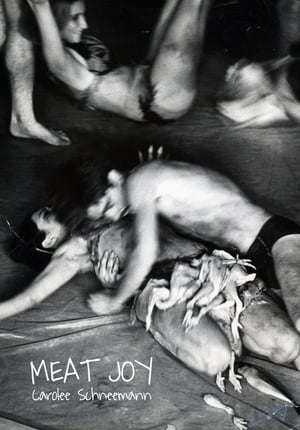
"Meat Joy is an erotic rite — excessive, indulgent, a celebration of flesh as material: raw fish, chicken, sausages, wet paint, transparent plastic, ropes, brushes, paper scrap. Its propulsion is towards the ecstatic — shifting and turning among tenderness, wildness, precision, abandon; qualities that could at any moment be sensual, comic, joyous, repellent. Physical equivalences are enacted as a psychic imagistic stream, in which the layered elements mesh and gain intensity by the energy complement of the audience. The original performances became notorious and introduced a vision of the 'sacred erotic.' This video was converted from original film footage of three 1964 performances of Meat Joy at its first staged performance at the Festival de la Libre Expression, Paris, Dennison Hall, London, and Judson Church, New York City."
Latest installment from the on-going collaboration between filmmaker Paul Clipson & musician Jefre Cantu-Ledesma. Paul's Super8 films, shot entirely in New York City, channel the blissed out states of color drenched psychadellia explored by Brakage as well as lovely black and white still life's that reminisce on Ozu's 'pillow shots' & Chantel Akermans monumental portrait of Pre-Giuliani New York 'Letters Home'. Jefre's music is culled from the same sessions that launched his 2007 release on Students Of Decay 'Shinning Skull Breath', (the two share a track in common). Billowy clouds of distorted guitar expand out into long passages of muffled static and fuzzed out melody.
Simon Schama explains the style, theme and concept of Rembrandt's late masterpieces.