Raza Brava
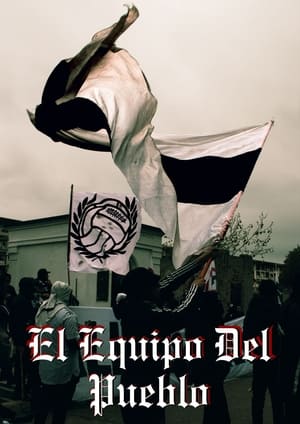
Documentary tells the story of the Chilean football club Colo-Colo, exploring its profound impact on popular culture and the everyday lives of its fans. Throughout the film, it shows how the club has transcended sport to become a symbol of resistance, pride, and class struggle in Chile.
Documentary about the recovery process of the Colo Colo social and sports club, a process in which young people grouped in branches, artists and members of the club decide to organize themselves in order to rescue the memory of the futbol team.
The story of Colo Colo 1991, champion of the Copa Libertadores de América, in the voice of its protagonists.
Documentary that explores the history of the Colo-Colo Social and Sports Club, and not only highlights the socio-political significance of Colo-Colo at a national level but also debunks the myth surrounding the relationship between Pinochet and Colo-Colo. It dispels the belief that the former dictator provided funds for the construction of the Estadio Monumental.
Campaign of Colo Colo champion of the 1991 Copa Libertadores narrated by its players and fans
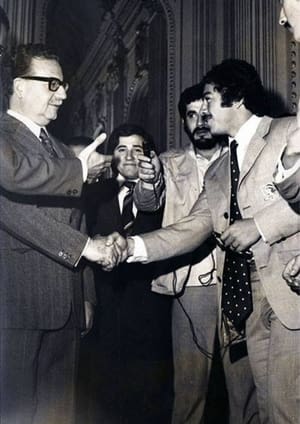
Just when Chile was experiencing the last months of the Popular Unity of President Salvador Allende, Colo Colo - the most popular team in Chilean soccer - faced the 1973 Copa Libertadores de América. This benchmark led by footballers Carlos Caszely, Francisco "Chamaco" Valdés and coach Luis "Zorro" Álamos, not only managed to play the final of this competition against Independiente of Argentina, but also, its brilliant game, dynamics and drive popular turned it into the necessary balm for the fans, at a time when the Chilean political and social situation became extremely acute. Thirty-four years later, the protagonists of Colo Colo 73 relive this Copa Libertadores campaign.
Unpublished images of Colo-colo in the 2008-2009 seasons, intensely experiencing the institutional crisis that the club suffered after Claudio Borghi's brilliant campaign.
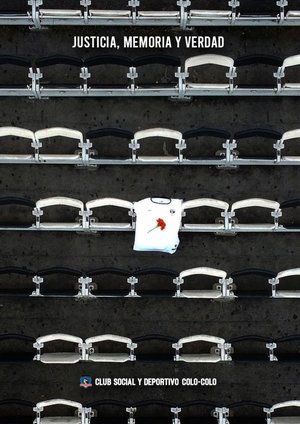
Chile's national stadium was the scene of thousands of celebrations for one people, as well as the suffering and torture of thousands more. The CSD Colo Colo reaffirms its position of justice and memory.
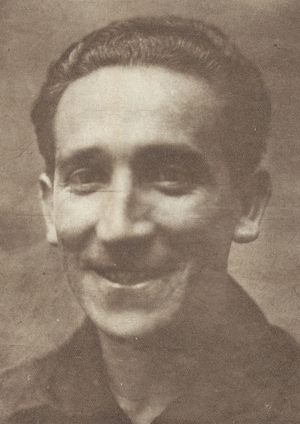
Stories of some idols of the Colo Colo Social and Sports Club
A metaphor of the Flood in our times, The Flood is the rain of violence that washes over us. Noah´s Ark is the train that runs through Mexico toward the United States and migrants are the species attempting to save their lives. For the directors, cinema moves people not just by condemnation, but by confronting and fostering emotions which lead to new, constructive ideas. This documentary became a cinematographic diary for their first viewer, their three-year-old daughter, Zafirah.
Johan van der Keuken went against the grain in 1980: from Amsterdam (on April 30 with the coronation riots and squatting actions) via Paris, southern France and Italy to Egypt. He made his personal travelogue in three parts for VPRO television. Later, he fused the three parts into one long movie.
Punishment in Capitals is a live CD and DVD-release by the band Napalm Death. It was recorded at the London ULU on 12 April 2002 at an animal rights benefit gig.
With the use of montage sequences, voiced over with the observations of the children, van der Keuken was able to use artistic expression to portray the sightless children’s unique perspective of the world.
Documentary that portraits the social issues faced by the community of Chacahua in Oaxaca, through a group of kids who dream of surf.
Porto 2001 project, made in the prison of Paços de Ferreira. Nuno Cardoso, the play director, develops this work with the prisoners during the time period of one year. Documentation of the process: conversations with the prisoners in the context of the process of artistic creation and the theater project. Interviews and testimonials with various people who cross their experiences, their view of life and their life behind bars, with the development of the play.
Life and legacy of Agostinho da Silva. Traversing the biographical journey, the life and work of the Luso-Brazilian philosopher, this work has testimonies from himself and various personalities of Portugal and Brazil that allow us to unravel his personality and multifaceted thought.
Today it is the city of Montreal, but 3 centuries ago the tiny band of missionary founders called it Ville-Marie, the holy city of Mary. This film goes back to its beginning and those who felt called to plant an oasis of Christianity in the North American wilderness. In an imaginative, at times almost surrealistic, way the film recalls the highborn company from France, and shows what survives of Ville-Marie in the Montreal of today.
In China more people are on death row than the rest of the world combined. The children of the convicts are often left alone, stigmatized and living in the streets. Grandma Zhang, as the kids call her, is a former prison guard who has founded an orphanage in Nanzhao.
Short film about General Eduardo Cano, who after the military coup became director of the Chilean central bank in the Pinochet dictatorship. Cano withdraws money from the circulation, which were described by opposition parties with resistance piles. From the Chile cycle by Walter Heynowski and Gerhard Scheumann.