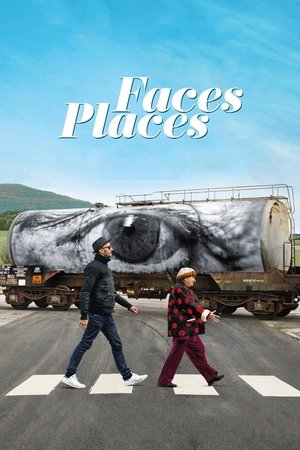
Director Agnès Varda and photographer/muralist JR journey through rural France and form an unlikely friendship.
The story of how newspapers were distributed during the Blitz, stressing the importance of an accurate and objective press on the home front.
For 2-4 year old children, the Tomika Prarail friendly hiragana first time drill. Learn hiragana characters with the aid of Tomika Prarail trains and cars.
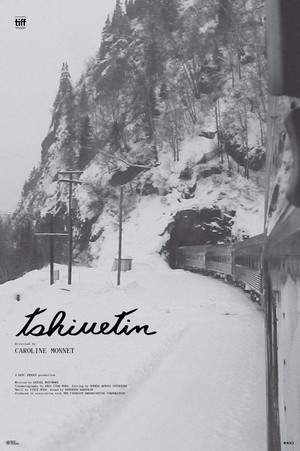
Take a breathtaking train a ride through Nothern Quebec and Labrador on Canada’s first First Nations-owned railway. Come for the celebration of the power of independence, the crucial importance of aboriginal owned businesses and stay for the beauty of the northern landscape.
Final Line
A journalist chats on the unusual excursions possible from nodal stations on Europe's train networks. Douglas Browne, journalist and traveller, takes us about Europe re-telling his experiences of many countries (Italy, Switzerland, Germany, Spain) and letting us into the secret of making the journey over land and see an exciting part of a holiday or business trip.
Dr Beeching, Chairman of the British Transport Commission, sits at a desk addressing workers. Intended to be shown before a programme of other British Transport films.
Two boys aged 9 and 10, Jan and Christoph, want to visit their grandma, who lives in another town. They travel by train, on their own. They buy their tickets, find the right platform and get on the right train. And they know how to behave on the train. So, as expected, the train trip to Grandma's is a safe affair and great fun for the boys.
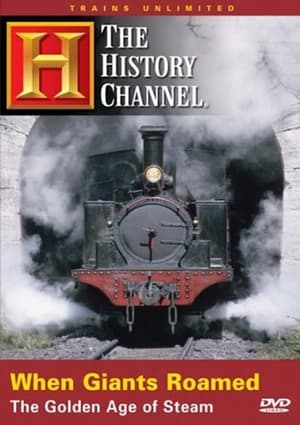
In the first half of the 20th century, America's railroads were radically transformed by the innovation of gargantuan steam locomotives. Pushed by the need to haul ever longer and heavier trains, the nation's locomotive works responded with the invention of awe-inspiring articulated engines. Delivering up to 7,500 horsepower, these steel behemoths could haul mile-long, 15,000-ton trains. In this riveting program, journey back to the golden age of steam for an up-close look at these legendary locomotives. See the Union Pacific's famed "Big Boy" in action and ride the rails of the Chesapeake & Ohio and Norfolk & Western railways. Meet the men who drove engines like the Allegheny and Yellowstone, and visit the museums and yards where the largest steamers ever built remain preserved in time. THE HISTORY CHANNEL' proudly presents this rollicking retrospective, sure to set any rail fan's heart pounding
Trace the history of Hitler's armored private train, a 15-car mobile headquarters boasting state-of-the-art communications and anti-aircraft cannons.
The Channel Tunnel linking Britain with France is one of the seven wonders of the modern world but what did it take to build the longest undersea tunnel ever constructed? We hear from the men and women, who built this engineering marvel. Massive tunnel boring machines gnawed their way through rock and chalk, digging not one tunnel but three; two rail tunnels and a service tunnel. This was a project that would be privately financed; not a penny of public money would be spent on the tunnel. Business would have to put up all the money and take all the risks. This was also a project that was blighted by flood, fire, tragic loss of life and financial bust ups. Today, it stands as an engineering triumph and a testament to what can be achieved when two nations, Britain and France put aside their historic differences and work together.
Des trains dans la guerre
Volume Two features trackside SEPTA electric action at Pennsylvania locations including Glenside, Elkins Park, Melrose Park, Fern Rock, Daylesford, Paoli, and Malvern. Many Silverliner IV MU's are seen along with former PRR Silverliner III, and former PRR and RDG Silverliner II equipment. The MU's have been painted into an attractive rainbow paint scheme recently adopted by SEPTA. In addition, SEPTA's AEM7 electric locomotives are seen pulling Bombardier push pull train sets as well as Amtrak Genesis diesels powering Keystone Service trains. Filmed and narrated by Tim Hosey in April 2001; edited by Nick Lipka
A day in the city of Berlin, which experienced an industrial boom in the 1920s, and still provides an insight into the living and working conditions at that time. Germany had just recovered a little from the worst consequences of the First World War, the great economic crisis was still a few years away and Hitler was not yet an issue at the time.
A group of people are standing along the platform of a railway station in La Ciotat, waiting for a train. One is seen coming, at some distance, and eventually stops at the platform. Doors of the railway-cars open and attendants help passengers off and on. Popular legend has it that, when this film was shown, the first-night audience fled the café in terror, fearing being run over by the "approaching" train. This legend has since been identified as promotional embellishment, though there is evidence to suggest that people were astounded at the capabilities of the Lumières' cinématographe.
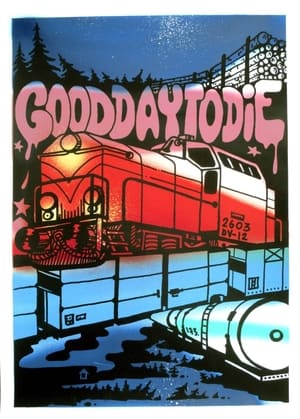
Several films have been made about the lives of train hobos, but Aleksi Pohjavirta's A Good Day to Die is probably the first Finnish documentary on the subject. The film follows Billy, who travels in a pump on freight trains. In the way of life, the feeling of freedom and letting yourself be carried away by chance are attractive and they make the train bomb strive for a windy ride again and again.
A story of progress in railroad transportation
The story of the independent railroad and its survival against the giants.
A Santa Fe Railroad educational film on the steam locomotive in their role in industry and passenger travel.
A Documentary on the railways and their role in supporting the United States