Tout le temps, tout le temps, tout le temps...?
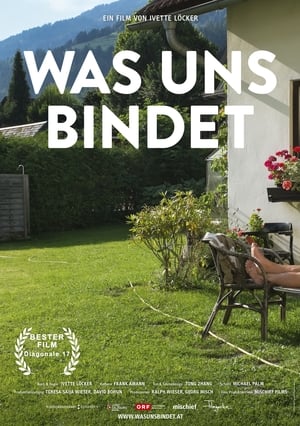
Rosa is from Croatia and lives in Switzerland, with her husband who depends on her care. She takes care of everything. Her children have grown up and want to leave home. Rosa stays behind alone.
Kekaiulu Hula Studio follows the Proclaimed Hula Halau of the same name, showcasing their twist on what the real reason for hula is and what life as a dancer in the halau is really like. Something previously unseen in the public eye.
What would your family reminiscences about dad sound like if he had been an early supporter of Hitler’s, a leader of the notorious SA and the Third Reich’s minister in charge of Slovakia, including its Final Solution? Executed as a war criminal in 1947, Hanns Ludin left behind a grieving widow and six young children, the youngest of whom became a filmmaker. It's a fascinating, maddening, sometimes even humorous look at what the director calls "a typical German story." (Film Forum)
An Oscar nominated documentary about a middle-class American family who is torn apart when the father Arnold and son Jesse are accused of sexually abusing numerous children. Director Jarecki interviews people from different sides of this tragic story and raises the question of whether they were rightfully tried when they claim they were innocent and there was never any evidence against them.
yaya/ayat explores identities, being lost in translation and distance. But at its core it's about the filmmaker longing for a relationship with her geographically distant grandma and her journey to Greece to find her. This is an experimental documentary about how being a part of any diaspora shapes a person's identity.
La vie heureuse de maman Louise
On the outskirts of Den Helder lies De Nollen, an inland dune area where nature, sculpture, and painting merge into a truly immersive experience. It is the life's work of artist Rudi van de Wint. He died unexpectedly in 2006. His sons, Ruud and Gijs, carried on his dream, out of love for their father and for De Nollen. But plans for a Rudi van de Wint museum in the area led to cracks in their idyllic existence.
Haja Fatma, a mother to eight children, tells the tale of family life in Tripoli during the Libyan Revolution. Women, young and old, all contributed during these hostile months in their own unique way. A human portal into the acts of ordinary people in their hope for freedom.
Ida is cleaning out the house that her grandfather, an artist, used to live in. She wades through a studio overflowing with artefacts, oddities and lost history. Similarly to S P A C E S, Štrbová treats the theme of memory and loss, combining fiction and documentary, letting the images of nostalgic childhood and the suffocating past flow associatively. To the sound of Francesco Geminiani's Concerto grosso no. 12, subtitled Madness, the fragile physicality of both dead and living relics stands out. The head of a dead parrot, a cast of her grandmother's breasts or a moss-covered real estate agent represent the discoveries of a personal archaeological site and exhibits of an introspective museum of family history.
Filmmaker Julie Buck explores her grandfather’s collection of Super 8 footage; the revelations behind the captured moments of joy reveal dark truths.
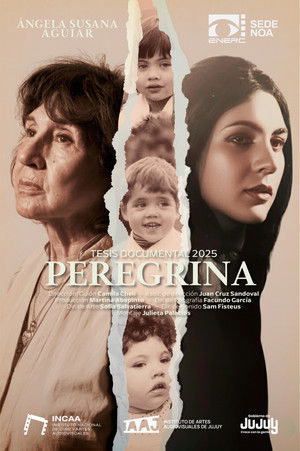
In the Land That Is Like You is a progress on the tracks of my lost past, with the contact of my mother, my grandmother and the man who I love, in a country which escapes from me and retains me, Lebanon.
The documentary's title translates as "to be and to have", the two auxiliary verbs in the French language. It is about a primary school in the commune of Saint-Étienne-sur-Usson, Puy-de-Dôme, France, the population of which is just over 200. The school has one small class of mixed ages (from four to twelve years), with a dedicated teacher, Georges Lopez, who shows patience and respect for the children as we follow their story through a single school year.
In Argentina, almost all adopted children are under 5 years of old. Luis and Valeria open the doors of their home and tell us their family story. A true story full of obstacles, fears and love about paths that connect and people who meet by chance.
Traces the lives of the Hartings, a blind Montreal family of three who make their living singing in the city's subway stations. The Hartings lost their only sighted child Hassan in a tragic drowning accident, and have since turned to the teachings of Russian mystic Grigori Grabovoi, hoping to resurrect their son. Resurrecting Hassan is an exploration of this family's legacy of grief, tragedy and abuse; the film will follow them on their path to redemption.
Until now, they have stood on the sidelines. They have not appeared before the cameras. They have not taken part in public discussion. It is mainly to them that the documentary film by the well-known journalist Ewa Ewart was devoted. It shows the face of the Smolensk catastrophe through the eyes of the victims' families. April 10, 2010 went down in the memory of Poles as a day of national drama. But for the characters in the film, it was the day of their greatest personal drama. Along with the presidential couple, their loved ones passed away in shocking circumstances. For most, the time passing since the Smolensk catastrophe does not bring relief. Ewa Ewart and her film crew accompany the families at various stages of their struggle with difficult emotions. The film is in the process of being made and will include sequences and stills that have not been used anywhere before.
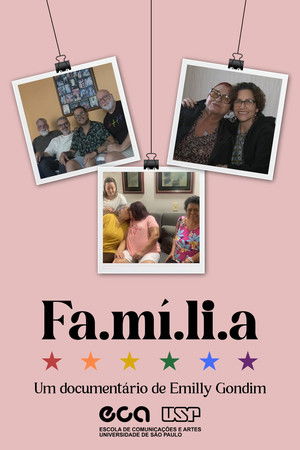
What happens when your child comes out to you? In this feature documentary, parents of lesbian, gay, bisexual and trans-gender individuals in Turkey intimately share their experiences with the viewer, as they redefine what it means to be parents in this conservative society.
A silent day unfolds on the slope of a mountain… A child exists alongside his mother and father, yet each of them seems to inhabit a different world. With no dialogue, the film relies on visual storytelling. In certain close-up shots, color fades to black and white; symbolizing moments of inner solitude, personal conflict, and emotional disconnection. The unseen distances within the family are revealed not through words, but through images.
During the rice sowing season, Jun, a young Catalan of Chinese origin, works as a seasonal worker in the Ebro Delta. This ancient labour will make him confront his own roots and the distance that separates him from his family.
Arctic Tale is a 2007 documentary film from the National Geographic Society about the life cycle of a walrus and her calf, and a polar bear and her cubs, in a similar vein to the 2005 hit production March of the Penguins, also from National Geographic.