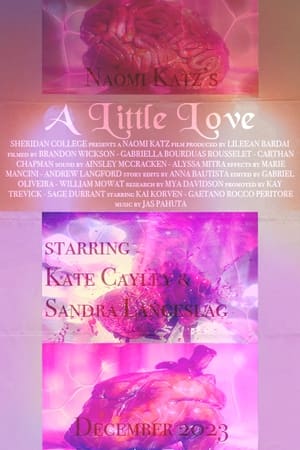
X-ray images were invented in 1895, the same year in which the Lumière brothers presented their respective invention in what today is considered to be the first cinema screening. Thus, both cinema and radiography fall within the scopic regime inaugurated by modernity. The use of X-rays on two sculptures from the Bilbao Fine Arts Museum generates images that reveal certain elements of them that would otherwise be invisible to our eyes. These images, despite being generally created for technical or scientific purposes, seem to produce a certain form of 'photogénie': they lend the radiographed objects a new appearance that lies somewhere between the material and the ethereal, endowing them with a vaporous and spectral quality. It is not by chance that physics and phantasmagoria share the term 'spectrum' in their vocabulary.
Departing from peripheral details of some paintings of the Bilbao Fine Arts Museum, a female narrator unravels several stories related to the economic, social and psychological conditions of past and current artists.
Argemira
The Big Picture uncovers the untold story of a state-of-the-art cinema quietly forgotten in the center of Bristol, a vibrant UK city known for its countercultural spirit. Once a cutting-edge IMAX theatre, the building was abandoned for over a decade—until a collective of cinephiles reclaimed it. Blending DIY ingenuity with punk ethos, they’ve transformed a forgotten relic into the beating heart of a grassroots cinema movement—reviving not just a building, but a shared vision of what cinema can be.
A documentary of insect life in meadows and ponds, using incredible close-ups, slow motion, and time-lapse photography. It includes bees collecting nectar, ladybugs eating mites, snails mating, spiders wrapping their catch, a scarab beetle relentlessly pushing its ball of dung uphill, endless lines of caterpillars, an underwater spider creating an air bubble to live in, and a mosquito hatching.
Aconteceu, virou Manchete! A História da Rede Manchete
Follows the young people of Selma, Alabama's RATCo (Random Acts of Theatre Company) as they journey to New York City to share their story of hope, resilience, and overcoming.
When two of artist Barbora Kysilkova’s most valuable paintings are stolen from a gallery at Frogner in Oslo, the police are able to find the thief after a few days, but the paintings are nowhere to be found. Barbora goes to the trial in hopes of finding clues, but instead she ends up asking the thief if she can paint a portrait of him. This will be the start of a very unusual friendship. Over three years, the cinematic documentary follows the incredible story of the artist looking for her stolen paintings, while at the same time turning the thief into art.
Since the enactment of the Anti-Boryokudan Act and Yakuza exclusion ordinances, the number of Yakuza members reduced to less than 60,000. In the past 3 years, about 20,000 members have left from Yakuza organizations. However, just numbers can’t tell you the reality. What are they thinking, how are they living now? The camera zooms in on the Yakuza world. Are there basic human rights for them?
From May 10, 1940, France is living one of the worst tragedies of it history. In a few weeks, the country folds, and then collapsed in facing the attack of the Nazi Germany. On June 1940, each day is a tragedy. For the first time, thanks to historic revelations, and to numerous never seen before images and documents and reenacted situations of the time, this film recounts the incredible stories of those men and women trapped in the torment of this great chaos.
How do artists view their own work? How does actor Esko Salminen immerse himself in his roles, how does the writer/director Saara Turunen create a whole new world for the stage, and why does musician PK Keränen pick up his guitar time and time again? Is creativity a conscious or subconscious process, a pleasure or a compulsion? Veikko Aaltonen’s documentary takes us straight into the heart of creativity with artists from different fields and generations. Celebrating the various forms of passion and creative work, the film presents a compelling case for the significance of art.
A unique visual interpretation of Tyler, the Creator's latest album, Chromakopia.
For ten years, Raymond Depardon has followed the lives of farmer living in the mountain ranges. He allows us to enter their farms with astounding naturalness. This moving film speaks, with great serenity, of our roots and of the future of the people who work on the land. This the last part of Depardon's triptych "Profils paysans" about what it is like to be a farmer today in an isolated highland area in France. "La vie moderne" examines what has become of the persons he has followed for ten years, while featuring younger people who try to farm or raise cattle or poultry, come hell or high water.
When the cameras rolled, Doris Day wore a happy face, never hinting at the pain she endured in her personal life. This documentary brings viewers close to the real Doris Day through the eyes of her friends and family members and with the help of film footage, newsreels and photographs. What surfaces is a complex picture of an equally complicated woman who faced problems far more formidable than her cinematic image revealed.
Jim Carrey exhibits his talent as a painter and reflects on the value and power of art.
A feature-length documentary going behind-the-scenes on the making of the 2015 film Tangerine.
January 13th, 2024; Suffolk County's punk, grunge, and emo scenes are showcased through the more than a hundred attendees at Caveversary; an annual celebration of the independent basement venue, The Cave.
An experimental half-documentary half-fiction about a young person’s routine of getting to sleep and waking up.
Wallpaper
The Victorian era is often cited for its lack of sexuality, but as this documentary reveals, the period's artists created a strong tradition surrounding the classical nude figure, which spread from the fine arts to more common forms of expression. The film explains how 19th-century artists were inspired by ancient Greek and Roman works to highlight the naked form, and how that was reflected in the evolving cultural attitudes toward sex.