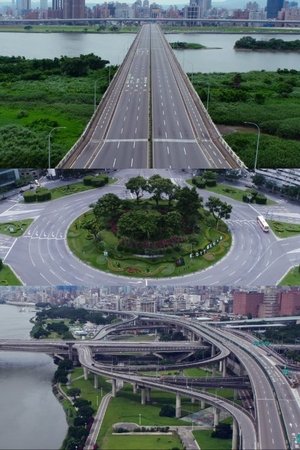
This documentary aims to register this unknown side of James Joyce: His Greek Notebooks. Trieste. Bloomsday, 2013. Dance in slow motion, accompanied by text. By deconstructing the body, we turn it into a memory: of the body, of life, of texts. The biographical references to Joyce and Mando Aravantinou, combined with the diagonal slicing of the image, cancel the realism of the landscape, including that of the Narrator’s space/study. As a culmination, Joyce’s letter “A request for a loan in Greek” functions as a timely denunciation. Various routes through cities, such as Trieste, London, New York, and Athens; languages such as Greek and English. In addition to the primal myth of Ulysses, there is another issue: Greek is “the language of the subject of Ulysses”
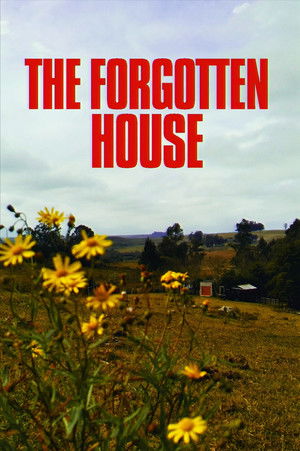
In 2008, a real-life mystery began to unfold when a real estate company (name withheld by request) discovered video footage shot in one of its vacant properties. The tapes were acquired by local documentary filmmakers Jarrod Rogan and Haman Movafagh, who began piecing together a series of bizarre instances recorded by a man living in the house. Apparently waiting for his wife and daughter to join him from out of state, the man began documenting strange activity that kept him from sleeping for days on end. The eerie recordings have become the subject of much controversy among paranormal investigators, and are finally being released to the general public. This first documentary from Son of Jason Films challenges audiences to explain what happened in the house on Briar Lane.
The cooking show is as old as television itself. But why do we like watching the making of a meal that most of us will never cook, let alone eat? Dirty Furniture’s jam-packed video essay is a rollercoaster ride through the history of the genre, at once a staple of television viewing and a hotpot of shifting perspectives and sociocultural values.
An audiovisual essay constructed from Super 8 footage filmed during camera tests for the short film ‘La Trampa’. Through gestures, light, and silences, it reflects on what the image reveals and what it leaves unsaid.
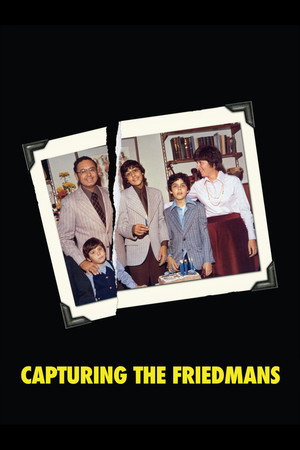
An Oscar nominated documentary about a middle-class American family who is torn apart when the father Arnold and son Jesse are accused of sexually abusing numerous children. Director Jarecki interviews people from different sides of this tragic story and raises the question of whether they were rightfully tried when they claim they were innocent and there was never any evidence against them.
A French documentary or, one might say more accurately, a mockumentary, by director William Karel which originally aired on Arte in 2002 with the title Opération Lune. The basic premise for the film is the theory that the television footage from the Apollo 11 Moon landing was faked and actually recorded in a studio by the CIA with help from director Stanley Kubrick.
A flickering dance of intriguing imagery brings to light the possibilities of ordinary movements from the everyday which appear, evolve and freeze before your eyes. Made entirely from archive photographs and footage from the earliest days of moving image, All This Can Happen (2012) follows the footsteps of the protagonist from the short story 'The Walk' by Robert Walser. Juxtapositions, different speeds and split frame techniques convey the walker's state of mind as he encounters a world of hilarity, despair and ceaseless variety.
Born June 8, 1964, Frank Matter films four "twins", born the same day as him, but in other latitudes. Interweaving their life stories with rich archival material, the filmmaker links these Parallel Lives with elements from his own biography, to compose a fascinating fresco where intimate trajectories are part of the advent of the global village.
Capturar (Las 1001 novias)
A tribute to a fascinating film shot by Alfred Hitchcock in 1958, starring James Stewart and Kim Novak, and to the city of San Francisco, California, where the magic was created; but also a challenge: how to pay homage to a masterpiece without using its footage; how to do it simply by gathering images from various sources, all of them haunted by the curse of a mysterious green fog that seems to cause irrepressible vertigo…
Madonna's rise to fame from 1978 to 1992, exploring her personal life, controversies, and the challenges she faced during that period.
Many years ago, a group of friends started a journey. This documentary looks back at unique hobby that forged an unbreakable brotherhood.
Paranormal horror documentary with real footage of the night when two friends entered with cameras in an abandoned hotel among the forests of Galicia, they were surrounded and attacked by unexplained forces. The documentary shows what happened there with real footage and interviews of the protagonists.
Two generations dialogue through the images they filmed of their children, a reflection of the emotional bond that arises from their involvement with what was shot.
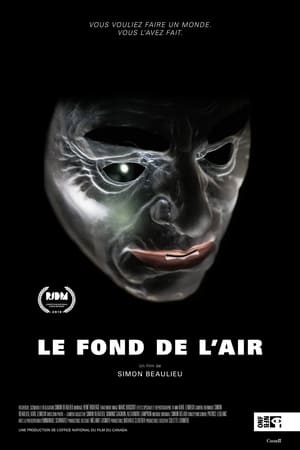
A reflection on the fate of humanity in the Anthropocene epoch, White Noise is a roller-coaster of a film, a whirlwind of sounds and images. The fourth feature-length work by Simon Beaulieu, this film essay plunges viewers into a subjective sensory adventure—a direct physical encounter with the information overload of daily life. White Noise transforms the imminent collapse of our civilization into a visceral aesthetic experience.
Por Diabos
Thanks to his myriad film roles, Lon Chaney is known as “the man of a thousand faces,” and you could say that the early horror era never beheld a figure more intriguing. Yet because of his numerous transformations, his face never became as iconic as that of, say, Boris Karloff. Accompanied by a soundtrack from Bernhard Lang, this “re-imagination of shots” taken from Chaney´s forty-six surviving films offers a beguiling excursion into the history of film. The director reveals surprising associations, while highlighting the enduring magic of works which are now more or less forgotten.
Make Moravia Great Again
This experimental Western horror film set in the Moravian region of Slovácko offers a new take on the legend of Saint Wenceslas. Against the backdrop of a shabby folk festival, the mythical prince Boleslav, a zombie from a wine cellar, battles his brother Wenceslas over the nature of Czech statehood and a plate of tomato soup.
The second part of the endless series about Moravia offers an even darker descent into the soul of Moravia, which is, however, intoxicating like a slightly delirious state after a sip of wine and chewing on a clod of mother earth. A visually distracting journey focused on the undercurrents of Moravian identity, whose echoes even Friedrich Nietzsche would not want to hear...