Preschool to Prison is a compelling examination of how the United States public school system is built and operated like prisons. Zero-tolerance policies are used to justify suspension and arrests that set up a pathway to send children of color and children with special needs from school to prison. Children are being suspended, restrained, dragged, physically manhandled, and subsequently arrested for minor offenses such as throwing candy on a school bus. These personal accounts from people affected by the school-to-prison pipeline give riveting tales about the generational impact on society.
In 2020, the USA experienced a multiple catastrophe: No other country in the world was hit so badly by the coronavirus pandemic, the economic slump was dramatic, and so was the rise in unemployment. A rift ran through society. In the streets there were protests of both camps with violent riots, authoritarian traits were evident in the actions of the leader of the nation. And all of this in the middle of the election year, when the self-centered president fought vehemently for his re-election. From the start of his presidency, Donald Trump had divided American society, incited individual sections of the population against one another, fueled racism, hatred, xenophobia and prejudice, insulted competitors and denigrated critical journalists as enemies of the people. The documentary shows how this could happen and what role the targeted disinformation of certain sections of the population through manipulative media played.
Archiviato - L'obbligatorietà dell'azione penale in Valsusa
On 19 March 1966, a photo exhibition about the police intervention during the wedding of Beatrix and Claus opened in Amsterdam. After the opening, filmmaker Louis van Gasteren filmed how, in the distance, policemen began beating up a young man, seemingly without any provocation. This footage was shown that same evening on television. Van Gasteren interviewed the victim, a 22-year-old student, who declared that he was walking in that direction because his ‘bicycle was there’. That became the title of this short film, in which Van Gasteren used slow motion to analyse the objectionable actions taken by the police.
The film recounts Carlo Giuliani’s day of July 20 and, parallel to it, the July 20 of the march of the ‘disobedients’, or the ‘white overalls’, among whose ranks Carlo died. An individual’s story is told in all its absolute concreteness, the friends he meets, the snack bar he goes to for a bite, the roll of scotch tape he picks up on the street; whereas a multitude’s story is told in all its epic tragedy, the night under the rain, the colossal preparation against the march, the advance behind shields, the attack of which the multitude was victim, the defense that gets organized.
You Have Struck A Rock! commemorates the special contribution of South African women to the success of the anti-apartheid struggle. It recovers the remarkable "women's campaigns" of the 1950s against the hated pass system. This massive, non-violent civil disobedience movement was only finally crushed by the 1960 Sharpeville Massacre and the banning of anti-apartheid organizations. Lilian Ngoyi, Helen Joseph, Dora Tamana and other leaders recall this struggle and their imprisonment and banning. Yet they remain undaunted, demonstrating the South African proverb: "When you have touched a woman, you have struck a rock."
In 2020, five kids were victims of police gunfire. One of them, Blas Correas, was killed. In spite of the attempts to cover it up, institutional violence and police brutality came to light.
A Southern Indiana man endures a fatal night of torture after being arrested for a routine traffic stop.
Beneath the fury of Ferguson unrest, an affable professor dedicates his life to actionable, peaceful change while attempting the grueling triple crown of ultra-marathon swimming.
It became world news in October 2019 when economic reforms in Ecuador led to gas prices suddenly shooting up by 123 percent. People from urban and indigenous communities united in protest. In The Rebellion of Memory we follow the events through their eyes, as the country’s capital, Quito, descends into smoke-filled chaos.
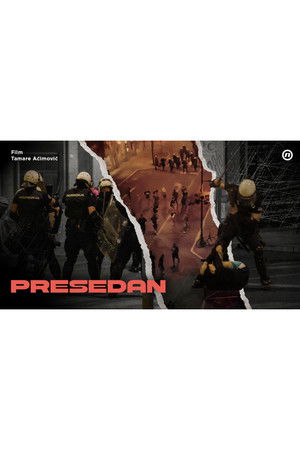
Marka Žvaka together with Drop Site News, recapitulated the events from the fall of the canopy in Novi Sad until today. Given that Serbia is at the crossroads, we encourage you not to turn to Albuquerque. Ideal for all your English speaking friends and contacts.
The first major uprising against police brutality, harassment, and societal oppression was not at Stonewall in 1969, but at Compton's Cafeteria in San Francisco three years earlier. Those who stood up were trans women and gay men. Now, nearly 40 years on, Susan Stryker and Victor Silverman tell the story of this oft-overlooked event in the history of American civil rights.
In a country that prides itself on democracy, a group of activists, known for chalking messages and holding signs, faces a terrifying escalation: repression so severe that their right to speak freely becomes their last, desperate stand.
On August 1, 1942, a 22-year-old Mexican American man was stabbed to death at a party. To white Los Angelenos, the murder was just more proof that Mexican American crime was spiraling out of control. The police fanned out across LA, netting 600 young Mexican American suspects. Almost all those taken into custody were wearing the distinctive uniform of their generation: Zoot Suits. The tragic murder and the injustice of the trial that followed, coupled with sensational news coverage of both, fanned the flames of the racial hostility that was already running rife in the city. Within months of the verdict, Los Angeles was in the grip of some of the worst violence in its history.
Black White & Blue covers race issues in America, police brutality, the Black Lives Matter movement, the Flint Water Crisis, and the 2016 election of President Donald Trump. The film features one-on-one interviews with notable African-Americans: Michigan Senator Coleman Young II, Baltimore attorney William "Billy" Murphy Jr., rapper Killer Mike, former NYPD Officer Michael Dowd and others.
As the first part of our investigation, the CORONA.FILM prologue will delve into the science behind the pandemic. Starting at the very beginning, we shine a light on the responses. The aim is not to point the finger; our aim is to tell the whole story in all its complexity, as we believe that justice cannot prevail if only one side of the story is told.
After Dontre Hamilton, a black, unarmed man diagnosed with schizophrenia, was shot 14 times and killed by police in Milwaukee, his family embarks on a quest for answers, justice and reform as the investigation unfolds.
A documentary recording the lives of Khon students in their last years of study. They spent six years under the rules of the military regime after the 2014 coup d’etat. The coup granted the regime power to change many things, especially education which became more focused on the monarchy and royal glorification instead of basic human values. While the world is becoming awakened to human rights, the military regime deems them against their own values. The shooting of the film began at the time of the king’s succession, shortly after which there was a great social awakening in Thailand. Meanwhile, the authorities used state violence and oppression in an effort to eliminate dissidents, even when they were just high school and university students.
This film from Bill Moyers is the first documentary to focus exclusively on people formerly detained in New York City’s notorious Rikers Island Jail. They tell their compelling stories direct to the camera, revealing the violent arc of the Rikers experience – from the trauma of entry to extortion and control by inmates, to oppressive corrections officers, violence and solitary confinement.
Behind the gas masks of Hong Kong’s democracy movement, the often very young activists are just as diverse as the youths of the rest of the world. But they share a demand for democracy and freedom. They have the will and the courage to fight – and they can see that things are going in the wrong direction in the small island city, which officially has autonomy under China but is now tightening its grip and demanding that ‘troublemakers’ be put away or silenced. Amid the violent protests, we meet a 21-year-old student, a teenage couple and a new father.