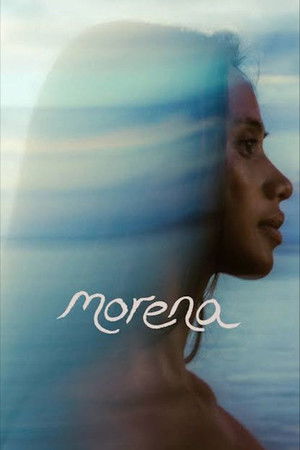
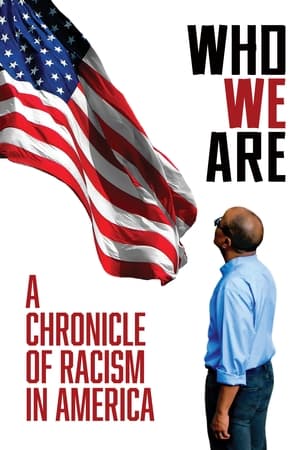
In 1937, tens of thousands of Haitians and Dominicans of Haitian descent were exterminated by the Dominican army, on the basis of anti-black racism. Fast-forward to 2013, the Dominican Republic's Supreme Court stripped the citizenship of anyone with Haitian parents, retroactive to 1929, rendering more than 200,000 people stateless. Elena, the young protagonist of the film, and her family stand to lose their legal residency in the Dominican Republic if they don't manage to get their documents in time. Negotiating a mountain of opaque bureaucratic processes and a racist, hostile society around, Elena becomes the face of the struggle to remain in a country built on the labor of her father and forefathers.
A documentary incorporating footage of Montgomery Clift’s most memorable films; interviews with family and friends, and rare archival material stretching back to his childhood. What develops is the story of an intense young boy who yearned for stardom, achieved notable success in such classic films as From Here to Eternity and I Confess, only to be ruined by alcohol addiction and his inability to face his own fears and homosexual desires. Montgomery Clift, as this film portrays him, may not have been a happy man but he never compromised his acting talents for Hollywood.
The Other Side of Fear signifies the actions which incite religious violence and broaden the divide of cultural and moral beliefs in society. The film shadows two clashing perspectives both of which are searching for safety in their own communities and these perspectives blend testimonies of trauma and manifestos of power. By using poetic documentation, the director acknowledges that there are more than two sides to every story and intertwines these sentiments, embodiments and experiences into one journey to understand what is happening behind the doors of communities the other hasn’t experienced.
An analysis of the impact on the United States Latino community of immigration policies promoted by President Donald Trump.
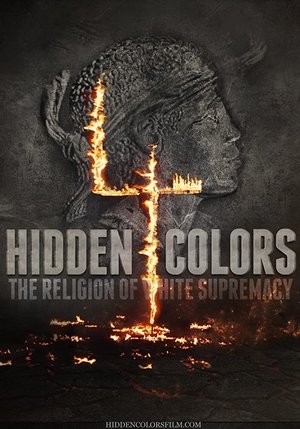
In THE COLOR OF FEAR, eight American men participated in emotionally charged discussions of racism. In this sequel, we hear and see more from those discussions, in which the men talk about about how racism has affected their lives in the United States. We also learn more about the relationships between them, and about their reactions during some of the most intense moments of that discussion.
'Green Lights, Blue Skies' features twenty tracks to make you want to head for the open road. Many of these videos, promotional clips and performances have never been included on a DVD. Bonus features include an introductory film by DJ and broadcaster Gary Crowley, exclusive band profiles and a new 5:1 mix.
A view of the religious tensions between Muslims and Buddhist through the portrait of the Buddhist monk Ashin Wirathu, leader of anti-Muslim movement in Myanmar.
Documents the race riot of 1921 and the destruction of the African-American community of Greenwood in Tulsa, Oklahoma. With testimony by eyewitnesses and background accounts by historians.
Chronicles the rise of Collab Crib, one of the first mainstream Black creator mansion, exclusively documenting their whirlwind drive to achieve social media stardom in 90 days.
Doing really well on your school assessment tests, but still having the school recommend that you go to preparatory vocational school. Going to a club with friends and having the bouncer keep you out. Having to endure jokes from classmates. These are examples of the sort of casual racism that the children of director Karin Junger and their friends have to face. In Ik alleen in de klas, director Karin Junger, white mother of three darker-skinned children, stands with her family to confront the racism they experience in their daily lives. Twelve adolescents meet at a mansion in France. The group consists of Junger’s children and their friends. All of them come from ethnic minority backgrounds and share a feeling of being excluded from Dutch society. Re-enactment is used to explore painful situations again. In this simple but effective documentary, we can see the impact of subtle and less subtle forms of racism on the lives of young Dutch people.
People are interviewed in Dresden, Ontario, to sample local attitudes towards racial discrimination against black people that brought this town into the news. After a round-up of the opinions of individual citizens, white and black, commentator Gordon Burwash joins two discussion panels, presenting opposite points of view. The rights and wrongs of the quarrel are left for the audience to decide.
Documentary film about Tony Halme, masculinity and populism. The film follows how Tony Halme created a mythical, highly masculine freestyle wrestling character, The Viking, who gained fame both in the ring and in the public eye and eventually became captivated by it. With his brash speeches, Halme fired the starting shot for the rise of the Finns Party. The voice of a forgotten section of the population, a protest against the ruling elite, were the building blocks of Halme's popularity. Halme's great popularity has served as a good example of a populist figure, admired within the deep ranks of the nation, who comes from outside the political elite and changes the direction of politics. Also, despite - or perhaps because of - his openly racist statements, he was part of changing the political climate in Finland to a more acrimonious one.
In the fifties, when the future Democratic Republic of Congo was still a Belgian colony, an entire generation of musicians fused traditional African tunes with Afro-Cuban music to create the electrifying Congolese rumba, a style that conquered the entire continent thanks to an infectious rhythm, captivating guitar sounds and smooth vocals.
On June 12, 2016, Pulse Nightclub in Orlando, Florida was the site of one of the deadliest mass shootings in the history of the USA. Lifeline will take you behind-the-scenes to see how the blood center and hospital raced against the clock to save the victims' lives. Hear the emotional stories from both the survivors and the blood donors themselves who unknowingly saved their lives. Hear the emotional stories from both the survivors and the blood donors themselves who unknowingly saved their lives.
A short documentary exploring the ways LGBT couples show affection, and how small interactions like holding hands in public can carry, not only huge personal significance, but also the power to create social change.
Can a tree be racist? A few years ago, debate on this issue reached as far as Fox News. The focus was a row of tamarisk trees along a huge golf course in Palm Springs, which screened off the neighborhood of Crossley Tract. This is a historically Black neighborhood, named after its founder Lawrence Crossley, who was one of the first Black residents to settle in the largely white tourist paradise, established on indigenous land over a century ago.
The tenth edition of Polish Pride parades a colorful trail of rainbow flags through the streets of Warsaw. Along the route, Antek and his friends line up to warn of the “pink threat” in prayer and edifying hymns. As traditional Catholics, he and his Brotherhood hold deeply conservative views: sex before marriage is out of the question, homosexuality can be cured, abortion is a great evil and Poland is for the Poles. His sister thinks his homophobic ranting is pointless, because in a few years the planet will be destroyed anyway as nobody is doing anything about climate change.
A film about small Ontario town's struggle to restore a desecrated African-Canadian cemetery and the resulting turmoil over it.
This film made by a Palestinian-Israeli collective shows the destruction of the occupied West Bank's Masafer Yatta by Israeli soldiers and the alliance which develops between the Palestinian activist Basel and Israeli journalist Yuval.
An American story. Traces the career of Joe Louis (1914-1981) within the context of American racial consciousness: his difficulty getting big fights early in his career, the pride of African-Americans in his prowess, the shift of White sentiment toward Louis as Hitler came to power, Louis's patriotism during World War II, and the hounding of Louis by the IRS for the following 15 years. In his last years, he's a casino greeter, a drug user, and the occasional object of scorn for young Turks like Muhammad Ali. Appreciative comment comes from boxing scholars, Louis's son Joe Jr., friends, and icons like Maya Angelou, Dick Gregory, and Bill Cosby.