In the summer of 2001 the Taliban strategically captured 24 Shelter Now International Aid hostages that captured the attention of the world for more than three months. With representatives from the United States, Australia, Germany and Afghanistan, the Taliban set out to create an insurance policy against the pending attacks of September 11th. What transpired through their story was an overwhelming journey of faith, grace and endurance. Based on the true story as told by the captives, Kabul 24 captures the gantlet of their 105 days in captivity and the cruel treatment of the Muslim co-workers at the hands of the Taliban who accused them of converting to Christianity. Revisit their journey from the grueling interrogation to their sham "trial" before the Taliban Supreme Court, to the dangers endured during the bombing of Kabul and a crushing sense that the world had abandoned them.
Mark Urban tells the inside story of Britain's fight for Helmand, told with unique access to the generals and frontline troops who were there.
Key decision makers reveal the inside story of how the West was drawn ever deeper into the Afghan war. Reporter John Ware charts the history of a decade of fighting and looks at when the conflict may end.
Armed only with their cameras, Peabody and Emmy Award-winning conflict Journalist Mike Boettcher, and his son, Carlos, provide unprecedented access into the longest war in U.S. history: they are embed with U.S. troops during nine days of intense combat in Afghanistan.
Three stories told simultaneously in ninety minutes of real time: a Republican Senator who's a presidential hopeful gives an hour-long interview to a skeptical television reporter, detailing a strategy for victory in Afghanistan; two special forces ambushed on an Afghani ridge await rescue as Taliban forces close in; a poli-sci professor at a California college invites a student to re-engage.
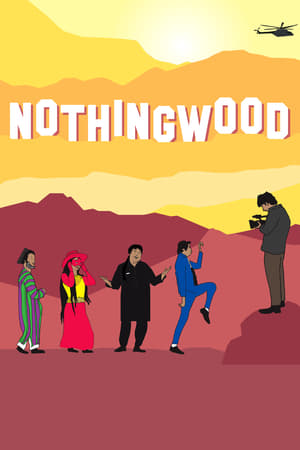
Set in the futuristic landscape of Los Angeles on July 4, 2008, as it stands on the brink of social, economic and environmental disaster. Boxer Santaros is an action star who's stricken with amnesia. His life intertwines with Krysta Now, an adult film star developing her own reality television project, and Ronald Taverner, a Hermosa Beach police officer who holds the key to a vast conspiracy.
"The Junkyard" is the story of two twin baby brothers who get separated in Afghanistan in 1981, when an airstrike hits their home. Both survive, 38 years later they meet again by accident as enemies.
The friendship between Christophe de Ponfilly and Commander Massoud, a legendary figure of the Afghan resistance against the Soviet invader, goes back to the filmmaker's first film, "A Valley Against an Empire", made in 1981. Fifteen years later, weakened, isolated, betrayed by many of his own, the "Lion of Panshir" has not surrendered to his new and implacable enemies, the Taliban. While preparing his next offensive, he evokes his commitment and his fights, and bears witness to a history in which he has been one of the main actors for twenty years. At the same time, the director questions the role and power of the media, as well as his own approach as a filmmaker. Commander Massoud was killed in an attack in September 2001.
Leaving their hometown of Fulchester in the North of England, Sandra and Tracey head for the bright lights of London, shagging and boozing their way to fame and fortune.
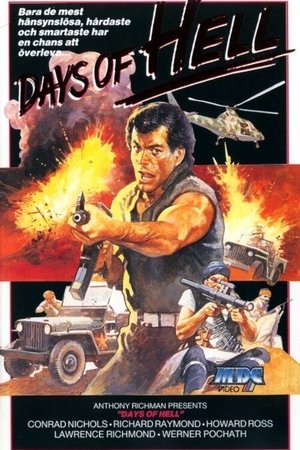
This fast-paced film stars (Conrad Nichols) as the tough Captain Williams, head of a crack commando squad who goes into Afghanistan to save the U.S.S.R. -- and indirectly, the U.S. -- from some very bad publicity. A journalist and his daughter have evidence that the Russians are using biological and chemical weapons in their war in Afghanistan. The unit of five commandos smuggle themselves into Afghanistan through its neighbor Iran, bribing the leaders of that country with some spare parts for its war planes (shades of Iran-Contra!). Once inside the country they discover that the journalist has already died from exposure to nerve gas, and his daughter is already getting sick. Williams starts to guess that they are all being set up because everything is going just a little too well, and he adjusts his plans accordingly. ~ Eleanor Mannikka, Rovi
As a young and idealistic war correspondent, Graeme Smith followed the troops into battle in Afghanistan. Now he returns to a place that gave him nightmares to see if there is hope for peace. Smith revisits old friends and acquaintances and sees the deep divisions in the country.
This documentary on the effect the talent competition "Afghan Star" has on the incredibly diverse inhabitants of Afghanistan affords a glimpse into a country rarely seen. Contestants risk their lives to appear on the television show that is a raging success with the public and also monitored closely by the government.
Afghanistan: From Ground Zero to Ground Zero is the story of Masuda Sultan, a 23-year-old Afghan-American woman who travels back to Kandahar, Afghanistan to see what has become of her country. Masuda is delighted to see the yoke of the Taliban lifted, but horrified to find out what happened to her family. Seeking refuge from the American bombing, a large number of her family escaped to the small village of Chowkar-karez, 60 miles north of Kandahar. On October 22, 2001 Chowkar-Karez was attacked by the American military. 41 civilians were killed. 19 of them were members of Masuda's family. Masuda, who supports America's effort against terrorism, wants to know why her family had to die in the desert.
After spending years in California, Amir returns to his homeland in Afghanistan to help his old friend Hassan, whose son is in trouble.
"No Book This Year" tells the story of Yalda, a former staff member of Afghanistan's booth at the Frankfurt Book Fair. Years after the booth's closure, Yalda takes it upon herself to independently relaunch Afghanistan's presence at the fair. Despite numerous challenges and obstacles, her unwavering determination to showcase Afghan literature and culture shines through, illustrating the resilience of the human spirit in preserving cultural heritage.
An undercover investigation focuses on the Taliban's crackdown on women in Afghanistan.
In 1960, acclaimed filmmaker James Ivory traveled to Afghanistan to shoot scenes for a documentary that was never completed. In 2022, he decided to revisit this unique footage, which takes him back to his adventurous youth.
This film creates a real-life epic of boyhood and manhood that follows the same individual over 20 years, living in one of the most dangerous countries in the world. When we first meet Mir, he is a mischievous boy of seven living in a cave in central Afghanistan alongside the Buddhas of Bamiyan, two statues that were recently destroyed. For two decades, the film follows the adventures of his life, until, as an adult with a family of his own, he decides to pursue his own career as a news cameraman in Kabul. More than just a personal journey, My Childhood, My Country is an powerful examination of what has – and has not – been achieved in Afghanistan over the past 20 years.
How microchip technology ushered in a new era of American combat operations with stealth, networked air control and precision-guided munitions.
Soraya, a low-level government official, is imprisoned when she defends a woman from village lords. Behind bars, she writes the Afghan President for help.