Ivan Melnychuk documents the changes in Kyiv, focusing on the ruins of buildings constructed from the late 60s for workers. As an architect, he observes the ‘improvements’ of public spaces, highlighting small gestures common in Ukraine. These actions, driven by pragmatism, involve occupying spaces without considering broader effects, reflecting a persistent situation where public spaces are subtly manipulated.
It is a documentary about mostly inner-city birds. It is meant to examine their lives in a more metropolitan context as they become increasingly tangled in our everyday lives.
In late August 2016, the band of Floating Points travelled to the Mojave desert to rehearse and record before their tour of the Southern states of America. Whilst visiting Joshua Tree national park, they were struck not only by its physical beauty, but also of the sonic reflections from the rock formations. A unique sound of reverb, echo and phase shifting modulating the sound from its surroundings.They took advantage of this environment to write and record some new music at the base of some of these natural sculptures which was documented in this short film.
13 figures de Sarah Beauchesne au 71, rue Blanche
A 16mm archive from 1964 intervened as an emotional diary during the first three months of the COVID-19 pandemic is the basis of this film, reinterpreted in the montage of the sound design, in which the images are reinterpreted, emphasizing the soundscape of the protests from 2020 to 2023 in the streets of Cajamarca, Cusco and Lima, three regions of Peru, questioning the constant political and social crisis.
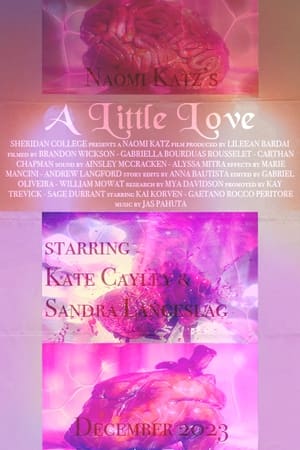
Through interspersed conversation and prose, this experimental documentary follows a poet and a neuroscientist as they explore the definition of love, what it means, and why it matters.
How do German couples communicate in private? What are they arguing about? Is the way to a man’s heart really through his stomach? This docu-fictional hybrid production discusses such questions with the help of authentic interview snippets that were edited under the staged plot. We get an insight into the life of an animal couple, who experience typical everyday situations on behalf of us humans. At first, our fox is emotionally contained, while the penguin lady may get wild as hell. With a wink, the filmmakers hold up a mirror to the audience in the cinema.
Fireworks
Six million tons, suspended by the slightest gesture. Mother of the World presents a series of brief vignettes of Cairo just prior to the 2011 Egyptian Revolution. These fragmented scenes choreograph class structure and foreign influence into an intimate, poetic view of a nation about to change.
GIRI CHIT tells a tale of the subtle trace of irreconcilable worlds. A worker driving a mobile sweeper in hypnotic circles across an already immaculate surface. The high drama of cosplay aficionados clamoring to be seen. A cast of thousands toiling hundreds of feet above the street. Giri translates as ‘duty’ in Japanese, but the concept is in fact far more complicated. Giri is a sort of interpersonal political capital that informs careers, family relations, and much more. Its presence and flow is palpable in Japan, where this film was shot. A “giri chit” then may be a hypothetical voucher for this intangible flow (with a tip of the cap to Thomas Pynchon’s “Vineland”). Selected Screenings and Awards: DaVinci Film Festival (Best Experimental Film), Chicago Underground Film Festival, Athens International Film and Video Festival, Dallas Videofest, ICDOCS Film Festival, NewFilmmakers at Anthology Film Archives, Oxford Film Festival, Director’s Lounge Berlin
A film of and through the trees. Leaves catch, consume and resist the light through the seasons.
Made primarily using 35mm black & white stills film, which was developed and scanned at home, the film explores themes of memories, nostalgia, and our relationship to still and moving image and how those two mediums differ in regards to how we process the passing of time.
In the summer of 1900, the first film camera was purchased by Mozaffar ad-Din Shah Qajar for Iran, and immediately the first Iranian moving images were captured by this camera. These images, in an obsessive manner, have embodied the mesmerized gaze of people. In the span of 79 years since the purchase of this camera, Iran has undergone two revolutions and two coups, and throughout all these moments, the camera has been present as the recorder of people's mesmerized gazes. These mesmerized gazes are in a way as if they are the ones looking at us, not the other way around. It seems like these gazes are trying to convey something, but what? No one knows. Now, we gaze at those who have gazed at us from a distant time.
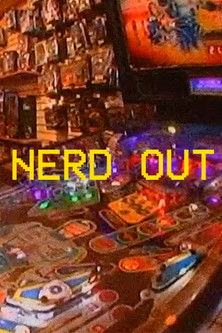
A documentary about three different physical media shop owners "nerding out" about the media that their store specializes in and their thoughts on how one day physical media may become obsolete.
A documentary about the sea and memory. Its movement is its form. Its strength.
A humanoid film robot spews its stream of consciousness throughout its allocated screen time.
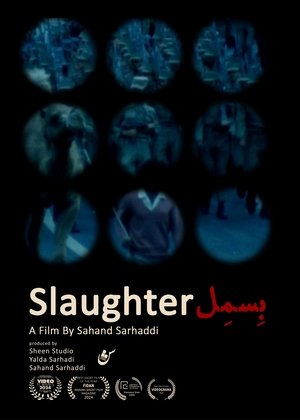
"Slaughter" is an experimental short film that delves into the archival and historical footage of the Iranian Revolution in 1979, depicting a symbolic narrative surrounding the ritualistic act of animal sacrifice, known as "Besmel." It serves as an allegorical representation of a nation's sacrifice amidst the backdrop of political transformations.
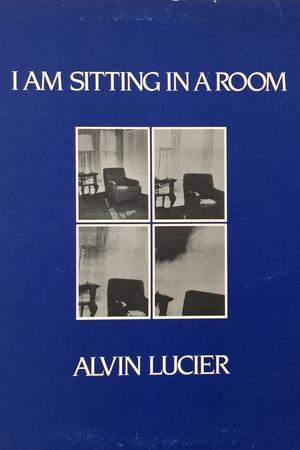
I am sitting in a room is a sound art piece by American composer and sound artist Alvin Lucier composed in 1969. The first performance of the work was in 1970 at the Guggenheim Museum in New York. In collaboration with his partner Mary Lucier. The piece features Lucier recording himself narrating a text, and then playing the tape recording back into the room while re-recording it. The new recording is then played back and re-recorded, and this process is repeated. Due to the room's particular size and geometry, certain resonant frequencies are emphasized while others are attenuated. Eventually the words become unintelligible, replaced by the characteristic resonance of the room.
Made as part of the Winnipeg Film Group's "Super 8 Special" film incubator. This picture was captured on super 8 film, drip dyed with a mixture of india ink and water collected from Lake Winnipeg, then digitized and captured on VHS.
Jonas Mekas recites poems of his, both in English and Lithuanian. Exclusive Mekas interview by the poet Sparrow. The legendary poet-film critic and film diarist waxes philosophical in rare extended setting exhibiting his transcendental poetic humor. Jonas attacks the crass world of TV advertising and sell-out commercial filmmakers. Contributes zen anecdotes and filmmaking advice. Choice clips include Mekas' Film Diaries with deceivingly formalist amateur "home movie" style, but in small bursts of expression in a quick collage. Footage from Jonas' homeland as well as clips of famed pop figures John Lennon, Yoko Ono and Tiny Tim.