Filmmaking icon Agnès Varda, the award-winning director regarded by many as the grandmother of the French new wave, turns the camera on herself with this unique autobiographical documentary. Composed of film excerpts and elaborate dramatic re-creations, Varda's self-portrait recounts the highs and lows of her professional career, the many friendships that affected her life and her longtime marriage to cinematic giant Jacques Demy.
Mona is a 22 year old trans girl from a small village in France. She puts needles attached to peacock feathers in her skin, under bright lights, late at night. She bleeds, half naked, in front of small crowds of people. Sometimes they faint whilst watching her. Why would she do this? How did she learn to do it? And why would someone want to watch?
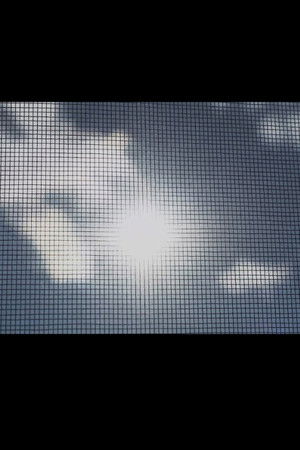
An experience of a camera swinging in different gestures facing the optical distortion of the Sun. The last appearance of the smudge.
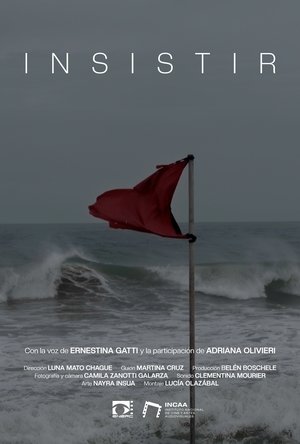
A documentary featuring 30 Argentinian women aged between 4 and 80, sharing their stories of resilience, strength, and unique perspectives on womanhood through performance art.
The horses in Denys Colomb Daunant’s dream poem are the white beasts of the marshlands of the Camargue in South West France. Daunant was haunted by these creatures. His obsession was first visualized when he wrote the autobiographical script for Albert Lamorisse’s award-winning 1953 film White Mane. In this short the beauty of the horses is captured with a variety of film techniques and by Jacques Lasry’s beautiful electronic score.
A homogeneous structure of wind and light across tree branches in the South region of Isère
A closeted transgender woman is comforted by dancing to confront her sexual demons.
Made in Japan, Last Room is both fiction and documentary. The occupants of the love-hotels and capsule-hotels tell their own intimate, dreamlike stories, interspersed with journeys through the archipelago's landscapes. Soon, these personal stories resonate with a collective history: that of Gunkanjima, the abandoned ghost island of Nagasaki, and then that of Japan as a whole.
An old man's vision of a drowning world is clouded. He decides to take radical actions inflicting damage to his surroundings. Instigating a self-destructive chain of events, coming from the dark abyss of his subconsciousness.
A film essay that intertwines the director's gaze with that of her late mother. Beyond exploring mourning and absence as exclusively painful experiences, the film pays tribute to her mother through memories embodied by places and objects that evidence the traces of her existence. The filmmaker asks herself: What does she owe her mother for who she is and how she films? To what extent does her film belong to her?
An experimental tribute to Jean-Luc Godard, his documentary works and his insights in our modern world.
An exploration of entering and leaving consciousness from the perspective of non-human bodies trapped in everlasting cycles of abuse.
A comfortable rhythm composed of light and shadow. Director Ogino-style absolute movie which freely manipulates geometric figures.
«I often have dreams. Careless dreams. When the sun was shining. It was calm and quiet. And a peaceful sky overhead.» An experimental musical film on the theme of love. Memories of the past excite the imagination and make you evaluate what is happening in the present in a new way.
This free-form film is a self-portrait, which revisits more than 40 years of the author’s filmography and questions the major stations of his life, while capturing the political tremors of the time.
In July 2022, a forest fire broke out on Monte Gambarogno in Ticino, Switzerland. Wound Edges is my emotional response to this landscape, filmed on 16mm and hand-developed with the forest’s ashes. Each frame carries physical traces of the land’s memory, blending destruction with resilience. The soundscape—field recordings, burned wood, contact microphones on trees, and the presence of fire—echoes the forest’s wounds. A reflection on human impact, impermanence, and the haunting beauty of transformation.
Five inmates recite poetry while time keeps passing by.
An old woman is carrying shopping bags. A child with a gun is riding a scooter. Birds are flying. A city is falling. A party is lit.
The light and the noise stain the dark night.
People leave (and return) from a church after Sunday Mass more than 120 years ago. The creaking of time and the darkness behind the ancient ritual of praying for our existence dance eternally, like a river of souls. Liz Taylor's visualy noisy reinterpretation of the film "Congregation Leaving St. Mary's Pro-Cathedral, Dublin" (1901) by the Edwardian filmmaking duo James Kenyon and Sagar Mitchell.