When an academic unearths a forgotten history, residents of the small township of Pukekohe, including kaumātua who have never told their personal stories before, confront its deep and dark racist past.
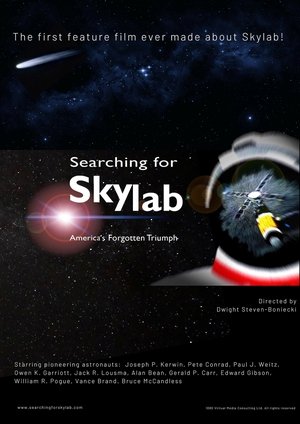
The first American space station Skylab is found in pieces scattered in Western Australia. Putting these pieces back together and re-tracing the Skylab program back to its very conception reveals the cornerstone of human space exploration.
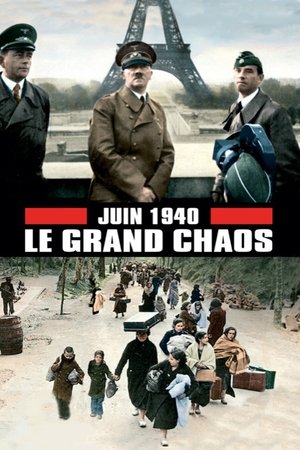
Between June 1940 and March 1943, the 1,200 kilometer long demarcation line broke France in two. For almost three years she controlled the daily newspaper of 40 million French people. In the north the zone occupied by Hitler's soldiers, in the south the zone administered by Marshal Pétain's Vichy regime. This film lifts the veil in this theater on the shameful mistakes of the collaboration, but also on the most courageous and noble deeds. Archive images and film recordings at places where the border used to be crossed are alternated with interviews with the last witnesses of this time.
From the acclaimed director of American Movie, the documentary follows former Los Angeles police officer turned independent reporter Michael Ruppert. He recounts his career as a radical thinker and spells out his apocalyptic vision of the future, spanning the crises in economics, energy, environment and more.
Colosseum: A Gladiator's Story
Cruelty, psychological and sexual violence, humiliations: reality television seems to have gone mad. His debut in the early 2000s inaugurated a new era in the history of the audio-visual. Fifty years of archives trace the evolution of entertainment: how the staging of intimacy during the 80s opened new territories, how the privatization of the biggest channels has changed the relationship with the spectator. With the contribution of specialists, including philosopher Bernard Stiegler, this documentary demonstrates how emotion has made way for the exacerbation of the most destructive impulses.
Archival footage, animation and music are used to look back at the eight anti-war protesters who were put on trial following the 1968 Democratic National Convention.
Race tracks are places of longing. But only the Nürburgring in the Eifel is truly spectacular and idyllic at the same time. Loved by fans, feared by drivers: Dozens of bends, many of them with illustrious names: Schwedenkreuz, Karussell, Fuchsröhre, Bergwerk, Brünnchen. To mark the 100th anniversary of the ground-breaking ceremony in 1925, this documentary tells the story of the ups and downs of the Nürburgring.
A look back at the violent conflict between the two leading figures of musical modernity, Arnold Schönberg and Igor Stravinsky, in the first decades of the 20th century. Although Arnold Schönberg and Igor Stravinsky both had a decisive influence on the fourth art, their creations remained diametrically opposed. While the Austrian developed the dodecaphonic method, placing the twelve notes of the chromatic scale at the heart of the composition technique to the detriment of tonality, his Russian rival based his practice on stylistic eclecticism. Their supporters formed two opposing camps, and the two composers - one the father of the Second Viennese School, the other of Neoclassicism - became, in the wake of their successes, the figureheads of a conflict that marked the history of music by its duration and intensity.
Les énigmes du trésor corse
This documentary is about the submersion and the demolition of Hasankeyf––a historical district in Batman that has 12,000 years of legacy, because of Ilısu Dam, and about the lives of the people who lost their villages, homes, memories, observing them before the collection of water, during the collection of water causing the destruction, and after the filling of the reservoir.
In 150 years, twice marked by total destruction —a terrible earthquake in 1923 and incendiary bombings in 1945— followed by a spectacular rebirth, Tokyo, the old city of Edo, has become the largest and most futuristic capital in the world in a transformation process fueled by the exceptional resilience of its inhabitants, and nourished by a unique phenomenon of cultural hybridization.
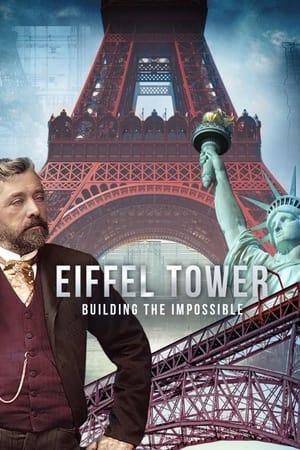
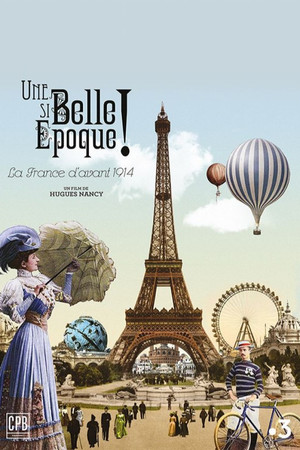
In 1889, Gustave Eiffel decides to attempt the impossible for the Universal Exhibition in Paris: to build the tallest tower in the world. Before this project, this pioneer and visionary had created more than 300 metal structures around the world.
De Gaulle, l'homme à abattre
Hidden deep in the south of France, practically untouched by the modern age, is a place known by many as 'the Zone'. In this space, the supernatural is an everyday reality of life. Magic is everywhere. It is reason. It is currency. It is unquestionable fact. Prepare yourself for a journey into life on the other side of the mirror.
Schätze aus der Unterwelt
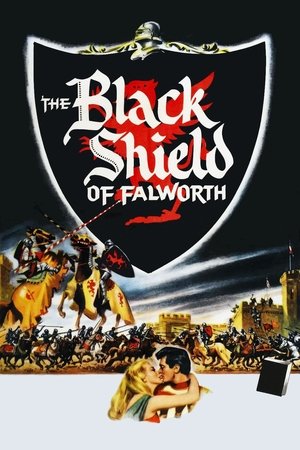
In 1812, during the French period, large parts of Germany are occupied by the troops of Napoleon. Several paramilitary Freikorps units battle the French forces, among them the Black Brunswickers led by the 'Black Duke' Frederick William of Brunswick-Wolfenbüttel. After the War of the Fifth Coalition, the Black Hussars are pursued by Napoleon throughout the country, but frequently take refuge with the noble-minded German people.
L'Énigme de la pyramide maudite : Dahchour
Gdańsk, Poland, September 1980. Lech Wałęsa and other Lenin shipyard workers found Solidarność (Solidarity), the first independent trade union behind the Iron Curtain. The long and hard battle to bring down communist dictatorship has begun.
On 28 January 1901 the great musician Giuseppe Verdi died from the consequences of a stroke that had struck him six days earlier. These very rare images, captured in Milan on 27 February 1901 by the operator and pioneer of Milanese cinema Italo Pacchioni, document the transfer of the Maestro's body from the Monumental Cemetery of Milan to the famous retirement home for musicians which he himself founded.