There are two Bergmans. One speaks English, the other Italian. They fall in love and set off impulsively to live together. But reality is far from easy. As the rift between their emotions deepens, what choice will they make? And what kind of ending awaits them?
A video essay on Edward Yang's 2000 film "Yi Yi: A One and a Two..."
A video essay on the history and morality of the Robin Hood legend.
The New York of News from Home was filmed in 1976, while the one of Taxi Driver was filmed in the summer of 1975. Both works reflect the same decadent city. Two visions that shift from the everyday to the existential complement each other. A resignification of Akerman's images through the voice-over of Scorsese's work.
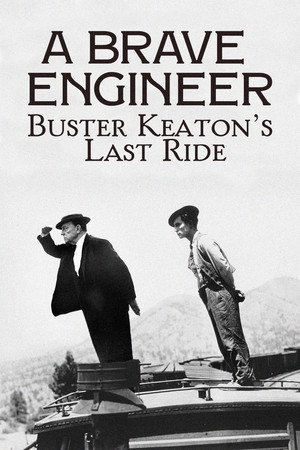
From 1920 to 1965, the great Buster Keaton made spectacular use of locomotives in his films. This video essay charts the course of his iconic cinematic career across the many tracks he rode along on screen: as a young man in the surge of his silent movie ascent in Our Hospitality, while making his masterpiece The General, and traversing the width of Canada on a railway speeder car as an old man in The Railrodder.
Non-human animals have always been around us, shaping and being shaped by our shared worlds. Yet in the modern city, their presence is increasingly cast as a problem, and their ways of living as disruptions. By following their traces, this film essay points toward a different picture that questions the narratives we take for granted. Through more-than-human encounters filmed locally in Romania, and a critical detour from the official discourse, other ways of living begin to surface. Perhaps there’s more we can do to unmake the anthropocentric landscape. What would it take to coexist more justly with urban animals? This film strays with this question and its possible answers.
A video essay made on S. Craig Zahler's 2015 film "Bone Tomahawk".
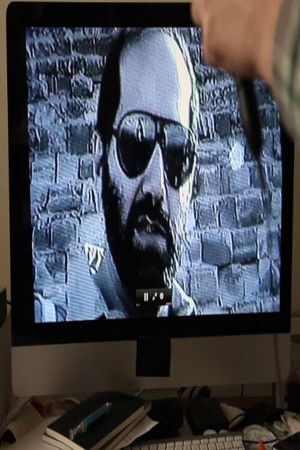
After the making of my previous film (PLAY DEAD!), some unfinished business remained on my desktop. Home movies and various body horror films from my childhood cluttered my computer screen. Part medical treatise, part self-anamnesis, and a mashup tinged with nostalgia, this video essay returns the images emanating from my computer screen to the everyday gaze of a diabetic.
nostomanie
In a world bedazzled by intractable images, do we need the essay film now more than ever? Kevin B. Lee weighs up this distinctively self-aware, searching form of cinema through both video and text.
Visite banale du musée de l'oubli.
comment faire disparaître un corps.
NULLE PART
Surrounded by reflections of color, an ephemeral being explores the ethereal, sweet, and dangerous nature of sexual affection for another. It yearns to desire, but also to be desired.
The film, grounded in the photo series titled "Right to be Flawed"—published on a-part.online, the official publishing platform of the Kadıköy-based aesthetic-modernist art collective apart Art Association—is a short videographic essay that aims, through a practice-based experiment, to test French thinker-sociologist Jean Baudrillard’s theory of simulation, the imperfection–perfection dichotomy within that theory, and the implications of this dichotomy in the context of art and image regimes.
Dinner is ready !
Timo Novotny labels his new project an experimental music documentary film, in a remix of the celebrated film Megacities (1997), a visually refined essay on the hidden faces of several world "megacities" by leading Austrian documentarist Michael Glawogger. Novotny complements 30 % of material taken straight from the film (and re-edited) with 70 % as yet unseen footage in which he blends original shots unused by Glawogger with his own sequences (shot by Megacities cameraman Wolfgang Thaler) from Tokyo. Alongside the Japanese metropolis, Life in Loops takes us right into the atmosphere of Mexico City, New York, Moscow and Bombay. This electrifying combination of fascinating film images and an equally compelling soundtrack from Sofa Surfers sets us off on a stunning audiovisual adventure across the continents. The film also makes an original contribution to the discussion on new trends in documentary filmmaking.
When Forgotten Silver — the story of pioneer filmmaker Colin McKenzie — unspooled on 29th October 1995, in a Sunday TV slot normally reserved for drama, many believed the fable was fact. Controversy ensued as a public reacted (indignant, thrilled) to having the wool pulled over their eyes. Costa Botes, who originated the mockumentary, later made this doco, looking at the construction of McKenzie's epic, tragic, yet increasingly ridiculous story. He interviews co-conspirator Peter Jackson and other pranksters, and they muse on the film's priceless impact.
The intention of the film is to give an impression of what small exotic Denmark looks like, what the strange Danes look like and how they are. Nearly 100 Danes are presented in the film, amongst them a racing cyclist, a Minister of Finance, a popular actor and 13 unmarried women from a provincial town. "There is too much fogginess and rain and melancholy in most of the pictures of Denmark," says Jørgen Leth. "But not in my film. I would like to show you some authentic, clear and beautiful pictures from this strange country."
Poet-filmmaker Jørgen Leth taps his own earliest inspirational veins by free-floating through a camera/microscope-enhanced set of poems with love as their first and final subject. For example, how a tropical island woman prepares for a meeting with her lover. The film was shot partly in the South Pacific with more than a nod to social anthropoliogist B. Malinowski's historical work The Sexual Life of Savages.