An impressionistic short film celebrating Stockholm’s rhythms of life, blending images of its streets, waterways, people, and architecture into a visual “symphony.” Winner of the Academy Award (Oscar) for Best Short Subject, One-Reel in 1949 — the first Swedish film ever to receive an Oscar.
Comprising train and track footage quickly shot just before a heavy winter's snowfall was melting, the multi-award-winning classic that emerged from the cutting-room compresses British Rail's dedication to blizzard-battling into a thrilling eight-minute montage cut to music. Tough-as-boots workers struggling to keep the line clear are counterpointed with passengers' buffet-car comforts.
Takes us to locations all around the US and shows us the heavy toll that modern technology is having on humans and the earth. The visual tone poem contains neither dialogue nor a vocalized narration: its tone is set by the juxtaposition of images and the exceptional music by Philip Glass.
Musician, octogenarian and transgender activist Beverly Glenn-Copeland and his wife navigate the implications of the former’s dementia diagnosis, contemplating high stakes, complex decisions about care and wellbeing while they embark on a mission to preserve his artistic legacy.
Four years after Pour la suite du monde (1963), director Pierre Perrault asks Alexis Tremblay if he'll agree to travel with his wife Marie to the country of their ancestors, France. In a montage parallel, we follow them in France and listen to them talking to their friends about it.
A city symphony of '70s New York as it exists in the movies that mythologized it.
This was a news film with elements of reenactment. From December 1927 to 1932, 2,000 bus and train drivers were fired, provoking a strike. This film was edited out of footage shot from that strike over a long period.
From disturbing viral video trends to the monetization of family life, this investigative work delves into the dark consequences of parents sharing private moments of their children’s lives online. Through raw firsthand accounts, it reveals how an obsession with profit and online fame can enable the manipulation, mistreatment, and erosion of childhood innocence when posted for the world to see.
During the last forty years, the photographer Sebastião Salgado has been travelling through the continents, in the footsteps of an ever-changing humanity. He has witnessed the major events of our recent history: international conflicts, starvations and exodus… He is now embarking on the discovery of pristine territories, of the wild fauna and flora, of grandiose landscapes: a huge photographic project which is a tribute to the planet's beauty. Salgado's life and work are revealed to us by his son, Juliano, who went with him during his last journeys, and by Wim Wenders, a photographer himself.
A small group of activists take on systemic racism and prejudice in Baltimore's public transportation, battling against the odds to create a brighter future for their community.
A day in the city of Berlin, which experienced an industrial boom in the 1920s, and still provides an insight into the living and working conditions at that time. Germany had just recovered a little from the worst consequences of the First World War, the great economic crisis was still a few years away and Hitler was not yet an issue at the time.
In this wildly entertaining vision of one of the twentieth century’s greatest artists, Bob Dylan is surrounded by teen fans, gets into heated philosophical jousts with journalists, and kicks back with fellow musicians Joan Baez, Donovan, and Alan Price.
The Post(?) Feminist Dissonance Project uses a quote by Kathleen Hanna as a prompt, a voicemail box as an interviewing device, found footage as a tool, and text as a character. it is a study in the cacophony of the inner life tuned against the perception of reality. i made this piece to see if i was alone, and i discovered that for better or for worse, i am not. this is above all about the process, not the resolution.
Edgar Morin, chronique d'un regard
Sanyo Electric Tramway carried 586 million people through Shimonoseki City over the 45 years of operation, from 1926 to 1971. Based on colour footage and photographs taken by former city employee Seiichiro Tomura using an 8 mm camera on the last day of operation, and featuring rare audio recordings of the train interior and the farewell ceremony, this documentary is a nostalgic look at the history of the city.
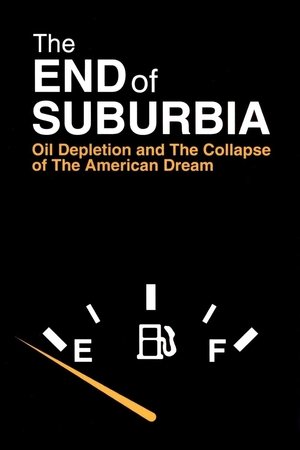
Since World War II North Americans have invested much of their newfound wealth in suburbia. It has promised a sense of space, affordability, family life and upward mobility. As the population of suburban sprawl has exploded in the past 50 years Suburbia, and all it promises, has become the American Dream. But as we enter the 21st century, serious questions are beginning to emerge...
At the Myrtle-Wyckoff intersection, transportation arteries and the community overlap and interact, connect and collide, react and respond. Where are people going? Where are they coming from? And, what lies underneath all of the activity?
A stark and graphic portrayal of the conditions that existed at the State Prison for the Criminally Insane at Bridgewater, Massachusetts, and documents the various ways the inmates are treated by the guards, social workers, and psychiatrists.
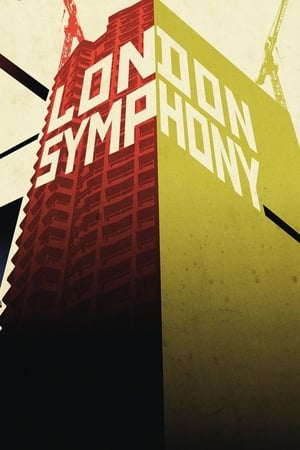
LONDON SYMPHONY is a brand new silent film - a city symphony - which offers a poetic journey through the city of London. It is an artistic snapshot of the city as it stands today, and a celebration of its culture and diversity.
Bienvenue en…. Los Angeles! Film executive Kyle and filmmaker Arran rendez-vous for a tête à tête in this crème de la crème of Cinéma Verité.