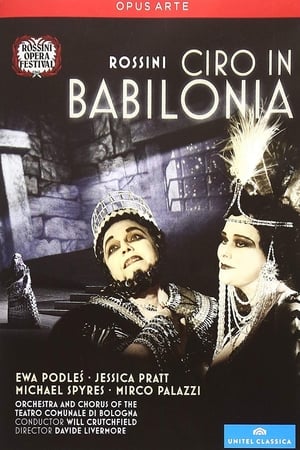
The Biblical story of Belshazzar's hubristic arrogance, set against the valour of the young warrrior-leader Cyrus, provided the 20-year-old Rossini with a dramatic story enriched by West-Eastern implications which still speak to us today. For the title role of Cyrus, Rossini wrote what would be his longest-ever contralto role, to which the great Rossini singer Ewa Podles´ is both naturally attracted and ideally suited. She is partnered by two young stars of Rossini singing, Jessica Pratt and Michael Spyres, and a conductor-scholar, Will Crutchfield, of great experience and sympathy. Filmed in High Definition and recorded in true Surround Sound.
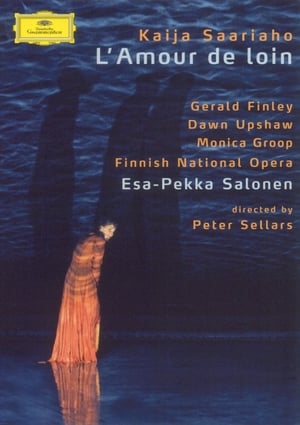
This is the 2004 version of Kaija Saariaho's opera performed by the Finnish National Opera and conducted by Esa-Pekka Salonen.
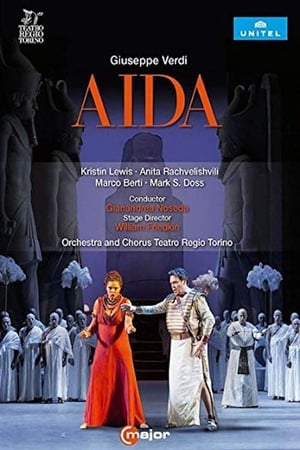
Originally commissioned to celebrate the completion of the Suez Canal and the opening of Cairos new opera house, Verdis Egyptian epic Aida is here seen in a spectacular new staging in the Teatro Regio Torino by the Oscar-winning American film director William Friedkin, creator of such famous movies as The Exorcist and The French Connection. The cast features American soprano Kristin Lewis who has been heralded for her remarkable voice, which she uses with powerful dramatic instinct, and Georgian mezzo-soprano Anita Rachvelishvili, whose Amneris dominates the stage with her dark, rounded, irresistible voice and extraordinary stage presence. Gianandrea Noseda leading the Orchestra and Chorus Teatro Regio Torino received accolaides from all: he controls everything- orchestra, singers, chorus, dancers, acrobats- with an all-encompassing overview. He knows exactly when its time to linger over a timbre, a color, an expressive chord.
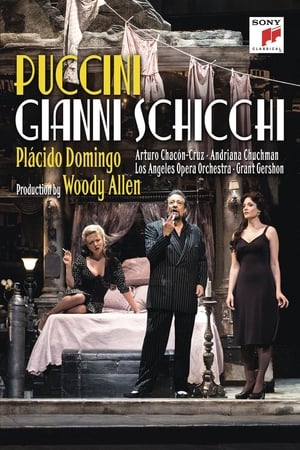
Woody Allen's production of the Puccini comic opera at LA Opera in 2015
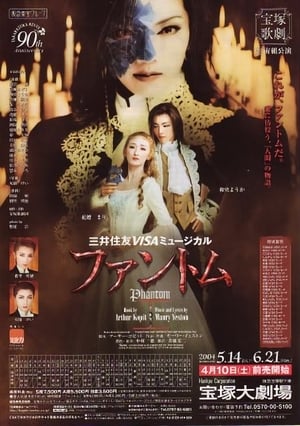
Takarazuka Revue's Phantom based on the play by Maury Yeston and Arthur Kopit.
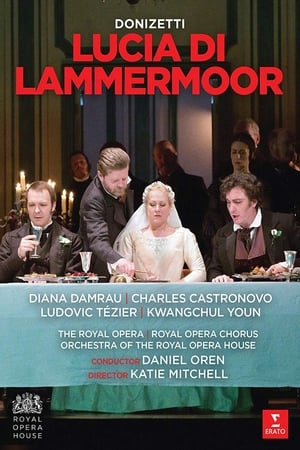
Diana Damrau’s reputation as the world’s leading coloratura soprano has been built on her extraordinary technical virtuosity, her sensitive musicianship and her acute psychological insight. In this DVD of Katie Mitchell’s sometimes radical production of Lucia di Lammermoor from London’s Royal Opera House, she is, as the Financial Times wrote, “brilliantly convincing”. The British award winning director Katie Mitchell – took a revisionist approach to the drama, updating the action to the mid-19th century and applying a feminist slant as she added new and unexpected elements. The Financial Times wrote: “Mitchell shows us on stage personal traumas that a self-respecting woman in the early 19th century was meant to keep to herself. It is a messy, bloody list — nocturnal sex trysts, a knife murder, a miscarriage, a suicide in the bath … In all this Damrau is brilliantly convincing. Her rebellious Lucia is a woman of modern attitudes stuck in a still feudal Victorian world.”
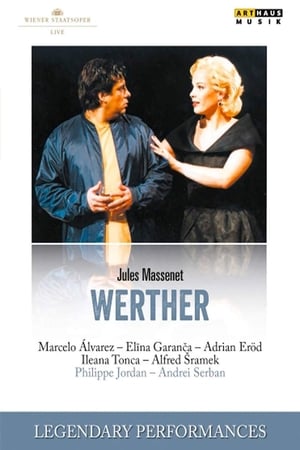
The production was the Vienna State Opera debut for the young Swiss conductor Philippe Jordan – the Argentinian tenor Marcelo Álvarez, took the title role. His Charlotte on this occasion was the young Latvian mezzo-soprano Elīna Garanča. Her performances have been enthusiastically received and she has already been labelled as the new mezzo wonder. Staged by internationally sought-after Rumanian director, Andrei Serban, the apparently sentimental love story – normally presented in 18th century period costumes - reveals a study of personal relationships and a close observation of a woman, who comes of age too late. Serban’s aim was to rid the opera of the unjustified reputation of banality that clings to it despite its underlying tragic mood. By setting the production in the stiff, claustrophobic atmosphere of a small town in the 1950s, he aimed to make the audience more aware of its deeper levels of self-denial.
Kui saabub õhtu
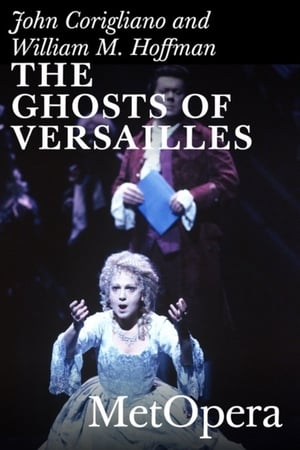
What happened to Figaro and his friends after the events told in Rossini’s and Mozart’s operas? One possible sequel is told in John Corigliano’s “grand opera buffa” The Ghosts of Versailles—an uproariously funny and deeply moving work inspired by Beaumarchais’s third Figaro play, La Mère Coupable, and commissioned by the Met to celebrate its 100th anniversary. This telecast captures its world premiere run, conducted by James Levine. Håkan Hagegård is Beaumarchais, Figaro’s creator, who is deeply in love with Marie Antoinette (Teresa Stratas in a heart-searing performance) and determined to rewrite history and save her from the guillotine. A young Renée Fleming, at the beginning of her international career, sings the unfaithful Rosina. Gino Quilico is the wily Figaro who tries to take matters in his own hands, and Marilyn Horne stops the show as the exotic entertainer Samira.
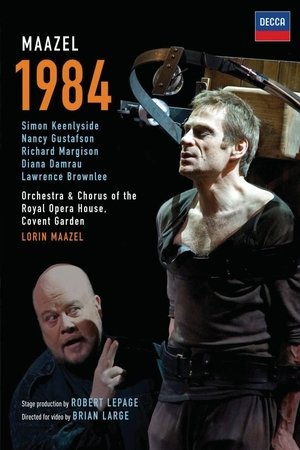
Inspired by one of the twentieth century's greatest novels, composer Lorin Maazel evokes Orwell's totalitarian nightmare, where "Big Brother" is always watching, and those guilty of "thoughtcrime" are condemned to face their worst fears in the infamous "Room 101". Filmed during world premiere performances of Robert Lepage's spectacular and psychologically gripping Royal Opera production and conducted by the composer, an international cast brings George Orwell's dark vision to shattering operatic life.
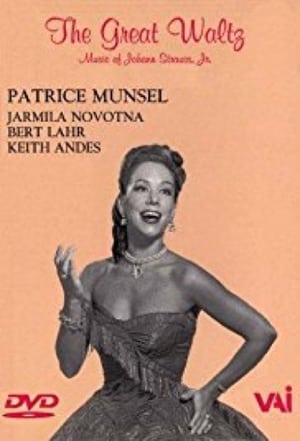
Johann Strauss, Jr., a would-be composer of waltzes in mid-19th Century Vienna, attempts to thwart his father's efforts to prevent his success when the older man becomes jealous of his melodic skill.
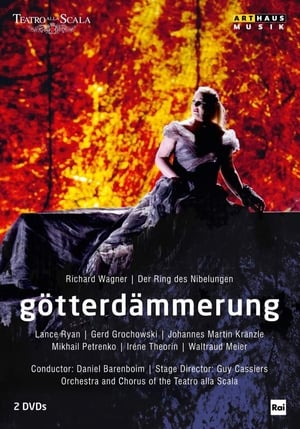
Götterdämmerung, the final instalment of Wagner’s Ring of the Nibelung, is a story of human passions. Two essentially benevolent creatures, involved with and possibly doomed by their traffic with the gods, find treachery and evil in the world of the humans, and are ruined by the dark side of humanity. Iréne Theorin, acclaimed worldwide for her portrayal of Wagner’s heroines, stars as Brünnhilde opposite Lance Ryan, who continues his radiant portrayal of the tragic hero Siegfried. The strong cast also includes Mikhail Petrenko as the dark antagonist Hagen and Johannes Martin Kränzle, who once again shines as his father Alberich. Waltraud Meier has a memorable appearance as Brünnhilde’s sister Waltraute. With this 2013 recording of Götterdämmerung, the musically and visually compelling Scala Ring Cycle by Daniel Barenboim and Guy Cassiers was completed and proved to be one of the highlights of the Richard Wagner bicentenary.
In Siegfried, the “Second Day” or third evening of the Ring Cycle, we meet the pivotal hero of the epic tale. The energetic drive from Die Walküre is pursued here while Siegfried finally recaptures the mighty ring from Fafner the Dragon and awakens Brünnhilde from her penal sleep on the great rock. Lance Ryan, having interpreted this role on the greatest stages of the world including the Bayreuth Festival, portrays the naïve hero. His antagonists are Peter Bronder, great and agile as Mime, Terje Stensvold, an experienced Wanderer and Johannes Martin Kränzle, who continues his mean and deceitful depiction of Alberich. The leading ladies are Nina Stemme, once again unrivalled as Brünnhilde and Anna Larsson, moving as the God-mother Erda.
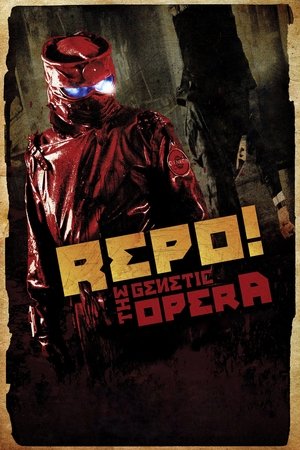
By the year 2056, an epidemic of organ failures has devastated the planet. The megacorporation GeneCo provides organ transplants on a payment plan — and those unable to fulfill their plans have their organs repossessed. In the midst of this, a sickly teenager discovers a shocking secret about herself, her father, and their connection to GeneCo.
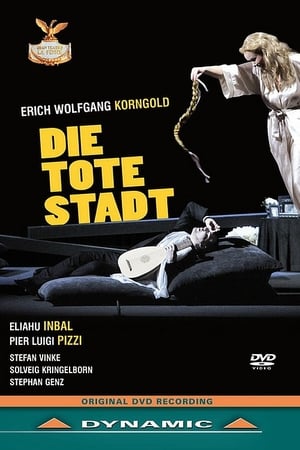
"Die tote Stadt" is a psychologically layered drama with Hitchcock-like features, about Paul who, after the loss of his beloved Marie, slowly but surely becomes entangled in a dream world of obsessions and delusions. This impressive opera is a passionate as well as a surrealistic plea for mourning. "He who cannot live with death has no life."
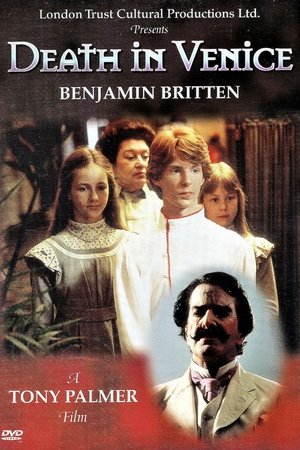
Gustav Von Aschenbach, a passionate composer, arrives in Venice as a result of wanderlust and there meets a young man by whose beauty he becomes obsessed.
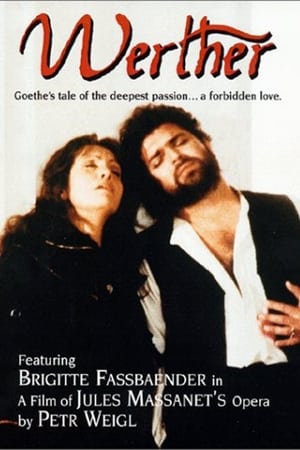
Jules Massanet's lyrical opera is transformed into a superb film production by Petr Weigl, shot on location in Prague, with music conducted by Libor Pesek. First produced by the Vienna Opera in February 1892, "Werther" rapidly confirmed Massanet's position on the French opera scene and achieved enormous popularity outside France, notably in Italy, America and England. The tragic story tells of Werther's intense passion for Charlotte, who has married his best friend, Albert, fulfilling a pledge to her now deceased mother. But Werther's letters of love bring Charlotte to his side when he promises to take his own life.
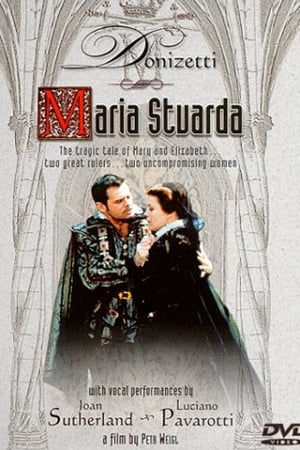
Donizetti's opera as film.
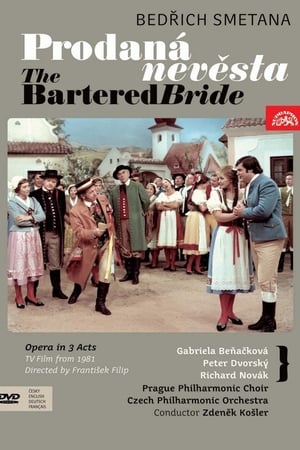
Frantisek Filip film version of the Smetana opera.
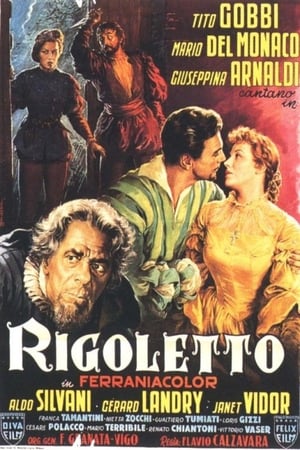
This tragic story revolves around the licentious Duke of Mantua, his hunch-backed court jester Rigoletto, and Rigoletto's beautiful daughter Gilda. The opera's original title, La maledizione (The Curse), refers to the curse placed on both the Duke and Rigoletto by a courtier whose daughter had been seduced by the Duke with Rigoletto's encouragement. The curse comes to fruition when Gilda likewise falls in love with the Duke and eventually sacrifices her life to save him from the assassins hired by her father.